dmoshehun-prog/learn-from-materials
A study buddy that refuses to let the model make things up
learn-from-materials turns PDFs, books and papers into interactive learning pages where every claim traces back to a source page.
Collecting fresh signals — velocity needs a few days of history.
collecting data…
star history
What it does
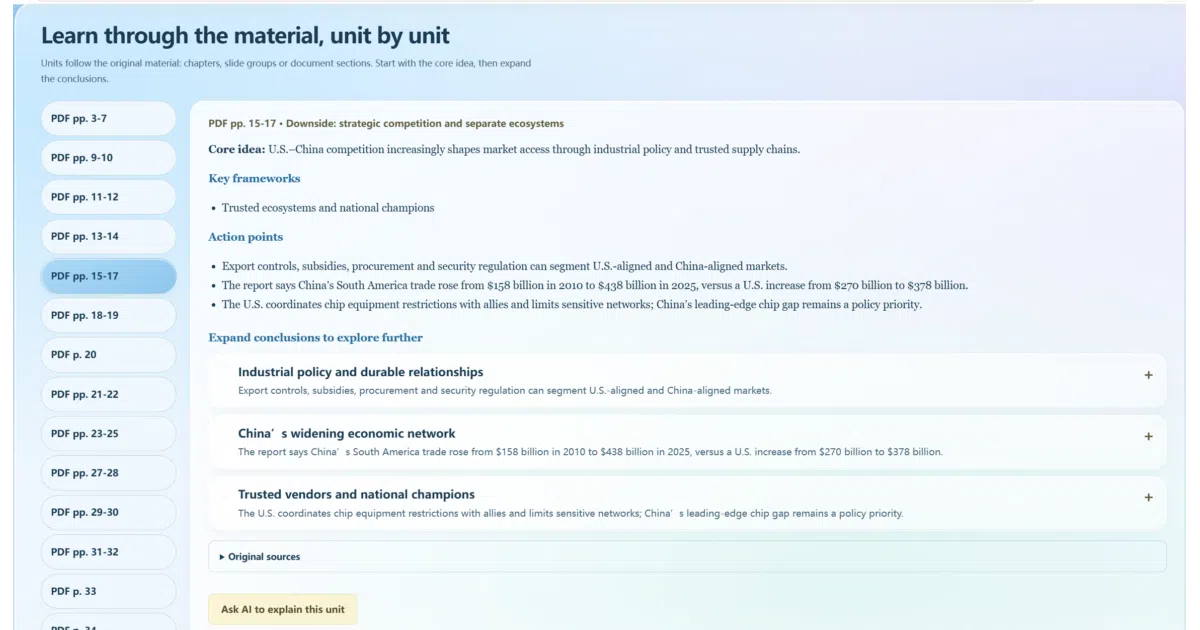
It’s an Agent Skills package (Python, SKILL.md-based) that runs inside agents like Claude Code, Codex, WorkBuddy or Copilot CLI. Feed it a PDF, EPUB, DOCX, slides or a pile of files, and it produces a .learnkb/ knowledge base, a self-contained interactive HTML learning page, and Markdown — all derived from the same extracted data. Two depths: a quick overview of the core argument, or a systematic study that reads to the end.
The interesting bit
The whole design is built around epistemic hygiene: material-backed facts, model-added content, uncovered areas and externally verified items are kept explicitly separate, and both depths run coverage audits with source hashes. When a material contains no methodology, it says so instead of inventing one — a rarer virtue than it should be.
Key highlights
- Fine-grained source mapping: PDF pages, PPT slides, EPUB chapters, with hover tooltips showing where each claim came from
- An accumulating method library (
methods.json) with versioned cards, stable IDs, and no silent overwriting of what the source actually said - Six modules per page: framework cards, guided content, glossary, action rules, self-check quizzes, local notes
- Bilingual Chinese/English throughout, following your explicit instruction rather than guessing from locale
- Offline by default; notes, profiles and wrong-answer records stay in the local browser
Caveats
- Pure chat environments without file access or Python can only use the prompting workflow — no extraction, coverage validation, or HTML rendering
- The README is dense to the point of exhaustion; expect a learning curve on the terminology (“unit rereads”, “dependency fingerprints”)
Verdict
Worth a look if you use an agentic CLI and want study material you can actually audit rather than trust. If you just want a chatbot summary of a PDF, this is considerably more machinery than you need.
Frequently asked
- What is dmoshehun-prog/learn-from-materials?
- learn-from-materials turns PDFs, books and papers into interactive learning pages where every claim traces back to a source page.
- Is learn-from-materials open source?
- Yes — dmoshehun-prog/learn-from-materials is open source, released under the MIT license.
- What language is learn-from-materials written in?
- dmoshehun-prog/learn-from-materials is primarily written in Python.
- How popular is learn-from-materials?
- dmoshehun-prog/learn-from-materials has 1.1k stars on GitHub.
- Where can I find learn-from-materials?
- dmoshehun-prog/learn-from-materials is on GitHub at https://github.com/dmoshehun-prog/learn-from-materials.