bupt-ai-cz/LLVIP
When the lights go out, this dataset brings infrared backup
LLVIP captures aligned visible and infrared views after dark to give computer vision algorithms a benchmark when daylight assumptions fail.
Not currently ranked — collecting fresh signals.
star history
What it does
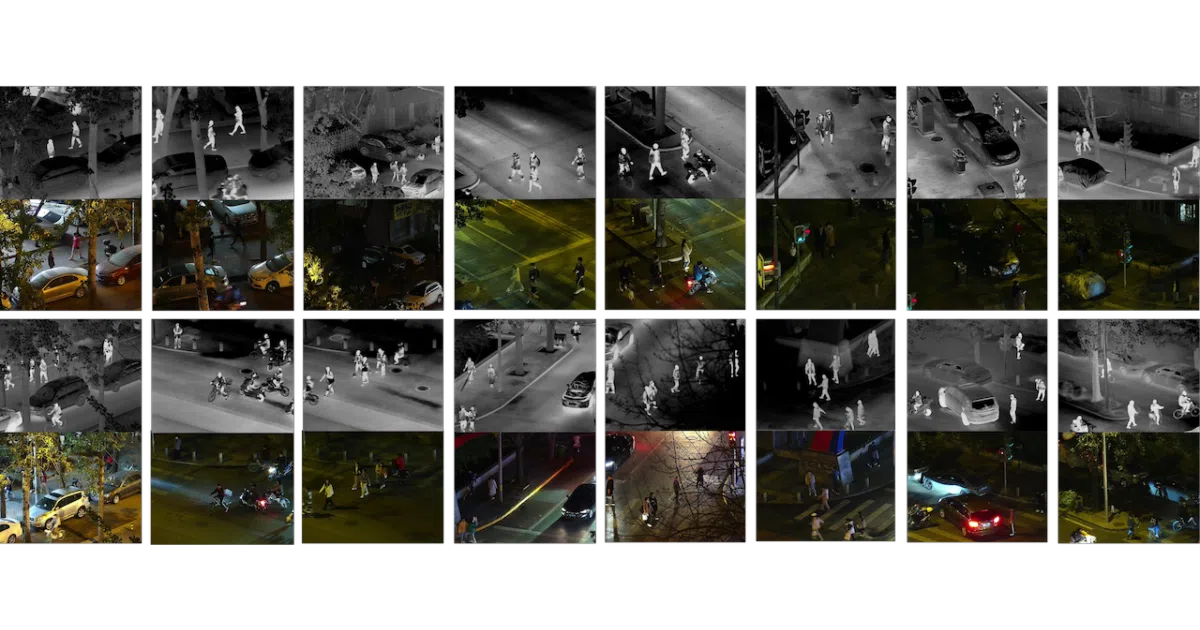
LLVIP is a visible-infrared paired dataset for low-light vision research. It contains 30,976 images captured in dark environments, provided in aligned visible and infrared sets with pedestrian annotations. The repository also includes reference implementations and trained model weights for several baselines covering image fusion, pedestrian detection, and image-to-image translation.
The interesting bit
The dataset is built around the failure mode where visible cameras lose detail after sunset, using infrared as a parallel signal. The authors note that under low light, infrared consistently outperforms visible imagery for pedestrian detection—particularly when intersection-over-union thresholds get strict—which underscores why the paired format matters beyond simple augmentation.
Key highlights
- 30,976 images shot in low light, delivered in aligned visible and infrared sets with pedestrian annotations and raw unregistered sequences for registration research.
- Reference implementations for fusion (
FusionGAN,Densefuse,IFCNN,GTF), detection (YOLOv5,YOLOv3), and translation (pix2pixGAN), plus a toolbox for converting annotations to YOLO and COCO formats. - Pretrained model weights available for download, including a released
pix2pixGANmodel and trained YOLO checkpoints. - A Kaggle competition, “Find Person in the Dark,” runs on a visible-only subset of the data.
- Annotations have been corrected and updated over time to fix missing pedestrians and imprecise labels.
Caveats
- The repository is a dataset and baseline collection rather than a unified framework; each method carries its own dependency stack (e.g., TensorFlow 1.14 for
FusionGAN, PyTorch forYOLOv5), so mixing them is not frictionless. - Annotation corrections were applied retroactively, which means older published results may not align with the current labels unless models were retrained.
- The Kaggle competition restricts entrants to visible images only, so it deliberately ignores the dataset’s multimodal advantage.
Verdict
Researchers working on low-light detection, image fusion, or infrared-visible translation should treat this as a starting point. If your problem assumes well-lit, single-modality imagery, you will not find much use for infrared pedestrian pairs.
Frequently asked
- What is bupt-ai-cz/LLVIP?
- LLVIP captures aligned visible and infrared views after dark to give computer vision algorithms a benchmark when daylight assumptions fail.
- Is LLVIP open source?
- Yes — bupt-ai-cz/LLVIP is an open-source project tracked on heatdrop.
- What language is LLVIP written in?
- bupt-ai-cz/LLVIP is primarily written in Jupyter Notebook.
- How popular is LLVIP?
- bupt-ai-cz/LLVIP has 857 stars on GitHub.
- Where can I find LLVIP?
- bupt-ai-cz/LLVIP is on GitHub at https://github.com/bupt-ai-cz/LLVIP.