athina-ai/rag-cookbooks
From Naive Search to Agentic Reasoning in 13 Notebooks
These notebooks collect advanced and agentic RAG techniques so developers can compare retrieval strategies and evaluate them with Athina AI instead of building each from scratch.
Not currently ranked — collecting fresh signals.
star history
What it does
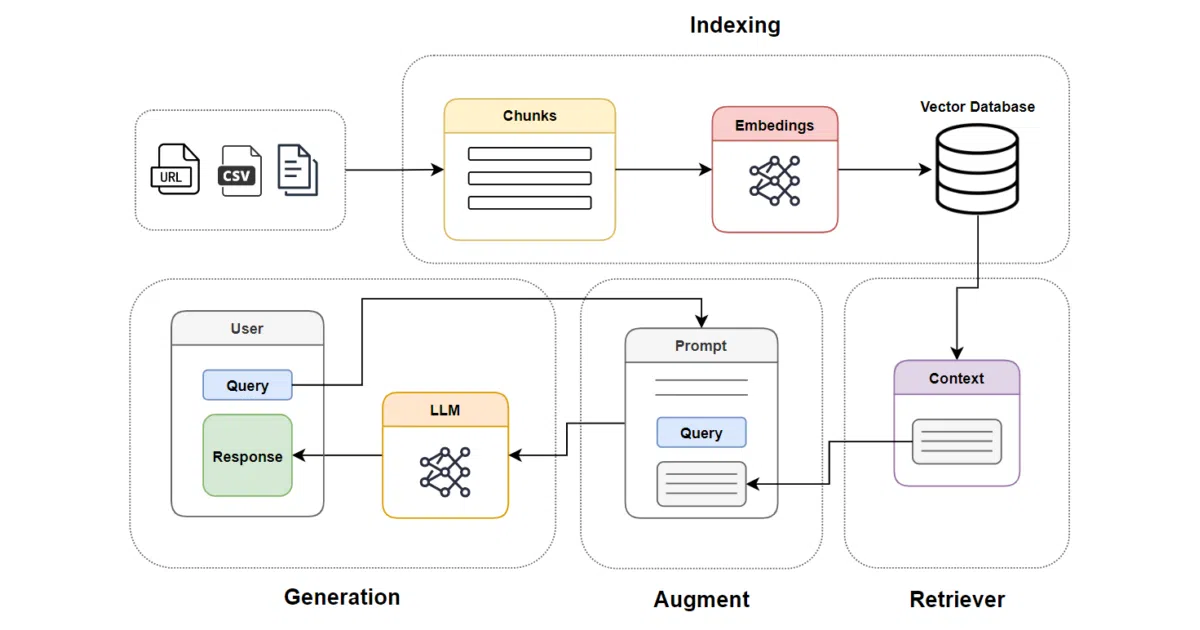
The repository provides end-to-end Jupyter notebooks that implement a progression of Retrieval-Augmented Generation patterns, starting with basic vector search and moving through hybrid retrieval, query rewriting, and agentic loops like ReAct and Self-RAG. Each notebook bundles a working pipeline with an evaluation section powered by Athina AI, aiming to save researchers and developers the time of reconstructing these patterns manually.
The interesting bit
Rather than treating RAG as a single solved architecture, the repo catalogs the field as a spectrum of escalating complexity—naive embedding search on one end, and LangGraph-driven agents that reflect on their own retrieved context on the other. It also forces the issue of evaluation upfront, pairing each technique with metrics rather than leaving correctness as an afterthought.
Key highlights
- Covers thirteen techniques across two tiers: eight “advanced” methods (including HyDE, RAG Fusion, and Parent Document Retrieval) and five “agentic” methods (including Corrective, Self, and Adaptive RAG).
- Every notebook includes an evaluation stage using Athina AI, so implementations are paired with measurement rather than left unverified.
- Uses a mix of vector stores—Pinecone, Chroma, Weaviate, Qdrant, and FAISS—depending on the technique, which gives a sense of how tooling choices shift with the pattern.
- The README states that research paper references are included for each technique, though it does not display the actual citations.
Caveats
- Evaluation is tightly coupled to Athina AI; if you are not using that platform, the assessment portions require substitution.
- The README is essentially a table of contents, so the depth of explanation and code quality must be judged inside the notebooks themselves.
Verdict
Worth browsing if you are trying to level up a RAG pipeline and want a quick survey of what “advanced” and “agentic” actually look like in code. Skip it if you are already running a mature retrieval system and need production-hardened libraries rather than pedagogical notebooks.
Frequently asked
- What is athina-ai/rag-cookbooks?
- These notebooks collect advanced and agentic RAG techniques so developers can compare retrieval strategies and evaluate them with Athina AI instead of building each from scratch.
- Is rag-cookbooks open source?
- Yes — athina-ai/rag-cookbooks is open source, released under the MIT license.
- What language is rag-cookbooks written in?
- athina-ai/rag-cookbooks is primarily written in Jupyter Notebook.
- How popular is rag-cookbooks?
- athina-ai/rag-cookbooks has 2.6k stars on GitHub.
- Where can I find rag-cookbooks?
- athina-ai/rag-cookbooks is on GitHub at https://github.com/athina-ai/rag-cookbooks.