androoAGI/starnet
A pixel-art station where the floor plan is load-bearing
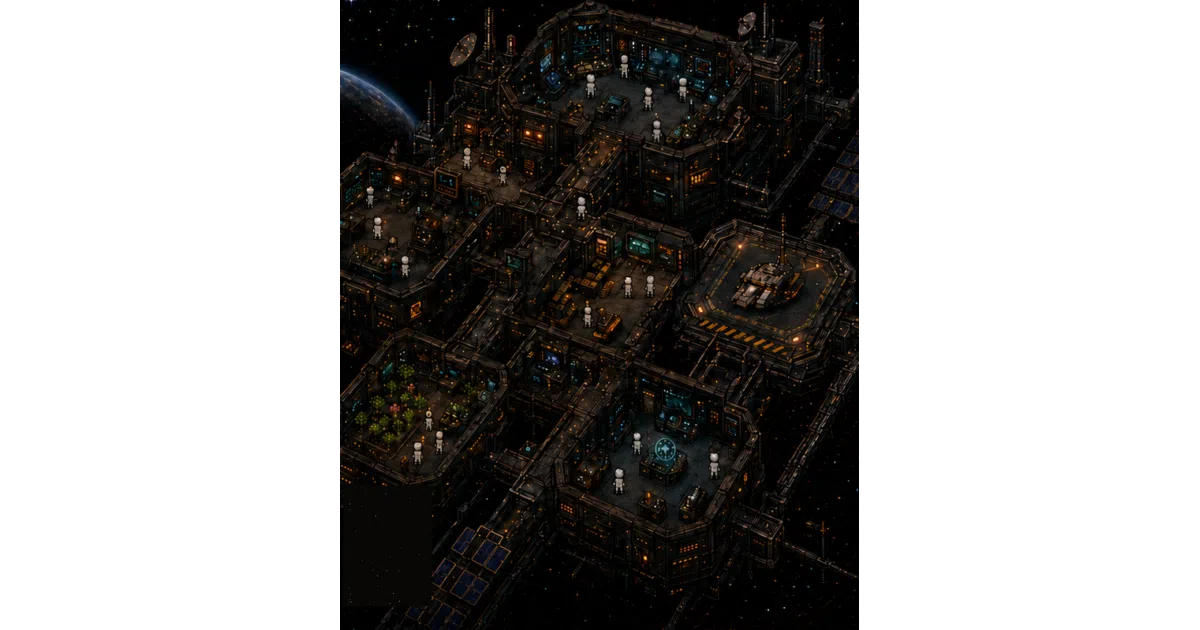
A local-first, bring-your-own-key desktop harness that turns multi-agent work into a pixel-art space station — the layout you draw is the workflow, and the interface never shows state the harness can't prove.
Velocity · 7d
+79
★ / day
Trend
↗accelerating
star history
What it does StarNet is a desktop harness for running a crew of AI agents that make real model calls, run real tools, and incur real cost — it explicitly refuses to animate a simulation. You create agents with distinct classes, personas, and loadouts; the harness runs several concurrently, each with its own workspace, transcript, memory, and bounded permissions. Under the hood it’s a Tauri shell, a vanilla-JS frontend, and a local Node sidecar built on core modules only, streaming events over localhost NDJSON/SSE. Bring an OpenRouter key or provider OAuth, or run keyless against a local Ollama model.
The interesting bit The station is the permission model, not a skin over it: a room is a capability-scoped team, a hallway is an authorized handoff lane, a placed object is a real capability grant. The project’s stated law — the interface must never assert state the harness cannot prove — reads as a pointed rebuttal to agent dashboards that render fiction. Spend, budgets, and run history persist on disk and are shown as-is.
Key highlights
- Local-first: station state, transcripts, memory, and ledgers stay on your machine; only provider calls leave it.
- BYOK done properly — keys live in the OS keychain via the sidecar, never in the frontend.
- Wire agents to Telegram, Discord, Slack, Signal, or Matrix; Night Shift lets them work unattended inside an explicit, logged leash.
- Task Briefs turn ambiguity into one concrete question with options instead of a silent wrong guess; finished work lands in the
OUTBOXas real files, not chat scrollback. - MCP connectors, cron schedules, reusable skills and recipes, plus an importer that mints agents from existing OpenClaw or Hermes homes.
Caveats
- Windows is the most-tested target; macOS has less real-world coverage, and Linux builds are internal artifacts, not a supported public release.
- MIT covers the code only — the StarNet name, logo, and artwork stay with the author, so forks must fully rebrand.
- The keyless Ollama route is free but, by the README’s own admission, slower and rougher on long tasks.
Verdict Worth a look if you want a self-hosted, BYOK multi-agent harness where permission boundaries are walls you can see instead of config you squint at. Skip if you need Linux support or consider pixel art a tax.
Frequently asked
- What is androoAGI/starnet?
- A local-first, bring-your-own-key desktop harness that turns multi-agent work into a pixel-art space station — the layout you draw is the workflow, and the interface never shows state the harness can't prove.
- Is starnet open source?
- Yes — androoAGI/starnet is open source, released under the MIT license.
- What language is starnet written in?
- androoAGI/starnet is primarily written in JavaScript.
- How popular is starnet?
- androoAGI/starnet has 1.8k stars on GitHub and is currently accelerating.
- Where can I find starnet?
- androoAGI/starnet is on GitHub at https://github.com/androoAGI/starnet.