aiprodcoder/MIXAPI
One API shape for Gemini, Claude, Qwen, and the rest
Corrals dozens of incompatible LLM APIs into a single self-hosted OpenAI-shaped endpoint with key management and billing built in.
Feature · 09 Jul 2026
An Open-Source Gateway Bets AI-Optimized Code Can Tame LLM Chaos
MIXAPI exists to collapse the sprawl of incompatible large-language-model APIs into a single, self-hosted OpenAI-compatible gateway with built-in key management, billing, and enterprise access controls.
Read the in-depth article →
Not currently ranked — collecting fresh signals.
star history
What it does
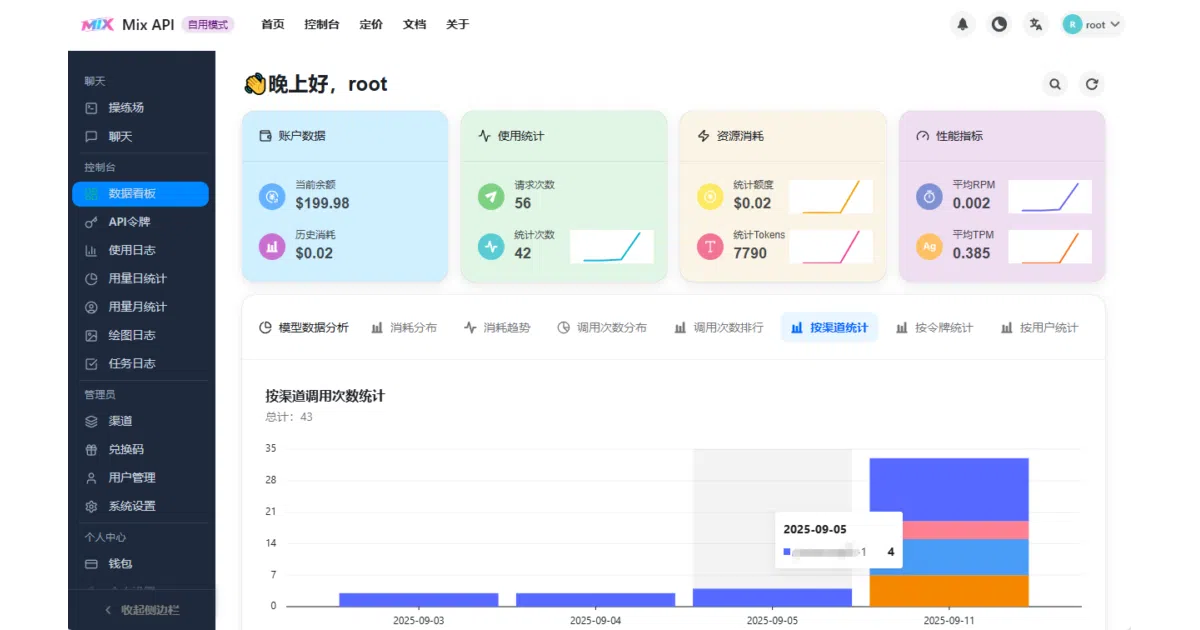
MIXAPI is a Go-based API gateway that sits between your application and a growing zoo of large-language-model providers. It translates requests and responses so that upstream services—whether Google Gemini, Anthropic Claude, Alibaba Qwen, Moonshot Kimi, or ByteDance Doubao—can all be addressed through standard OpenAI, Claude, or Gemini protocol shapes. Behind the proxy, it handles the unglamorous but necessary work of token rotation, rate limiting, usage dashboards, and per-token billing packages.
The interesting bit
The project is an explicit descendant of New-API and One-API, folding their features plus a bundle of third-party plugins into one deployable unit. The authors claim they turned the tables by having an AI optimize the hot-path forwarding code, allegedly lifting high-concurrency throughput by more than half. Whether or not you buy the 50% figure, the real utility is the management layer: channel grouping, weighted retries, cache-aware billing, and even a built-in chat UI at /chat2link.
Key highlights
- Normalizes domestic and international models behind familiar OpenAI
/v1/chat/completions, Anthropic/v1/messages, and Gemini/v1betaendpoints - Ships as a single binary or Docker container with SQLite by default; MySQL and PostgreSQL are optional
- Granular access control: token-scoped model allowlists, channel groups, daily and per-minute rate limits, and usage logging
- Commercial-adjacent features like prepaid packages, online recharge, and balance queries without login—though the default config disables pricing display for compliance
- Redis or in-memory caching for request deduplication and channel failover retries
Caveats
- The README notes that user input is filtered to collect only Chinese characters and strip “code characters,” which is an unusual choice for a developer-facing tool and worth scrutinizing if your prompts mix languages
- It is fundamentally a derivative integration of New-API and One-API; if you already run either, many features will feel familiar rather than novel
- A “PRO” sibling repository strips consumer billing features to focus on enterprise security auditing and privacy controls, so check whether your use case maps to the open-source or commercial fork
Verdict
Worth a look if you need a self-hosted Chinese-friendly LLM router with built-in monetization primitives and you’d rather not wire up provider SDKs yourself. Pass if you want a clean-slate architecture or heavy customization beyond the provided dashboard toggles.
Frequently asked
- What is aiprodcoder/MIXAPI?
- Corrals dozens of incompatible LLM APIs into a single self-hosted OpenAI-shaped endpoint with key management and billing built in.
- Is MIXAPI open source?
- Yes — aiprodcoder/MIXAPI is open source, released under the Apache-2.0 license.
- What language is MIXAPI written in?
- aiprodcoder/MIXAPI is primarily written in Go.
- How popular is MIXAPI?
- aiprodcoder/MIXAPI has 734 stars on GitHub.
- Where can I find MIXAPI?
- aiprodcoder/MIXAPI is on GitHub at https://github.com/aiprodcoder/MIXAPI.