ageitgey/face_recognition
Face recognition for people who don't want to read a PhD thesis first
A Python wrapper around dlib that turns face detection, landmark extraction, and identity matching into one-liners and shell commands.
Not currently ranked — collecting fresh signals.
star history
What it does
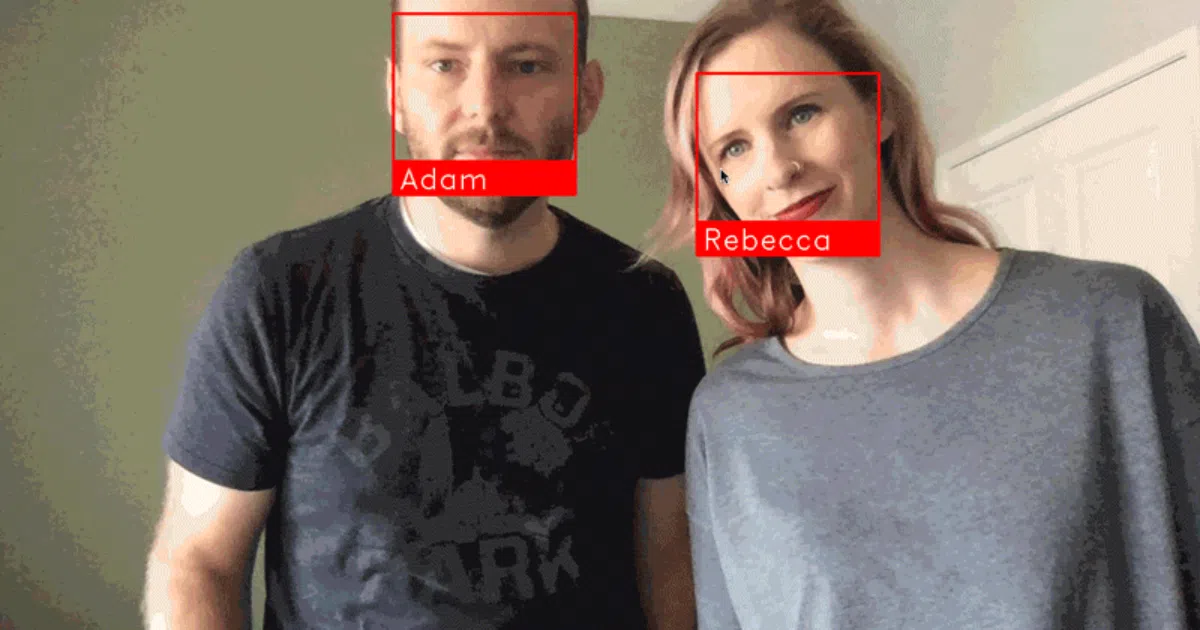
This library wraps dlib’s deep-learning face model into a Python API and two command-line tools: face_detection finds faces and returns pixel coordinates; face_recognition compares unknown faces against a folder of labeled reference photos and tells you who matches. It also exposes facial landmarks (eyes, nose, chin, etc.) for programmatic manipulation.
The interesting bit
The heavy lifting is dlib’s model, which the README claims hits 99.38% on the Labeled Faces in the Wild benchmark. The project’s actual value is in the ergonomics: you can pip-install it, point a CLI tool at two folders, and get comma-separated output. The “digital makeup” example suggests the author knows most users will try something silly before anything serious.
Key highlights
- CLI tools process single images or entire folders, with parallel CPU support (
--cpus -1) - Python API handles detection, 128-d face encodings, and landmark extraction in a few lines
- Optional CNN model for detection, but requires CUDA-enabled dlib for acceptable speed
- Runs on macOS, Linux, Raspberry Pi 2+, Jetson Nano, and FreeBSD; Windows is community-supported
- Pre-configured VM and Docker options for those who don’t want to build dlib from source
Caveats
- Windows is explicitly not officially supported; installation relies on community guides
- The Jetson Nano has a documented CUDA bug that causes silent failures unless you manually patch and recompile dlib
- The README’s “world’s simplest” claim is marketing; you still need to install cmake, dlib with Python bindings, and optionally wrestle with CUDA
Verdict
Good for prototypes, small-scale photo sorting, or teaching computer vision without touching C++. Skip it if you need production-grade inference at scale, real-time video on CPU-only hardware, or first-class Windows support.
Frequently asked
- What is ageitgey/face_recognition?
- A Python wrapper around dlib that turns face detection, landmark extraction, and identity matching into one-liners and shell commands.
- Is face_recognition open source?
- Yes — ageitgey/face_recognition is open source, released under the MIT license.
- What language is face_recognition written in?
- ageitgey/face_recognition is primarily written in Python.
- How popular is face_recognition?
- ageitgey/face_recognition has 56.9k stars on GitHub.
- Where can I find face_recognition?
- ageitgey/face_recognition is on GitHub at https://github.com/ageitgey/face_recognition.