SethGammon/Citadel
Durable Memory for Coding Agents That Outlives the Chat Window
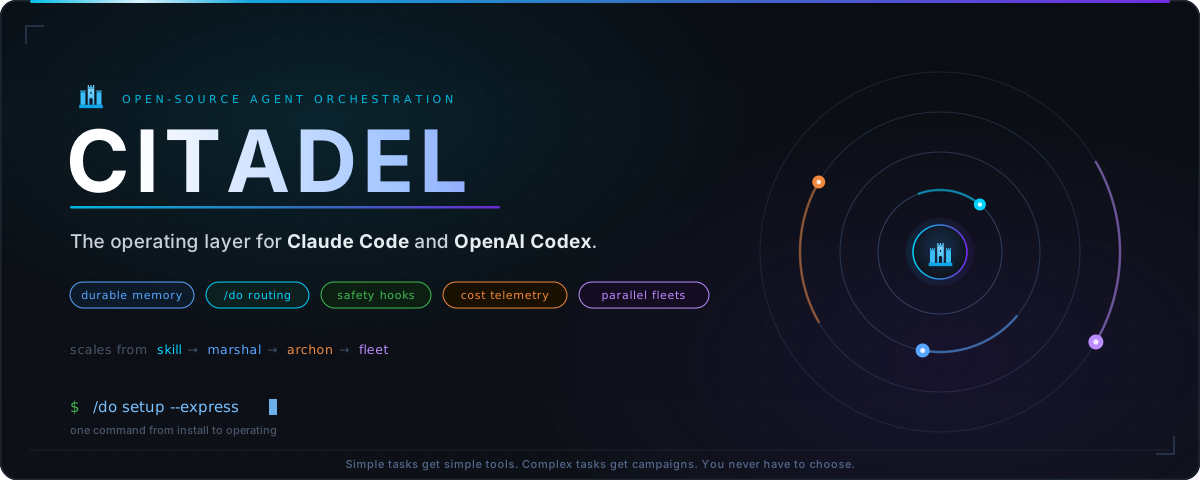
Citadel adds durable project memory, intent routing, and safety hooks so Claude Code and OpenAI Codex can work across real projects instead of isolated chats.
Not currently ranked — collecting fresh signals.
star history
What it does
Citadel wraps Claude Code and OpenAI Codex in a harness that turns one-off chats into repeatable engineering workflows. It stores project state, decisions, and telemetry in repo-local .planning/ files so work survives context resets and fresh threads. A /do router classifies plain-English requests and dispatches them to skills, marshals, archons, or parallel fleet agents running in isolated git worktrees.
The interesting bit
The router is deliberately cheap-first: it tries regex patterns, session state, and keyword lookups before bothering an LLM for classification. Most routine requests resolve without a single model call, which is a polite reversal of the usual “ask the oracle everything” default.
Key highlights
- Persistent memory lives in
.planning/files inside the target repo, not in cloud state or prompt hacks. - Safety hooks enforce file protection, quality gates, and policy checks across agent lifecycle events.
- Cost telemetry surfaces session spend through
/costand local dashboards instead of leaving you to guess. - Fleet mode splits large tasks across parallel agents with shared discoveries and isolated worktrees.
- The repository includes built-in skills, runtime adapters for both Claude Code and Codex, and a local verification suite.
Caveats
- Codex parity is explicitly on the roadmap, so Claude Code support appears more mature today.
- Fleet merge discipline and multi-operator team workflows are still being built out.
Verdict
Developers already using Claude Code or Codex for real project work will find Citadel closes the gap between “chatting with an agent” and “running an agentic engineering system.” If you are still re-explaining your codebase in every fresh session, this is worth a look; if you do not use those runtimes, there is nothing here to adopt.
Frequently asked
- What is SethGammon/Citadel?
- Citadel adds durable project memory, intent routing, and safety hooks so Claude Code and OpenAI Codex can work across real projects instead of isolated chats.
- Is Citadel open source?
- Yes — SethGammon/Citadel is open source, released under the MIT license.
- What language is Citadel written in?
- SethGammon/Citadel is primarily written in JavaScript.
- How popular is Citadel?
- SethGammon/Citadel has 928 stars on GitHub.
- Where can I find Citadel?
- SethGammon/Citadel is on GitHub at https://github.com/SethGammon/Citadel.