RuihengZhang/IFSOD-dataset
A heat-vision benchmark built for ten examples and moonless nights
It packages 4,815 thermal images and 23K annotations into three few-shot splits so detectors can learn new infrared targets from ten examples.
Not currently ranked — collecting fresh signals.
star history
What it does
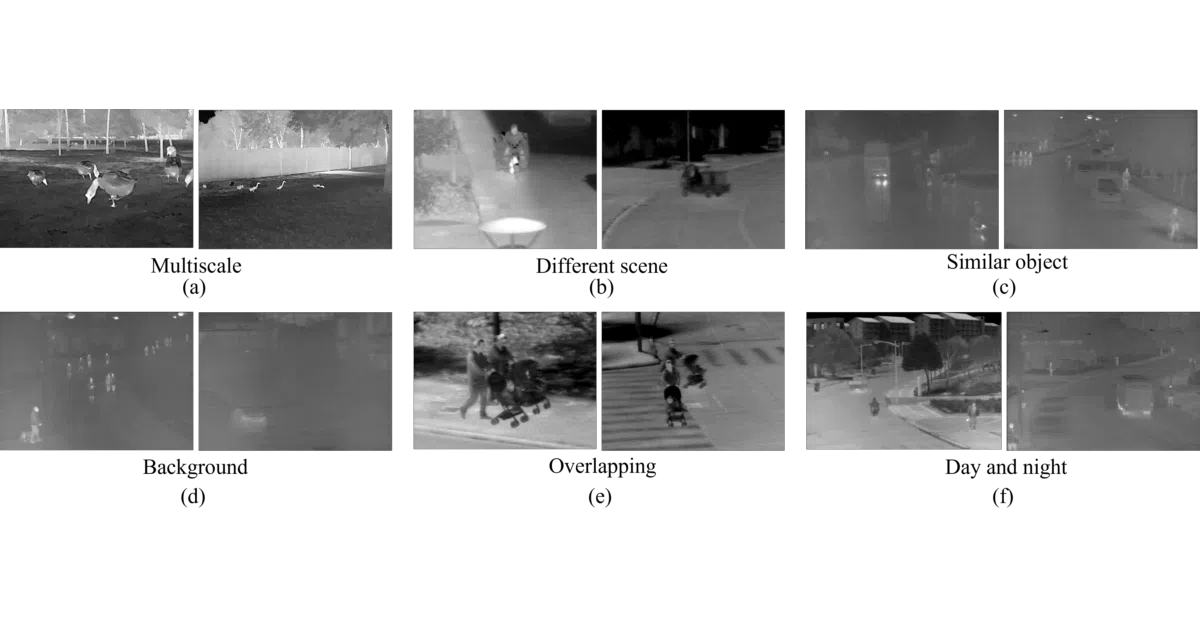
IFSOD collects 4,815 infrared images across 12 scenarios—urban, rural, night, and others—annotated with 23,333 instances across 18 categories including armored vehicles, pedestrians, and bicycles. The dataset follows the FsDet protocol and ships with three predefined partition seeds that rotate which classes serve as base data and which appear as novel classes with only 10-shot annotations. Average image resolution is 662×489 pixels.
The interesting bit
The authors treat class imbalance and scenario complexity as features, not bugs: the same category can be abundant base data in one split and a scarce novel class in another, forcing models to handle both high-volume thermal signatures and genuine few-shot generalization. It is purpose-built for the long tail of infrared surveillance where collecting thousands of labeled examples for every target type is impractical.
Key highlights
- 18 coarse-grained categories split across military and civilian taxonomies
- 12 complex scenarios including night and rural environments
- 3 predefined splits that rotate which categories are base versus 10-shot novel classes
- ~23K annotations in ~4.8K images at an average resolution of 662×489
- Published in IEEE TGRS 2025 with accompanying frequency-compression method
Caveats
- The README does not specify annotation formats beyond directory names like
Annotations/andJPEGImages/ - Class distribution is heavily skewed:
Peopleaccounts for over 14,000 instances while some novel classes have only 10 shots total - No training code or model weights are included; the repository is strictly the dataset asset and paper reference
Verdict
Computer-vision researchers working on thermal or low-light surveillance should grab this; if your use case already has thousands of labeled infrared samples per class, you will not find much novelty here.
Frequently asked
- What is RuihengZhang/IFSOD-dataset?
- It packages 4,815 thermal images and 23K annotations into three few-shot splits so detectors can learn new infrared targets from ten examples.
- Is IFSOD-dataset open source?
- Yes — RuihengZhang/IFSOD-dataset is an open-source project tracked on heatdrop.
- How popular is IFSOD-dataset?
- RuihengZhang/IFSOD-dataset has 1k stars on GitHub.
- Where can I find IFSOD-dataset?
- RuihengZhang/IFSOD-dataset is on GitHub at https://github.com/RuihengZhang/IFSOD-dataset.