RoboTwin-Platform/RoboTwin
A gym for robots that need both hands
RoboTwin 2.0 generates synthetic training data and benchmarks for bimanual manipulation, because two arms are harder than one and real-world demos are expensive.
Not currently ranked — collecting fresh signals.
star history
What it does RoboTwin is a simulation platform built on IsaacLab for dual-arm robotic manipulation. It generates synthetic demonstration trajectories and provides standardized tasks to train and evaluate policies like ACT, DP3, RDT, and various VLA models. The project also maintains a public leaderboard and has released over 100,000 pre-collected trajectories, though it nudges users toward generating their own to match specific task and robot configurations.
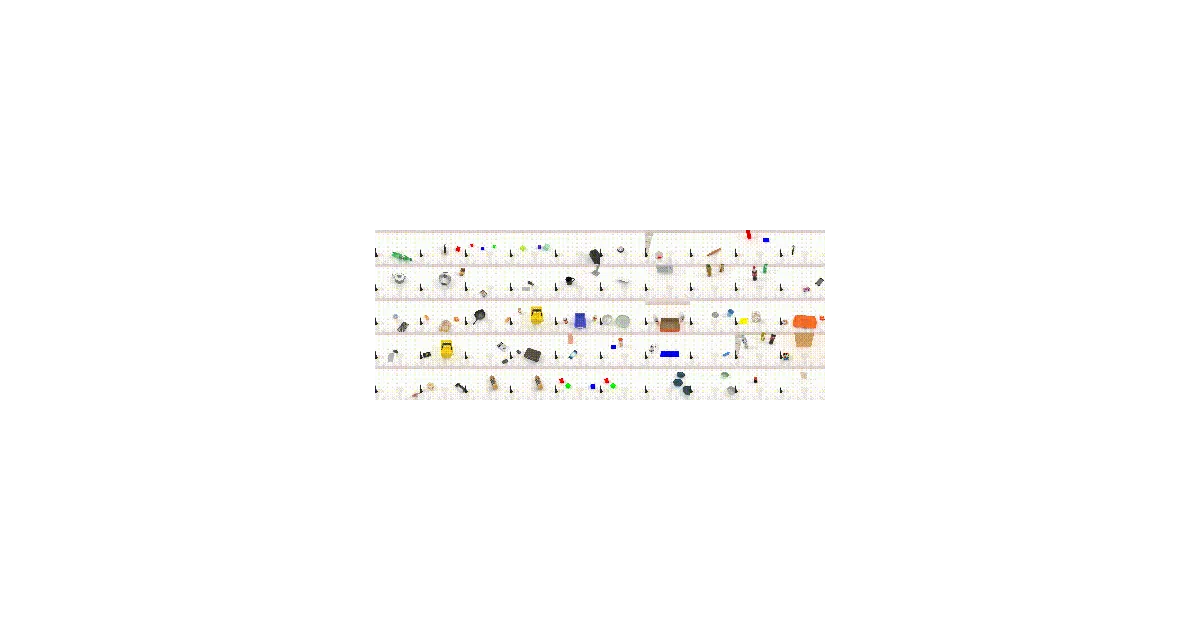
The interesting bit The “strong domain randomization” pitch is the core bet: instead of chasing photorealism, it randomizes textures, lighting, and object placements aggressively so policies trained in simulation transfer better to messy reality. The platform also tracks cross-embodiment performance — whether a policy trained on one robot arm geometry survives on another — which is where a lot of sim-to-real research quietly falls apart.
Key highlights
- Supports 50+ bimanual tasks with configurable difficulty and language conditioning
- Ships integration branches for IsaacLab-Arena, RLinf, and StarVLA
- Public leaderboard tracks visual robustness, language diversity, and multi-task generalization
- CVPR 2025 Highlight paper; active challenge track at CVPR 2025 MEIS Workshop
- Active maintenance: bug fixes for Piper wrist, DP3 eval, ACT deployment posted in recent months
Caveats
- The 2.0 paper is still under review as of the README date; some claims remain unvetted
- Several listed policy integrations (G3Flow, HybridVLA, SmolVLA, AVR, UniVLA) are marked TODO
- Pre-collected dataset is large but explicitly described as less configurable than user-generated data
Verdict Worth a look for robotics researchers working on imitation learning or VLA models who need a bimanual benchmark with less hardware overhead. Less useful if your problem is single-arm or you already have a reliable real-world data pipeline you prefer.
Frequently asked
- What is RoboTwin-Platform/RoboTwin?
- RoboTwin 2.0 generates synthetic training data and benchmarks for bimanual manipulation, because two arms are harder than one and real-world demos are expensive.
- Is RoboTwin open source?
- Yes — RoboTwin-Platform/RoboTwin is open source, released under the MIT license.
- What language is RoboTwin written in?
- RoboTwin-Platform/RoboTwin is primarily written in Python.
- How popular is RoboTwin?
- RoboTwin-Platform/RoboTwin has 2.9k stars on GitHub.
- Where can I find RoboTwin?
- RoboTwin-Platform/RoboTwin is on GitHub at https://github.com/RoboTwin-Platform/RoboTwin.