QmiAI/Qmedia
Self-hosted RAG for creators who hoard text, images, and shorts
Qmedia is a locally deployable multimodal search engine that lets content creators query their own images, text, and short videos through a card-based RAG interface.
Not currently ranked — collecting fresh signals.
star history
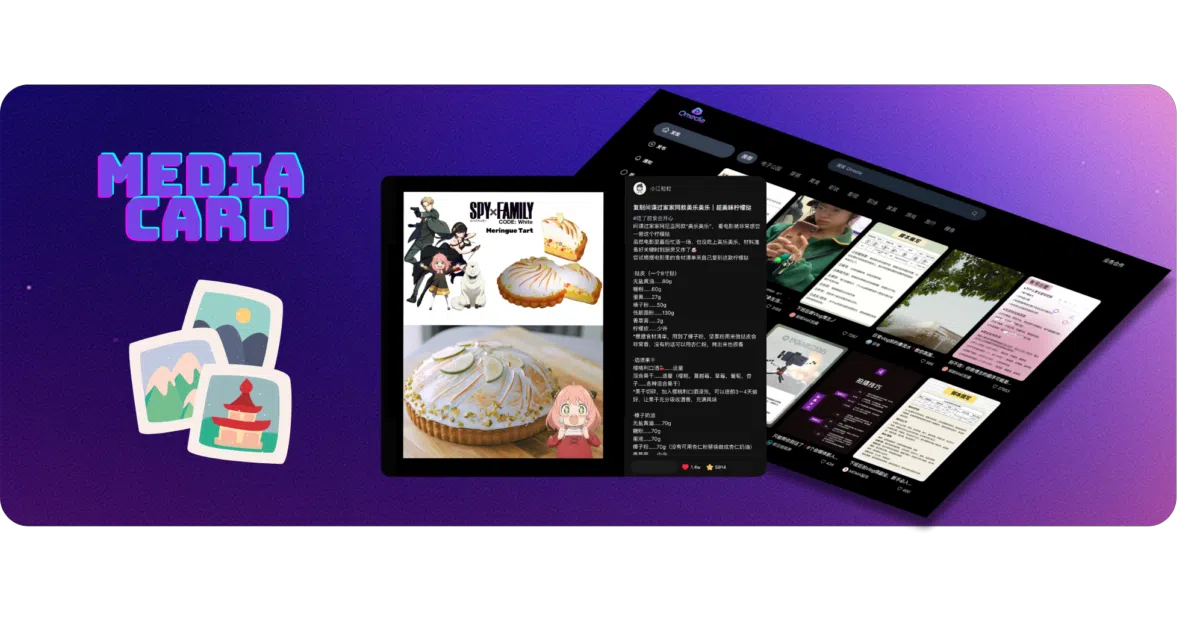
What it does Qmedia indexes your local media—images, text, and short videos—so you can search across them with natural language. It breaks content into structured cards, extracts transcriptions and OCR text, and answers questions via a multimodal RAG pipeline built on LlamaIndex. The whole stack—Next.js frontend, Python RAG server, and model services—can run offline on local hardware.
The interesting bit
Qmedia is largely glue code—Ollama, LlamaIndex, CLIP, BGE, and Faster Whisper wired together—but the value is in the packaging: it targets the creator workflow rather than generic document chat, surfacing drafts and clips as browsable content cards with source attribution. The model layer (mm_server) is also decoupled from the RAG layer (mmrag_server), so you can swap local LLMs or embedders without touching the Next.js frontend.
Key highlights
- Fully local deployment option using Ollama for LLMs, CLIP/BGE for embeddings, and Faster Whisper for video transcription.
- Web UI built with Next.js and Tailwind, styled after “XHS” (Xiaohongshu/Red) card layouts.
- Modular architecture: model services, RAG retrieval, and web frontend can be deployed independently.
- Ships with pseudo/demo data in
assets/that the pipeline automatically indexes on first run. - Integrates Google content search alongside local RAG (per the feature list).
Caveats
- Several video-analysis features—highlight identification, style recognition, and deep content breakdown—are listed as unchecked roadmap items, not implemented yet.
- Visual understanding via
llava-llama3is also marked as pending, so advanced image reasoning may be limited today. - The setup currently relies on placeholder “pseudo data” that you must manually replace with your own media and card metadata.
Verdict Content creators sitting on terabytes of unsorted clips and drafts will find this a practical starting point for a private media archive. If you need polished, end-to-end video editing or viral-content analytics, wait for the roadmap to catch up.
Frequently asked
- What is QmiAI/Qmedia?
- Qmedia is a locally deployable multimodal search engine that lets content creators query their own images, text, and short videos through a card-based RAG interface.
- Is Qmedia open source?
- Yes — QmiAI/Qmedia is open source, released under the MIT license.
- What language is Qmedia written in?
- QmiAI/Qmedia is primarily written in TypeScript.
- How popular is Qmedia?
- QmiAI/Qmedia has 638 stars on GitHub.
- Where can I find Qmedia?
- QmiAI/Qmedia is on GitHub at https://github.com/QmiAI/Qmedia.