OthmanAdi/planning-with-files
Disk-based memory for coding agents that forget the plan
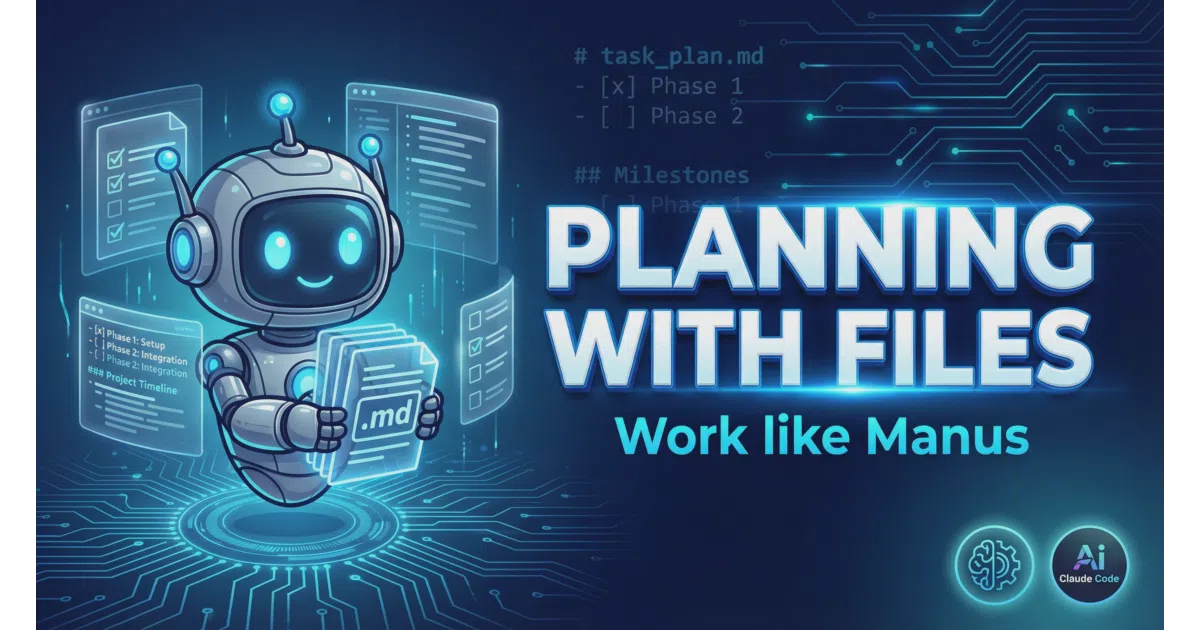
Persistent markdown plans and shell-script gates keep long-running AI tasks on track across sessions, agents, and context wipes.
Velocity · 7d
+19
★ / day
Trend
↗accelerating
star history
What it does
This project is essentially a filesystem convention plus a bundle of shell scripts that force AI coding agents to write their plans to disk, check progress against those files, and attest completion with SHA-256 hashes. It turns a local markdown file into shared memory that survives /clear, reboots, and handoffs between different agents or IDEs.
The interesting bit
The cleverness is in the boring parts: exhaustive release notes show the authors wrestling with POSIX portability, Windows exec-bit quirks, and keeping a dozen IDE-specific SKILL.md variants in version parity. The skill is mostly glue, but it is obsessively tested glue that closes race conditions with atomic temp-rename and optional flock advisory locks.
Key highlights
- Markdown plans act as crash-proof state that outlives chat context.
- SHA-256 attestation in
attest-plan.shblocks tampering and locks a plan across runtimes. - Slug-mode and
resolve-plan-dir.shisolate parallel tasks so multiple agents don’t stomp on each other. - Supports Claude Code, Cursor, Codex CLI, Pi, OpenCode, and others via mirrored
SKILL.mdadapters. - Community has already forked it for multi-agent orchestration, interview workflows, and finance agents.
Caveats
- The README is almost entirely release notes and badges; the actual mechanics of the planning protocol are implied rather than explained up front.
- Benchmark claims (96.7% pass rate, 3/3 A/B wins) are presented as badge graphics without reproducible detail in the visible source.
Verdict
Worth a look if you run long, multi-step agentic tasks and need a dead-simple way to persist state across sessions. Skip it if you were hoping for a standalone planner algorithm—this is an orchestration layer, not a reasoning engine.
Frequently asked
- What is OthmanAdi/planning-with-files?
- Persistent markdown plans and shell-script gates keep long-running AI tasks on track across sessions, agents, and context wipes.
- Is planning-with-files open source?
- Yes — OthmanAdi/planning-with-files is open source, released under the MIT license.
- What language is planning-with-files written in?
- OthmanAdi/planning-with-files is primarily written in Python.
- How popular is planning-with-files?
- OthmanAdi/planning-with-files has 27.6k stars on GitHub and is currently accelerating.
- Where can I find planning-with-files?
- OthmanAdi/planning-with-files is on GitHub at https://github.com/OthmanAdi/planning-with-files.