Omegastick/pytorch-cpp-rl
Reinforcement learning escapes Python's gravity
A C++ port of PyTorch RL algorithms for when Python isn't an option on the user's machine.
Not currently ranked — collecting fresh signals.
star history
What it does
CppRl implements A2C and PPO using PyTorch’s C++ frontend, with support for recurrent policies, continuous and discrete control. It ships with a ZeroMQ-based OpenAI Gym server so you can still test against standard environments. The author needed RL in a desktop app without asking users to install Python.
The interesting bit
This is essentially a faithful C++ translation of ikostrikov’s well-known PyTorch RL suite — same API, same algorithms, different ABI. The honesty is refreshing: the README calls it “very heavily based” and admits the Gym bridge involves “a few extra copies” that hurt performance on image observations.
Key highlights
- A2C and PPO implemented in libtorch, no Python runtime required
- Recurrent GRU policies and both continuous/discrete action spaces
- Cross-platform: tested on Windows 10, Ubuntu 16.04/18.04
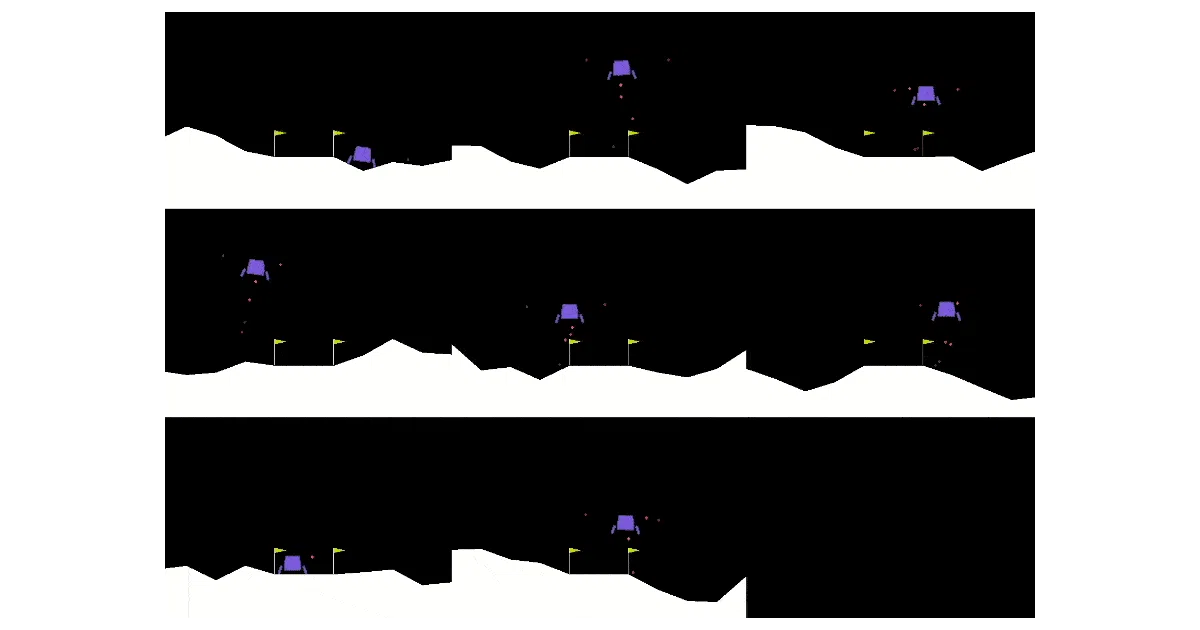
- ~60 seconds to 200 reward on LunarLander-v2 (i7-8550U), per the author’s laptop
- CMake build, most deps included as submodules; libtorch is the only external install
Caveats
- Windows performance runs about 75% of Linux; the author is investigating
- The Gym server/client path is explicitly not well optimized for image observations
- You are trading the Python ecosystem for deployability — know which you need
Verdict
Grab this if you’re shipping RL inside a C++ application and can’t bundle Python. Skip it if you’re doing research in a Jupyter notebook; you’re losing the Python tooling for no gain.
Frequently asked
- What is Omegastick/pytorch-cpp-rl?
- A C++ port of PyTorch RL algorithms for when Python isn't an option on the user's machine.
- Is pytorch-cpp-rl open source?
- Yes — Omegastick/pytorch-cpp-rl is open source, released under the MIT license.
- What language is pytorch-cpp-rl written in?
- Omegastick/pytorch-cpp-rl is primarily written in C++.
- How popular is pytorch-cpp-rl?
- Omegastick/pytorch-cpp-rl has 531 stars on GitHub.
- Where can I find pytorch-cpp-rl?
- Omegastick/pytorch-cpp-rl is on GitHub at https://github.com/Omegastick/pytorch-cpp-rl.