Nimbleway/webrouter
One typed API for every web tool your agent might want
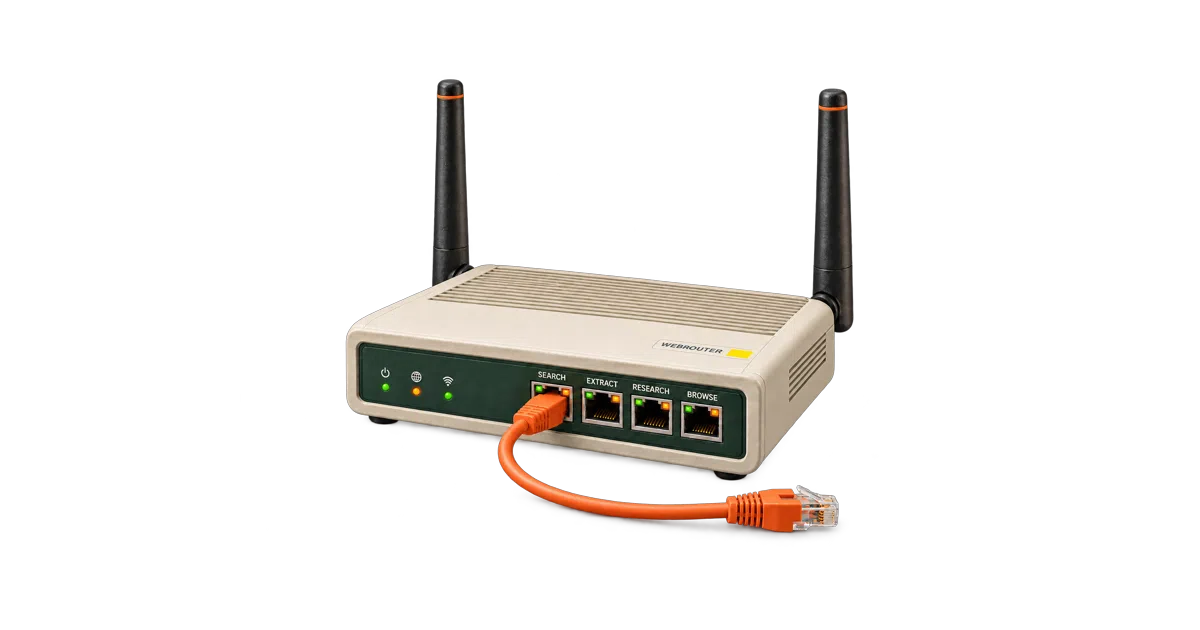
WebRouter wraps a dozen search backends, extractors, answer engines and browsers behind one interface, so switching providers is an argument, not a rewrite.
Too new to rank. Velocity needs a few days of history.
not enough history yet
star history
What it does
WebRouter gives agents a single typed interface for web work: search, page extraction, direct answers, deep research, live data, and browser sessions. Behind that interface sit twelve search backends, seven extract backends, five answer backends, three research backends, and a handful of browser providers. The same call shape and result shape hold no matter which backend answers — and response.provider tells you which one did.
The interesting bit
The default auto provider routes each request across every backend you hold a key for, ranked by frozen benchmark results, with keyless options as fallback. There’s also a max mode for extraction that fires every backend at once and takes the first document back — you pay for every fetch started, but you get the fastest possible answer. Provider names are honest about their limits: ask brave to extract and it refuses, naming the backends that actually can.
Key highlights
- Works with no API key at all — keyless backends (Jina Reader, You.com MCP, Exa MCP) cover the basics.
- Option mapping is documented per backend, with exact request fields in
contracts/search/<name>.json. - Governance features: keys scoped per provider, unsupported constraints rejected, explicit opt-in required for vendor writes.
- Ships an MCP server, so it plugs into agent frameworks that speak MCP.
- Apache 2.0, Python 3.11–3.13, runnable examples that mostly need no credentials.
Caveats
- Explicitly a developer preview — the API may change before 1.0.
- Option support varies widely by backend (DeepSeek stuffs four options into a 128-character query; Brave only maps
search_depthatlite), so behavior is only as uniform as the underlying APIs allow. autowill happily use a research-only key for searches — and those calls bill.
Verdict Worth a look if you’re building agents and tired of writing a bespoke client per web provider. If you’ve committed to one vendor and are happy there, it’s a solution to a problem you don’t have yet.
Frequently asked
- What is Nimbleway/webrouter?
- WebRouter wraps a dozen search backends, extractors, answer engines and browsers behind one interface, so switching providers is an argument, not a rewrite.
- Is webrouter open source?
- Yes — Nimbleway/webrouter is open source, released under the Apache-2.0 license.
- What language is webrouter written in?
- Nimbleway/webrouter is primarily written in Python.
- How popular is webrouter?
- Nimbleway/webrouter has 849 stars on GitHub.
- Where can I find webrouter?
- Nimbleway/webrouter is on GitHub at https://github.com/Nimbleway/webrouter.