MemoriLabs/Memori
Your agents forget everything. Memori treats that as a bug.
Memori exists so your agents stop forgetting everything the moment a session ends.
Velocity · 7d
−1.0
★ / day
Trend
↘cooling
star history
What it does
Memori sits between your agents and their existing infrastructure to persist structured memory across sessions. It wraps standard LLM clients—OpenAI, Anthropic, Gemini, and others—to automatically capture conversation and execution context in the background. The system organizes memories around entities, processes, and sessions, then recalls relevant state when needed without bloating prompts.
The interesting bit
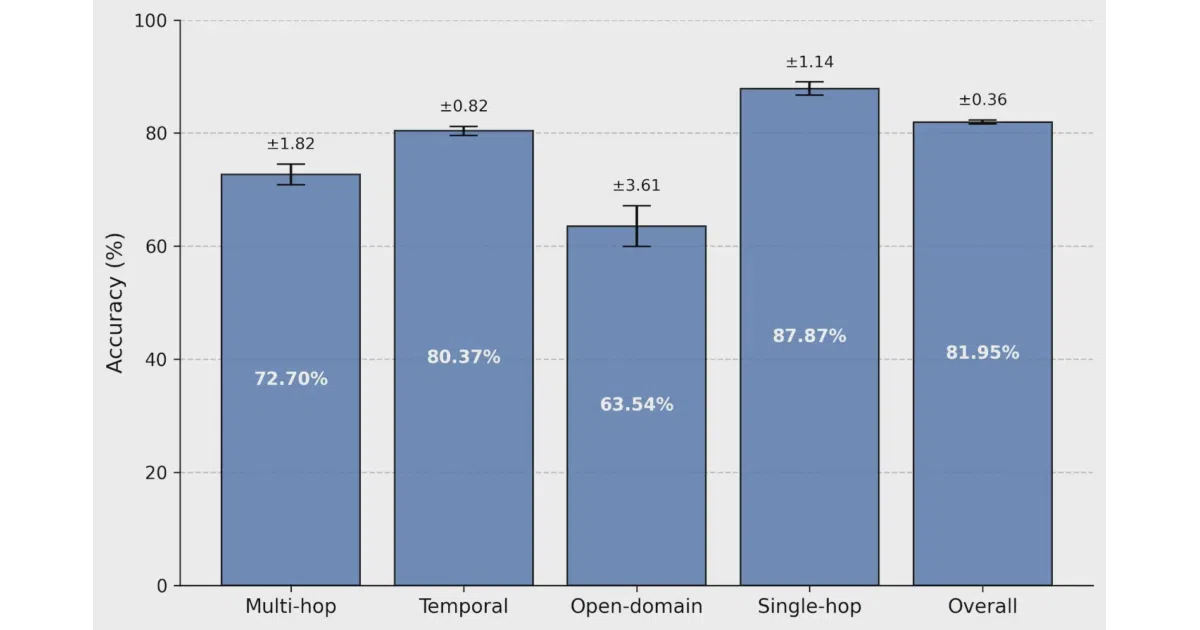
The project pitches itself as infrastructure rather than a framework: it is datastore-agnostic and offers a bring-your-own-database option, so you do not have to migrate off your existing data infrastructure to use it. It also claims to outperform Zep, LangMem, and Mem0 on the LoCoMo long-conversation benchmark while using about 4.97% of the token footprint of full-context prompting.
Key highlights
- LLM-agnostic wrappers for Python and TypeScript that intercept and persist chat completions automatically
- Drop-in plugins for OpenClaw and Hermes agents, plus an MCP server for Claude Code, Cursor, and similar tools
- Structured memory augmentation in the background across entities, processes, and sessions (facts, preferences, relationships, rules, skills)
- Deployable across managed cloud, single-tenant cloud, VPC, and on-premises
- LoCoMo benchmark result: 81.95% accuracy with ~1,294 tokens per query, which the project claims is about 4.97% of a full-context approach
Caveats
- The README pushes Memori Cloud heavily—most quickstarts assume an API key, and the free tier is rate-limited
- BYODB is mentioned but self-hosting details live in external docs, not the README
- Quota limits for the free tier and Advanced Augmentation are mentioned, but exact caps are not listed
Verdict
Worth evaluating if you need cross-session agent memory that works across multiple LLMs and frameworks. Keep in mind that the README emphasizes the hosted cloud path; BYODB and on-premises deployment are mentioned but not detailed inside the repository itself.
Frequently asked
- What is MemoriLabs/Memori?
- Memori exists so your agents stop forgetting everything the moment a session ends.
- Is Memori open source?
- Yes — MemoriLabs/Memori is an open-source project tracked on heatdrop.
- What language is Memori written in?
- MemoriLabs/Memori is primarily written in Python.
- How popular is Memori?
- MemoriLabs/Memori has 17.1k stars on GitHub and is currently cooling off.
- Where can I find Memori?
- MemoriLabs/Memori is on GitHub at https://github.com/MemoriLabs/Memori.