GaiaNet-AI/gaianet-node
Self-host an AI agent node with bash and WebAssembly
It exists to let you turn a bare machine into a RAG-capable AI agent node—public or local—without assembling the inference stack yourself.
Not currently ranked — collecting fresh signals.
star history
What it does
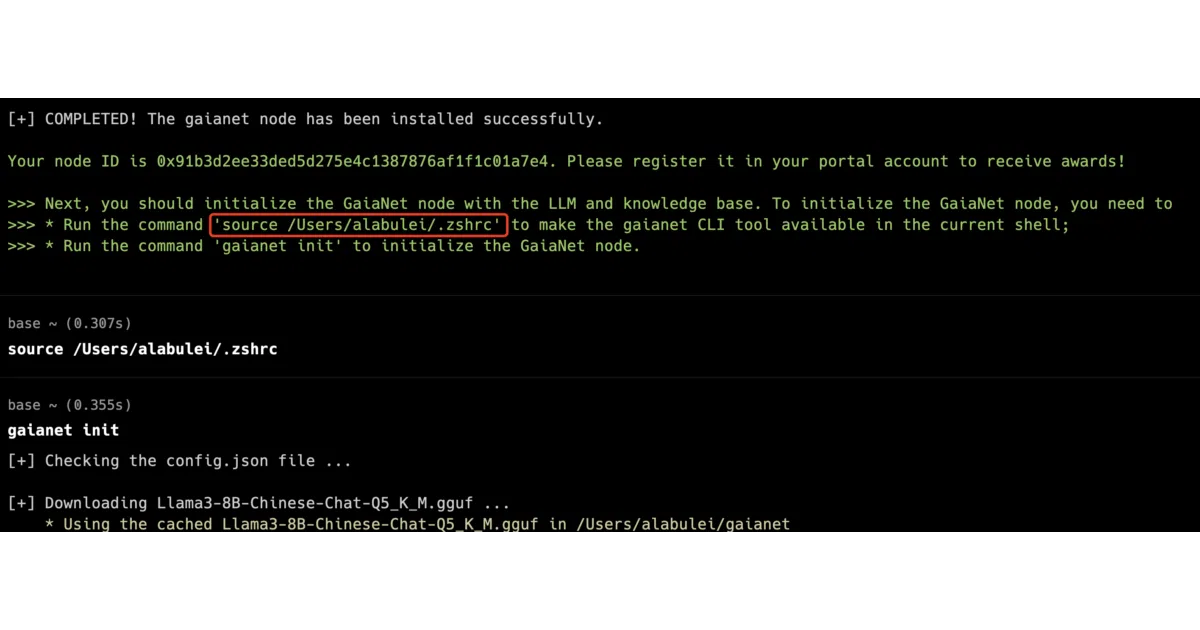
GaiaNet node is an opinionated shell-script installer and CLI manager for a self-hosted AI stack. It pulls down the WasmEdge runtime with its GGML plugin, a Qdrant vector database binary, a pre-built rag-api-server.wasm module, and open-source GGUF chat and embedding models. Once initialized, it starts a local API server that answers questions using retrieval-augmented generation, then exposes the node either publicly on a gaianet.network subdomain or strictly over localhost.
The interesting bit The serving layer runs as a WebAssembly module inside WasmEdge rather than the usual Python inference pipeline. That makes the API server portable bytecode, while the heavy lifting happens through a WASI-NN plugin. The whole thing is orchestrated by bash, which feels almost retro given the Web3 branding.
Key highlights
- Ships as a shell installer that bootstraps WasmEdge, Qdrant, model weights, and a WASM-based RAG API server
- Serves a chat dashboard and API endpoint after
gaianet start, with an optional public URL via GaiaNet domains - Supports custom
config.jsonfiles and pre-set model/knowledge-base combinations (e.g., Llama-3 8B with a London guidebook) - Can run fully local-only or publicly accessible; configuration updates require a re-initialization
- Uses standard GGUF model files and Qdrant snapshots, so you are not locked into proprietary model formats
Caveats
- The README is almost entirely quickstart and installation output; the actual decentralization mechanics—consensus, peer discovery, economics—are never explained in the sources
- Configuration changes force you to re-run the full
initsequence, which re-downloads model and snapshot files - The project is largely an orchestration layer: the heavy lifting is done by WasmEdge, Qdrant, and LlamaEdge, not novel code in this repo
Verdict Worth a look if you want a low-friction way to host a RAG-enabled LLM endpoint on your own hardware through a WebAssembly stack. Skip it if you are looking for a documented decentralized protocol specification or a native model-training framework.
Frequently asked
- What is GaiaNet-AI/gaianet-node?
- It exists to let you turn a bare machine into a RAG-capable AI agent node—public or local—without assembling the inference stack yourself.
- Is gaianet-node open source?
- Yes — GaiaNet-AI/gaianet-node is open source, released under the GPL-3.0 license.
- What language is gaianet-node written in?
- GaiaNet-AI/gaianet-node is primarily written in Shell.
- How popular is gaianet-node?
- GaiaNet-AI/gaianet-node has 5k stars on GitHub.
- Where can I find gaianet-node?
- GaiaNet-AI/gaianet-node is on GitHub at https://github.com/GaiaNet-AI/gaianet-node.