Filimoa/open-parse
Parsing PDFs like a human, not a paper shredder
Open Parse chunks complex PDFs by visual layout and semantic structure, sparing your RAG pipeline from naive text-splitter carnage.
Not currently ranked — collecting fresh signals.
star history
What it does
Open Parse is a Python library that ingests complex documents and emits structured, semantically coherent chunks built for LLM retrieval pipelines. It uses visual layout analysis to preserve headings, sections, and tables rather than flattening everything into raw text. The output is Pydantic-serialized nodes that you can feed directly into a vector store or a language model.
The interesting bit
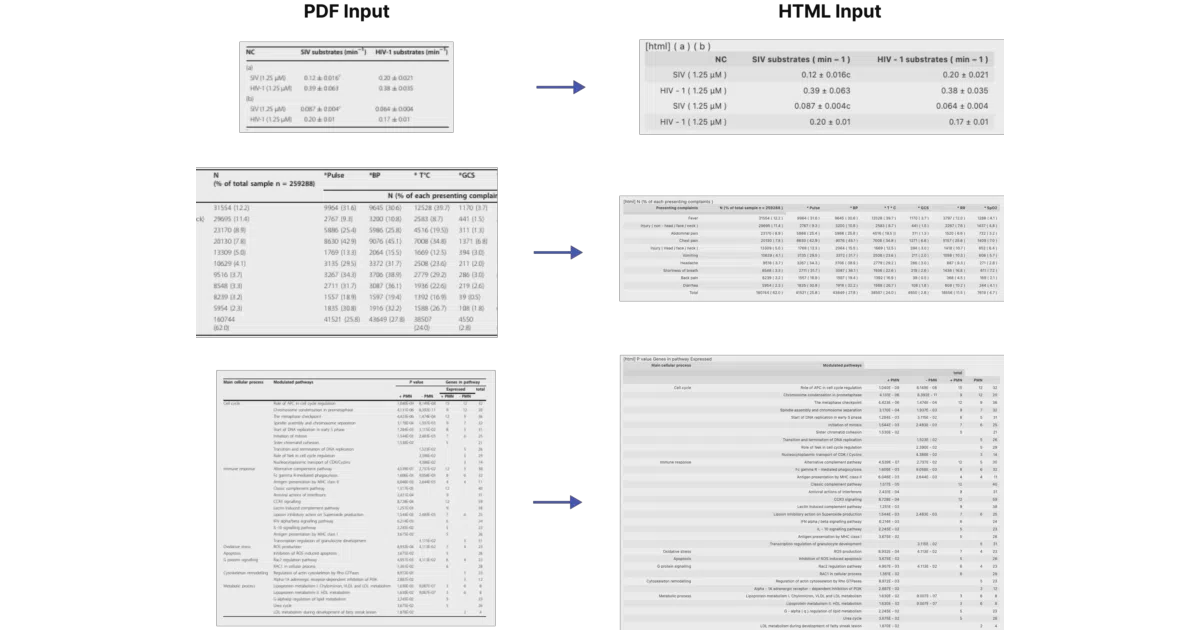
The library treats chunking as a semantic grouping problem, not just a slicing problem. It can cluster related nodes by embedding similarity, and it attempts to reconstruct tables as clean Markdown instead of leaving them as garbled rows of text. That sounds like table stakes until you realize most open-source parsers still fail at both.
Key highlights
- Visually-driven layout parsing that attempts to respect document structure (headings, sections, bullets) instead of doing naive text splitting.
- Optional semantic ingestion pipeline that embeds nodes and clusters them by similarity to form human-like chunks.
- Table extraction into Markdown via optional deep-learning backends, including a
unitableintegration the authors label state-of-the-art. - Extensible post-processing: you can inject your own steps into the parsing pipeline.
- Built on Pydantic, so serialization to dict or JSON is handled natively.
Caveats
- The current table-detection model (Microsoft Table Transformer) is explicitly described as subpar by the maintainers, which drags down downstream
unitableresults until a better detector is swapped in. - OCR support is not fully self-contained; the library expects a local Tesseract dependency to be available.
- PyMuPDF is listed as a table-extraction backend, but the README flags its commercial licensing, so check your compliance before using it in production.
Verdict
You should look at this if you are building RAG ingestion pipelines and tired of watching your retrieval quality die inside TokenTextSplitter. If you already have a paid Document AI contract or only process perfectly clean HTML, you probably do not need another parser in your stack.
Frequently asked
- What is Filimoa/open-parse?
- Open Parse chunks complex PDFs by visual layout and semantic structure, sparing your RAG pipeline from naive text-splitter carnage.
- Is open-parse open source?
- Yes — Filimoa/open-parse is open source, released under the MIT license.
- What language is open-parse written in?
- Filimoa/open-parse is primarily written in Python.
- How popular is open-parse?
- Filimoa/open-parse has 3.2k stars on GitHub.
- Where can I find open-parse?
- Filimoa/open-parse is on GitHub at https://github.com/Filimoa/open-parse.