FedML-AI/FedML
FedML tries to own the full ML stack, from clouds to smartphones
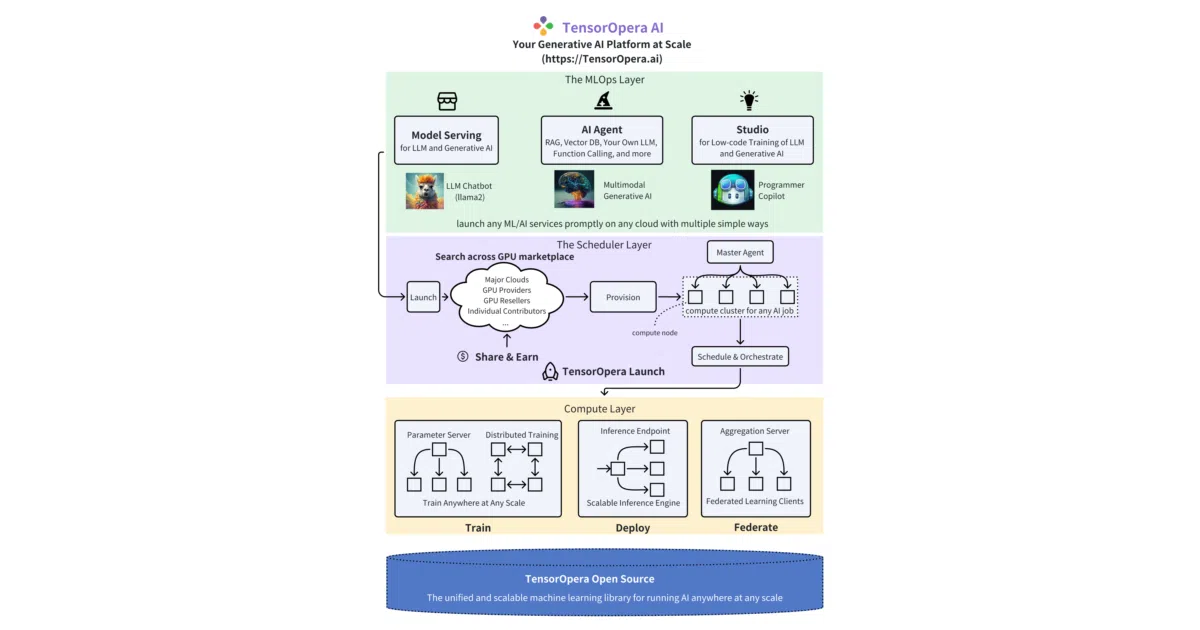
It bundles distributed training, model serving, federated learning, and cross-cloud scheduling into one Python library so you don't have to stitch together half a dozen tools.
Not currently ranked — collecting fresh signals.
star history
What it does
FedML is a Python library that attempts to unify distributed training, model serving, federated learning, and job scheduling under one roof. It targets GPU clouds, on-prem clusters, edge servers, and even smartphones, using a component called TensorOpera Launch to match jobs to hardware. The open-source code serves as the foundation for TensorOpera AI, a commercial platform that adds managed GPU marketplaces and pre-built job templates.
The interesting bit
Instead of specializing in one layer of the stack, FedML tries to connect them all—most notably by treating smartphones as first-class citizens for on-device federated learning. That breadth is unusual; most infrastructure projects pick a narrower fight.
Key highlights
- Combines distributed training, model serving, federated learning, and cross-cloud scheduling in a single library
TensorOpera Launchpairs AI jobs with GPU resources across public clouds, private clusters, and on-premise hardware- Federated learning component includes on-device training for smartphones and cross-cloud GPU servers
- Tightly integrated with the commercial TensorOpera AI platform, which offers pre-built jobs and a GPU marketplace
- The README bills the federated learning module as “the world’s first FLOps” platform
Caveats
- The README is heavy on vision and light on mechanics; it offers no benchmarks, API examples, or detailed architecture docs
- The line between the open-source library and the commercial TensorOpera AI service is blurry—many features described seem to require the paid platform
- Descriptions rely on vague superlatives rather than concrete technical claims
Verdict
Worth a look if you want one umbrella project that covers training, serving, and federated learning. Skip it if you prefer best-of-breed components with clear, standalone documentation.
Frequently asked
- What is FedML-AI/FedML?
- It bundles distributed training, model serving, federated learning, and cross-cloud scheduling into one Python library so you don't have to stitch together half a dozen tools.
- Is FedML open source?
- Yes — FedML-AI/FedML is open source, released under the Apache-2.0 license.
- What language is FedML written in?
- FedML-AI/FedML is primarily written in Python.
- How popular is FedML?
- FedML-AI/FedML has 4.1k stars on GitHub.
- Where can I find FedML?
- FedML-AI/FedML is on GitHub at https://github.com/FedML-AI/FedML.