DataXujing/YOLOv8
YOLOv8 architecture dissected, with TensorRT and Ascend deployment
Chinese-language walkthrough of YOLOv8’s architectural changes from YOLOv5, plus configs and deployment paths for TensorRT, Huawei Ascend, and Android.
Not currently ranked — collecting fresh signals.
star history
What it does
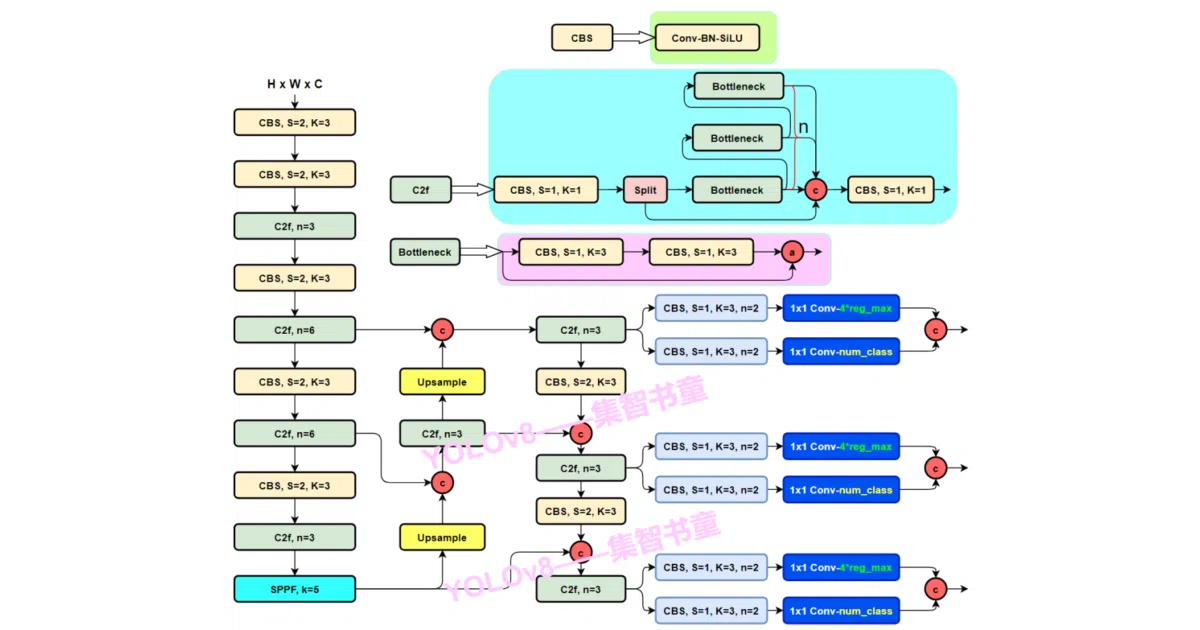
This repository is a detailed educational wrapper around the official ultralytics-8.0.0 package. It provides architectural comparisons between YOLOv5 and YOLOv8—charting the move to C2f modules, decoupled heads, anchor-free detection, and Task-Aligned Assigner—alongside YAML model configs and dataset templates for training custom detectors.
The interesting bit It functions as a Chinese-language field guide that bridges the official Ultralytics docs and hardware-specific deployment, explicitly targeting NVIDIA TensorRT, Huawei Ascend, and Android. The value is in the diff, not the code.
Key highlights
- Side-by-side breakdown of backbone, PAN-FPN, head, and loss changes versus YOLOv5
- Ready-to-use
yolov8s.yamland dataset config examples for custom training - Targets three deployment stacks: TensorRT, Huawei Ascend, and Android
- Heavily illustrated with architecture diagrams and inline PyTorch module snippets
Caveats
- The README is entirely in Chinese and dives straight into advanced architectural comparisons without preamble
- Deployment details for TensorRT, Ascend, and Android are promised in the project description but not visible in the provided README snippets, which focus on architecture theory
- It is essentially a tutorial and configuration layer atop the official Ultralytics package
Verdict Worth bookmarking if you are a Chinese-speaking developer who wants a guided architectural tour before shipping YOLOv8 to edge devices. If you already live in the official Ultralytics repository, you can skip the middleman.
Frequently asked
- What is DataXujing/YOLOv8?
- Chinese-language walkthrough of YOLOv8’s architectural changes from YOLOv5, plus configs and deployment paths for TensorRT, Huawei Ascend, and Android.
- Is YOLOv8 open source?
- Yes — DataXujing/YOLOv8 is an open-source project tracked on heatdrop.
- What language is YOLOv8 written in?
- DataXujing/YOLOv8 is primarily written in Python.
- How popular is YOLOv8?
- DataXujing/YOLOv8 has 1.5k stars on GitHub.
- Where can I find YOLOv8?
- DataXujing/YOLOv8 is on GitHub at https://github.com/DataXujing/YOLOv8.