01
PDFMathTranslate/PDFMathTranslate
+34 ★/day↗accelerating
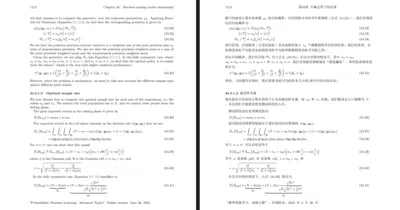
It translates scientific papers into bilingual PDFs while keeping formulas, charts, and annotations exactly where they belong.
It translates scientific papers into bilingual PDFs while keeping formulas, charts, and annotations exactly where they belong.
Obscura gives scrapers and AI agents a headless browser that runs real JavaScript without dragging along Chrome's 300 MB footprint.
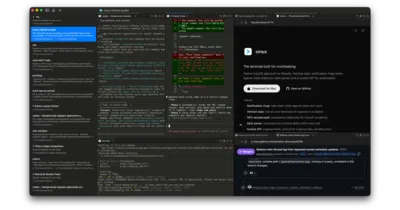
It exists because 'Claude is waiting for your input' is useless when you're running a dozen agents across split panes.
Repomix exists because copy-pasting twenty files into a chat window is a terrible way to ask an LLM for help.
Google Research releases all its code and datasets in one place, which has grown so large that the README treats a full clone as a hazard.
tiktoken gives you OpenAI’s byte-pair encoder locally so you can count tokens exactly instead of guessing and racking up API charges.
Built in a fit of rage after a $16 “open source” web-to-Markdown tool gated features behind API tokens.
This app wires a chat window and a dozen LLM providers into draw.io so you can generate, edit, and version-control diagrams with natural language instead of clicking through stencils.
A curated directory of Model Context Protocol servers that helps developers discover which AI integrations exist, from databases to browser automation.
Strip AI provenance marks from text and files you own, with an unusually honest accounting of what actually disappears and what merely gets rewritten.
This project bundles Wikipedia, Khan Academy, local LLMs, and offline maps into a browser-based survival computer for when the internet disappears.
HyperFrames turns HTML, CSS, and seekable animations into deterministic MP4s, built for agents and developers who'd rather skip React and proprietary timelines.
heatdrop uses Google Analytics to see which pages get read — nothing else. Your call. How we handle data.