01
AhmadHassan-BTed/B
+66% /wk +344 ★/day↗accelerating
B is a floating, emotionally expressive AI companion that reads your active windows, listens, and speaks up only when it has something worth saying.
B is a floating, emotionally expressive AI companion that reads your active windows, listens, and speaks up only when it has something worth saying.
unlazy forces AI agents to prove their work through runnable acceptance gates instead of trusting their own exit reports.
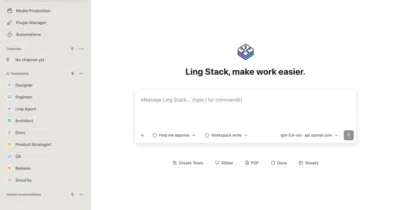
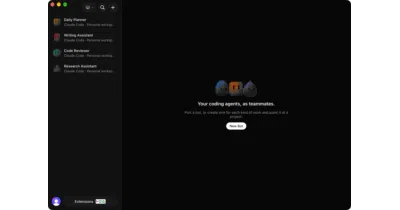
Ling Stack corrals multi-model agent work into a local-first project channel where conversations, tool approvals, and artifacts stay attached to the task.
Most browser agents chat at you; this one returns editable spreadsheets, slides, and sites you can actually use.
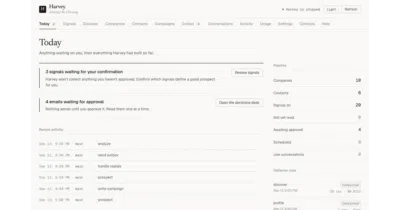
Harvey runs an autonomous cold-email pipeline on your existing Claude or ChatGPT subscription instead of a metered API key.
ThinkRail is a mobile-first IDE whose entire engine is the pi coding agent, run in-process and scoped to git worktrees.
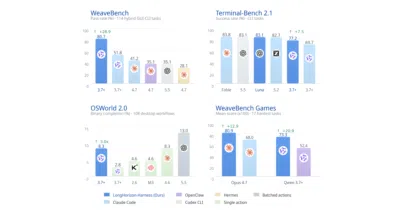
It stops long-running agents from drifting by forcing them to verify progress through independent roles before every new round.
A read-only MCP bridge that turns your paid ChatGPT web session into the planning and review brain for Codex, while execution stays locked to the agent.
OpenBot turns Codex, Claude, Grok and friends into persistent local teammates with workspaces, queues, file transfers, and an embedded browser they can drive.
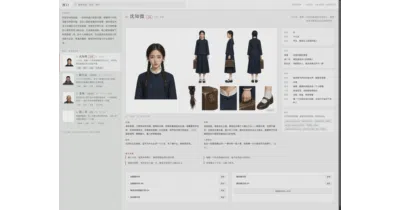
Agent-side workflows that turn novels into production-ready short-drama bibles—characters, outlines, and art guides—without leaving Claude Code or Codex.
Codync turns Claude Code, Codex, Cursor and ~40 other agents into chat bots you can message from an iPhone — using the subscriptions you already have.
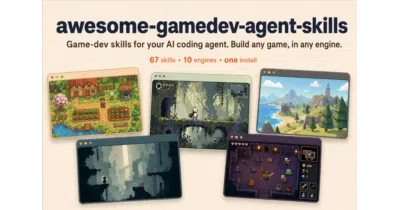
67 game-dev skills and a router that auto-loads the right context so your AI agent stops guessing your engine.
A Claude Code skill that ships 39 film styles as prompts — and proves each one with a demo film its agent rendered, scored, and narrated entirely in code.
Because LLMs confidently invent struct offsets and behavior from binaries, this toolkit makes them prove every claim against the actual bytes.
Switch exists to stop you from copy-pasting agent outputs into Slack by turning any AI agent into a first-class citizen inside your existing chat channels.
Phone Harness turns macOS iPhone Mirroring into a stateless bridge so an LLM can see, tap, and type on a real iPhone without jailbreaks, Xcode, or WebDriverAgent.
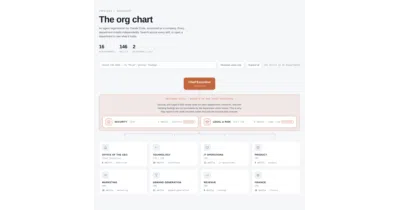
Headcount gives Claude Code a corporate structure—16 departments, 146 skills—so the right specialist agent answers each question instead of one generalist guessing.
BaoCut keeps every AI result — transcripts, dubs, cuts, motion graphics — inside one editable timeline the agent and you can both work on.
Cindy unifies Claude Code, Codex, and other AI harnesses into one open-source client so you can switch models mid-task without losing your workspace or memory.
safelabs-eval fires a curated adversarial prompt corpus at your agent and scores the damage with pattern detectors — no grader model, no agent code changes.
heatdrop uses Google Analytics to see which pages get read — nothing else. Your call. How we handle data.