yizhiyanhua-ai/fireworks-tech-graph
Diagrams from prose: an AI draftsperson for system architecture
Turns natural language descriptions into publication-ready SVG and PNG technical diagrams, so you never have to drag another box in Figma.
Velocity · 7d
+11
★ / day
Trend
↘cooling
star history
What it does
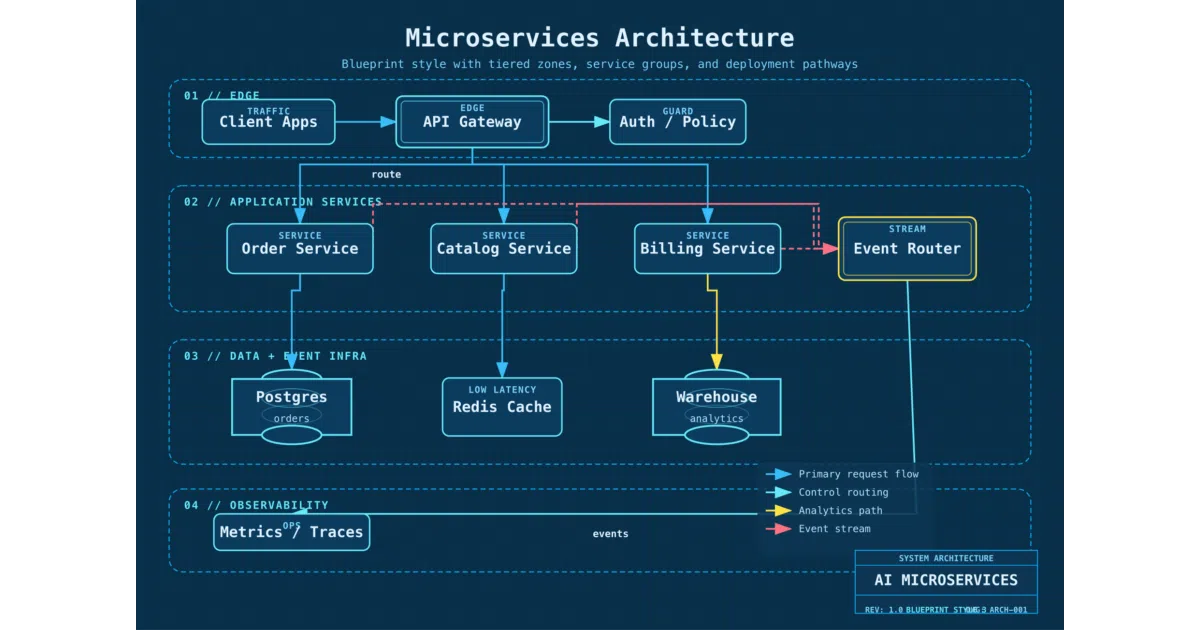
fireworks-tech-graph is a Claude Code skill that turns a plain-English or Chinese system description into a polished SVG diagram, exported as a 1920px PNG. It speaks the visual vocabulary of modern AI infrastructure—RAG pipelines, agent memory tiers, tool-call loops, multi-agent orchestration—so you don’t have to explain what a vector store looks like. The output is pure inline SVG with no external font dependencies, ready for docs, slide decks, or READMEs.
The interesting bit
The generator encodes its style guides as an executable system, not just markdown references. It can classify your prompt and apply one of seven template-driven visual languages—from dark-terminal neon to blueprint grid to brand-specific Claude and OpenAI aesthetics—automatically picking palettes, semantic shapes, and swim lanes. An eighth “Dark Luxury” style skips templates entirely; the AI reads a design brief and hand-crafts the SVG like a bespoke commission.
Key highlights
- Eight visual styles, including an AI-authored “Dark Luxury” mode and brand aesthetics tuned for Claude and OpenAI docs
- Full support for all 14 UML diagram types, plus built-in patterns for AI/Agent domains like Mem0 and Agentic Search
- Semantic vocabulary: LLMs render as double-border rectangles, agents as hexagons, vector stores as ringed cylinders
- 40+ product icons with canonical brand colors (Anthropic, Pinecone, Kafka, PostgreSQL, etc.)
- Runs offline with no online tool required; outputs renderer-friendly pure inline SVG
Caveats
- Requires a separate PNG renderer—
cairosvgis the recommended default, whilepuppeteeroffers highest fidelity at the cost of a ~150MB Chromium install - The “Dark Luxury” style is not template-driven, so output may vary between runs
- Documentation centers on Claude Code skill installation; using it as a standalone Python library is not the primary documented path
Verdict
Ideal for AI engineers and devtool founders who need clean, publication-ready architecture diagrams without opening Figma. If your workflow is already happy with Mermaid inside GitHub markdown, the extra visual polish here may be unnecessary.
Frequently asked
- What is yizhiyanhua-ai/fireworks-tech-graph?
- Turns natural language descriptions into publication-ready SVG and PNG technical diagrams, so you never have to drag another box in Figma.
- Is fireworks-tech-graph open source?
- Yes — yizhiyanhua-ai/fireworks-tech-graph is open source, released under the MIT license.
- What language is fireworks-tech-graph written in?
- yizhiyanhua-ai/fireworks-tech-graph is primarily written in Python.
- How popular is fireworks-tech-graph?
- yizhiyanhua-ai/fireworks-tech-graph has 11.8k stars on GitHub and is currently cooling off.
- Where can I find fireworks-tech-graph?
- yizhiyanhua-ai/fireworks-tech-graph is on GitHub at https://github.com/yizhiyanhua-ai/fireworks-tech-graph.