wanmeihuali/taichi_3d_gaussian_splatting
Gaussian Splatting Without Leaving Python
An unofficial 3D Gaussian Splatting implementation that uses Taichi to keep the entire pipeline in readable Python instead of hand-written CUDA.
Not currently ranked — collecting fresh signals.
star history
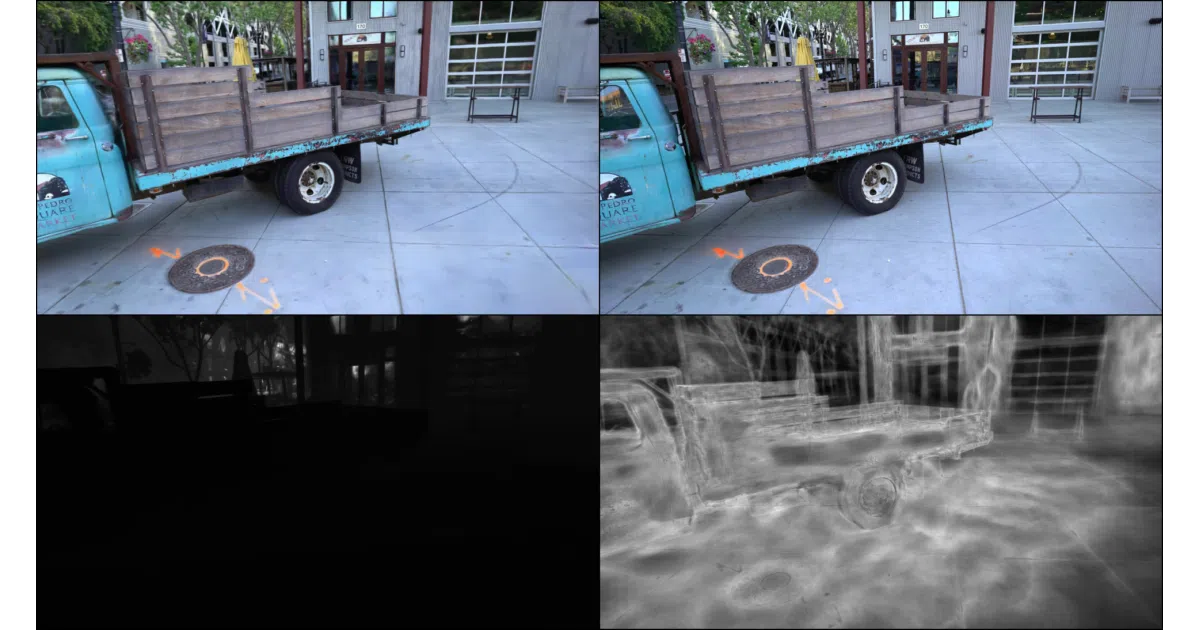
What it does Feed it multi-view images, a sparse point cloud, and camera poses, and it trains a dense point cloud laced with covariance and color data through a differentiable rasterizer. At inference, the same rasterizer draws novel views from new camera poses. Because the scene is an explicit point cloud rather than a neural network, merging objects or scenes is less painful than with typical NeRF methods.
The interesting bit The whole thing is pure Python, relying on Taichi—a high-performance computing dialect that compiles to GPU backends—to handle the heavy lifting. The author claims this makes the code far easier to read and maintain than the official CUDA implementation, even if the repo currently only targets CUDA and moves slower than the original.
Key highlights
- Matches or slightly exceeds the official implementation’s PSNR on the Tank and Temple truck scene while using roughly one-fifth to one-fourth the number of points.
- Explicit point-cloud representation simplifies scene and object merging compared to NeRF-based approaches.
- Stays entirely in Python via Taichi, avoiding hand-written CUDA kernels.
- Ships with conversion scripts for COLMAP, Instant-NGP, and BlenderNerf datasets.
- Taichi’s automatic differentiation is available but not yet wired in.
Caveats
- Only the CUDA backend is supported right now, despite Taichi’s theoretical portability to Metal and OpenGL.
- Training and inference remain slower than the official CUDA implementation.
- Testing is limited to Ubuntu 20.04 with an RTX 3090; other platforms are untested.
Verdict A solid choice if you want to experiment with 3D Gaussian Splatting but prefer reading Python to deciphering CUDA. Look elsewhere if you need maximum training speed or cross-platform GPU support today.
Frequently asked
- What is wanmeihuali/taichi_3d_gaussian_splatting?
- An unofficial 3D Gaussian Splatting implementation that uses Taichi to keep the entire pipeline in readable Python instead of hand-written CUDA.
- Is taichi_3d_gaussian_splatting open source?
- Yes — wanmeihuali/taichi_3d_gaussian_splatting is open source, released under the Apache-2.0 license.
- What language is taichi_3d_gaussian_splatting written in?
- wanmeihuali/taichi_3d_gaussian_splatting is primarily written in Jupyter Notebook.
- How popular is taichi_3d_gaussian_splatting?
- wanmeihuali/taichi_3d_gaussian_splatting has 759 stars on GitHub.
- Where can I find taichi_3d_gaussian_splatting?
- wanmeihuali/taichi_3d_gaussian_splatting is on GitHub at https://github.com/wanmeihuali/taichi_3d_gaussian_splatting.