waleedka/hiddenlayer
TensorBoard is overkill. This library draws your neural net instead.
HiddenLayer renders readable PyTorch, TensorFlow, and Keras graphs in Jupyter without the ceremony of full-blown visualization suites.
Not currently ranked — collecting fresh signals.
star history
What it does HiddenLayer generates clean architecture diagrams of neural networks and plots training metrics directly inside Jupyter Notebook. It supports PyTorch, TensorFlow, and Keras, and can export to PNG or PDF when you’re running headless on a server.
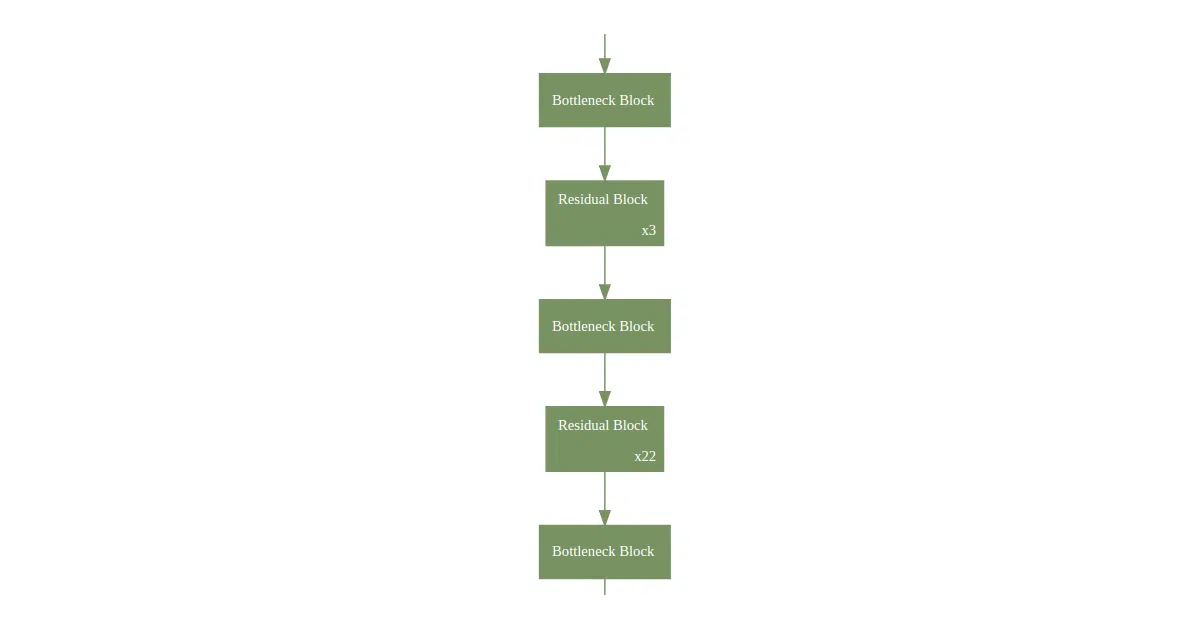
The interesting bit The “hidden” in HiddenLayer is the clever part: it deliberately collapses low-level noise. Conv→ReLU→MaxPool sequences fuse into single boxes, and you can write custom graph-expression rules—like folding an entire ResNet bottleneck block into one labeled node. The authors explicitly position it as “too big for the task” insurance against TensorBoard.
Key highlights
- Renders high-level graphs that hide weight initializations, gradients, and internal ops by default
- Custom folding via
ht.Fold()graph expressions (the ResNet example is genuinely neat) - Live training metrics with extensible
Canvasclass—subclass it to add pie charts, confusion matrices, whatever Matplotlib can draw - Works outside Jupyter: pops a window in CLI scripts, or saves PNG snapshots for remote servers
- ~1.8k stars, MIT licensed, Python 3.6 only per the README
Caveats
- Only tested on Python 3.6; older versions unsupported
- Authors warn it’s an “early release” and bugs are likely
- No optimization for large-scale experiment logging yet
Verdict Grab this if you want quick, hackable visualizations without configuring a TensorBoard server. Skip it if you need multi-run comparison, hyperparameter search visualization, or production monitoring—those remain TensorBoard territory.
Frequently asked
- What is waleedka/hiddenlayer?
- HiddenLayer renders readable PyTorch, TensorFlow, and Keras graphs in Jupyter without the ceremony of full-blown visualization suites.
- Is hiddenlayer open source?
- Yes — waleedka/hiddenlayer is open source, released under the MIT license.
- What language is hiddenlayer written in?
- waleedka/hiddenlayer is primarily written in Python.
- How popular is hiddenlayer?
- waleedka/hiddenlayer has 1.9k stars on GitHub.
- Where can I find hiddenlayer?
- waleedka/hiddenlayer is on GitHub at https://github.com/waleedka/hiddenlayer.