suriyadeepan/practical_seq2seq
TensorFlow seq2seq without the paper cuts
A thin wrapper that lets beginners train chatbots and phoneme converters without drowning in TensorFlow boilerplate.
Not currently ranked — collecting fresh signals.
star history
What it does
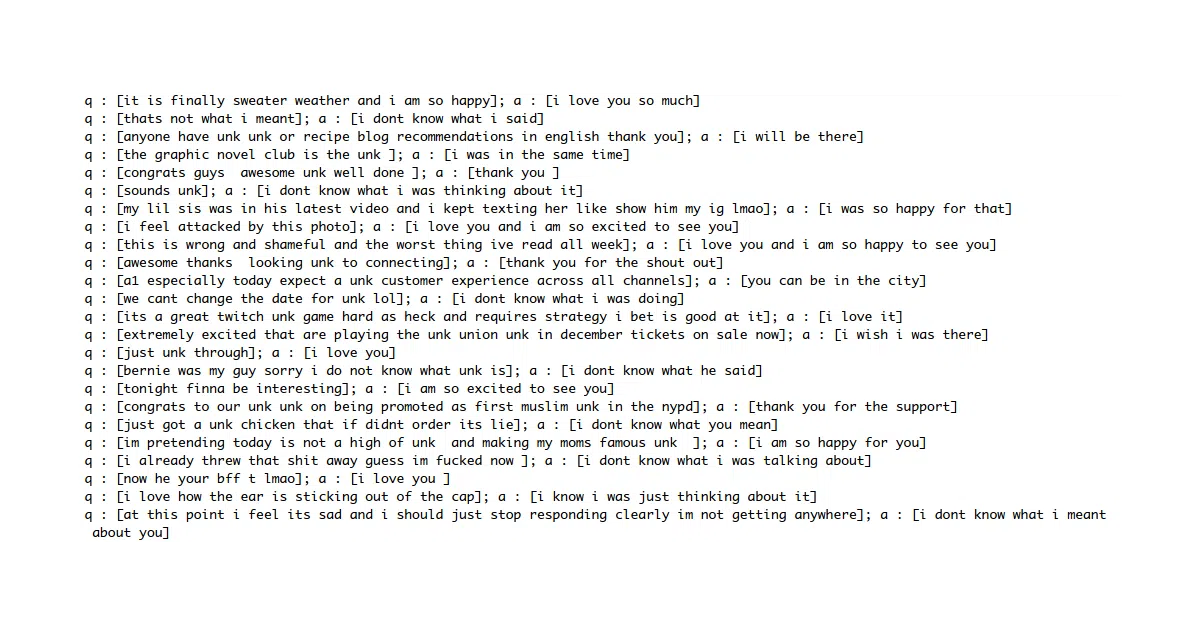
Wraps TensorFlow’s seq2seq module into something you can point at a dataset and run. Ships with three ready-made experiments: CMUdict phoneme-to-word, Twitter reply generation, and Cornell Movie Dialog. The README is basically a gallery of sample outputs plus a link to the author’s blog post.
The interesting bit
The value isn’t novelty—it’s curation. The author tuned the Twitter dataset down to 3% unknown tokens and an 8K vocabulary, then published the before-and-after output quality. That’s the tedious work beginners usually abandon.
Key highlights
- Pre-baked datasets with documented tokenization choices (rare for 2016-era repos)
- Sample outputs are honest, not cherry-picked—includes “she was so cute and she was so cute and she was a bitch”
- Single-file wrapper (
seq2seq_wrapper.py) borrowed and attributed from another project - Targets TensorFlow 0.12.0, which dates it firmly to the pre-eager-execution era
Caveats
- TensorFlow 0.12.0 means this is historical software; modern TF/Keras seq2seq looks nothing like this
- The “wrapper” is mostly glue code with attribution to mikesj-public’s spelling bee notebook
Verdict
Good if you’re trying to understand how seq2seq worked in 2016 or need a pedagogical starting point. Skip it if you want production chatbots or modern TensorFlow.
Frequently asked
- What is suriyadeepan/practical_seq2seq?
- A thin wrapper that lets beginners train chatbots and phoneme converters without drowning in TensorFlow boilerplate.
- Is practical_seq2seq open source?
- Yes — suriyadeepan/practical_seq2seq is open source, released under the GPL-3.0 license.
- What language is practical_seq2seq written in?
- suriyadeepan/practical_seq2seq is primarily written in Jupyter Notebook.
- How popular is practical_seq2seq?
- suriyadeepan/practical_seq2seq has 567 stars on GitHub.
- Where can I find practical_seq2seq?
- suriyadeepan/practical_seq2seq is on GitHub at https://github.com/suriyadeepan/practical_seq2seq.