sunbigfly/ppt-agent-skills
PowerPoint as a compile target: this agent treats slides like software artifacts
A multi-agent framework that generates presentation decks through strict state machines, visual QA loops, and recoverable pipelines instead of prompt-and-pray.
Not currently ranked — collecting fresh signals.
star history
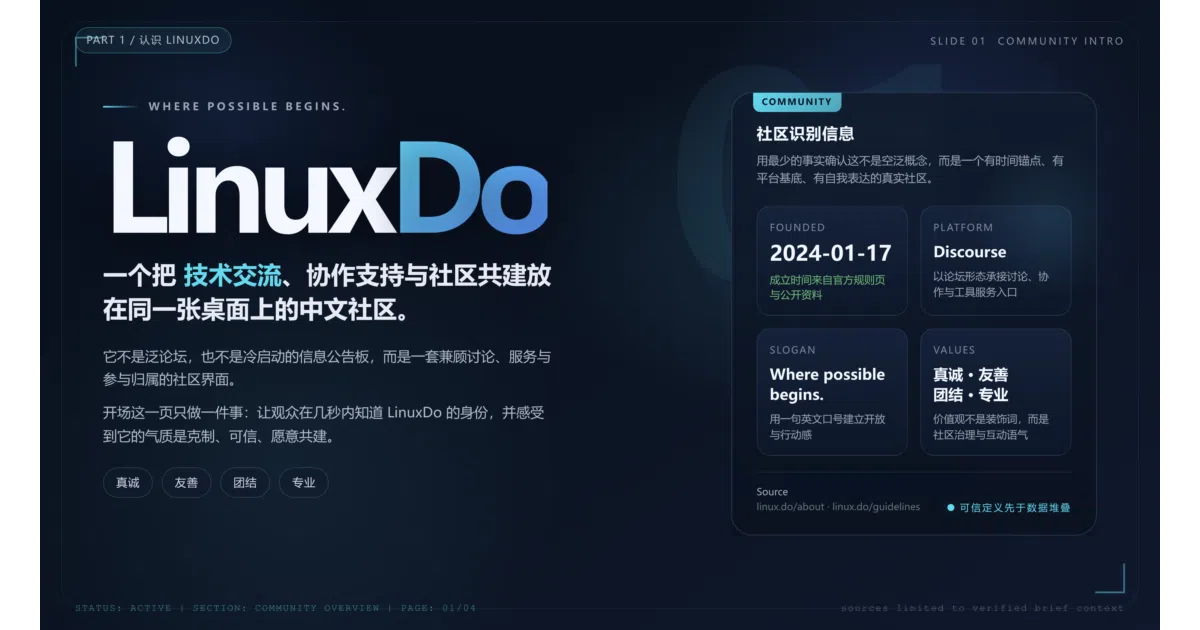
What it does PPT Agent turns a one-sentence brief into a finished PPTX through a seven-stage assembly line: interview, research, outline, style lock, per-page parallel production, visual audit, and dual-format export. Each stage writes artifacts to disk and passes a gate before the next begins; if something breaks, you rewind one step, not the whole deck.
The interesting bit The “Yin-Yang Cut Line” design philosophy is the telling detail: absolute physical guardrails (fixed baselines, collision walls) are hardcoded, while AI gets free rein within those bounds over typography, layering, and whitespace. The result is structured enough to avoid LLM layout hallucinations, loose enough to not look like a government form. A Puppeteer-based rasterizer with font-ready hooks replaces sleep-based “wait and hope” screenshotting.
Key highlights
- Four isolated subagents (Research, Outline, Style, Planning) each carry their own model parameter and cannot fall back to defaults
- Every page gets screenshotted and visually audited; layout overflows trigger DOM+CSS rewrites, not padding tweaks
- Crash recovery by scanning existing artifacts (
outline.txt,slide-N.png, etc.) — no state files to corrupt - JSON planning contracts validated before any HTML renders; an HTML structure detector catches non-standard skeletons
- Dual PPTX export: PNG raster stream for pixel fidelity, SVG vector stream for editable text
Caveats
- Runs as an Agent Skill, not a standalone package; requires a compatible agent environment (installed via
npx skills add) - README is Chinese-first; English version exists but may lag
- The “15 script tools” and exact engine versions are listed as badges but not documented in detail
Verdict Worth a look if you’re building agentic workflows where reliability matters more than vibe — the state-machine discipline and visual QA loop are genuinely unusual. Skip it if you need a drop-in Python library you can pip-install and run locally; this is infrastructure, not a script.
Frequently asked
- What is sunbigfly/ppt-agent-skills?
- A multi-agent framework that generates presentation decks through strict state machines, visual QA loops, and recoverable pipelines instead of prompt-and-pray.
- Is ppt-agent-skills open source?
- Yes — sunbigfly/ppt-agent-skills is an open-source project tracked on heatdrop.
- What language is ppt-agent-skills written in?
- sunbigfly/ppt-agent-skills is primarily written in Python.
- How popular is ppt-agent-skills?
- sunbigfly/ppt-agent-skills has 916 stars on GitHub.
- Where can I find ppt-agent-skills?
- sunbigfly/ppt-agent-skills is on GitHub at https://github.com/sunbigfly/ppt-agent-skills.