sintel-dev/Orion
MIT's anomaly library runs a dozen algorithms against your time series
Orion benchmarks AER, TadGAN, and ten other unsupervised pipelines so you don't have to guess which one works on your data.
Not currently ranked — collecting fresh signals.
star history
What it does
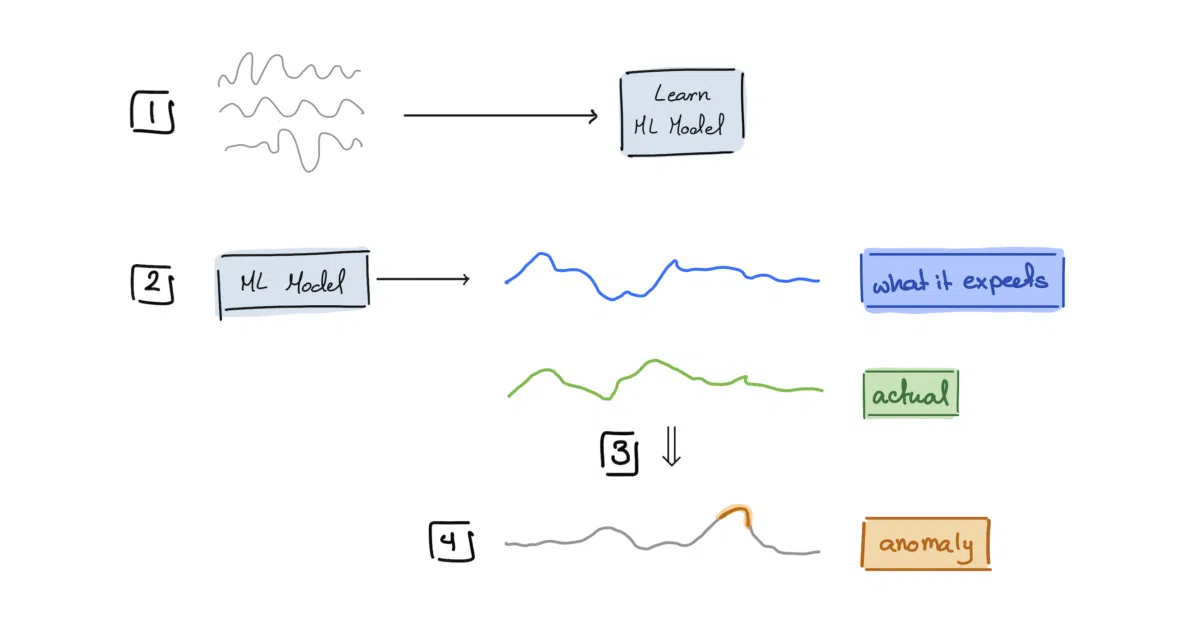
Orion is a Python library that wraps multiple unsupervised anomaly detection pipelines for time series data. You load a signal with timestamps and values, pick a pipeline like aer or tadgan, fit it, then call detect() to get back intervals flagged as anomalous with severity scores. It ships with demo data and a scikit-learn-style API.
The interesting bit The project maintains a public leaderboard that scores every pipeline against 12 labeled datasets, measuring how often each beats a baseline ARIMA model. AER currently wins on all 12; Azure’s commercial detector wins on zero. That kind of baked-in benchmarking is unusual for open-source ML tooling.
Key highlights
- 13 verified pipelines including autoencoders, GANs, VAEs, transformers, and matrix profiles
- Built-in benchmark suite with ground-truth datasets and published comparison spreadsheets
- Pre-Alpha status (PyPI classifies it Development Status 2)
- Python 3.8 through 3.11 supported
- Part of the broader Sintel ecosystem from MIT’s Data to AI Lab
Caveats
- Pre-alpha status means APIs may shift; the README itself warns about harmless but noisy warnings during execution
- The leaderboard compares pipelines relative to ARIMA, not absolute accuracy metrics, so “wins” can obscure how small the margins are
Verdict Worth a look if you need to evaluate multiple anomaly detection approaches on time series without building the comparison harness yourself. Skip it if you want production-stable APIs or need real-time streaming detection—neither is claimed here.
Frequently asked
- What is sintel-dev/Orion?
- Orion benchmarks AER, TadGAN, and ten other unsupervised pipelines so you don't have to guess which one works on your data.
- Is Orion open source?
- Yes — sintel-dev/Orion is open source, released under the MIT license.
- What language is Orion written in?
- sintel-dev/Orion is primarily written in Python.
- How popular is Orion?
- sintel-dev/Orion has 1.4k stars on GitHub.
- Where can I find Orion?
- sintel-dev/Orion is on GitHub at https://github.com/sintel-dev/Orion.