scutcyr/BianQue
A Chinese medical bot that interrogates before it diagnoses
BianQue exists because most medical chatbots diagnose on first contact, but real doctors know patients rarely describe symptoms clearly in one go.
Not currently ranked — collecting fresh signals.
star history
What it does BianQue is a family of Chinese health dialogue models built on ChatGLM-6B by researchers at South China University of Technology. It offers two variants: BianQue-1.0, which specializes in multi-turn patient questioning, and BianQue-2.0, which handles health advice and medical knowledge retrieval. The repository also supports a joint mode where the system can run through several rounds of inquiry before switching to the advice model for a final recommendation.
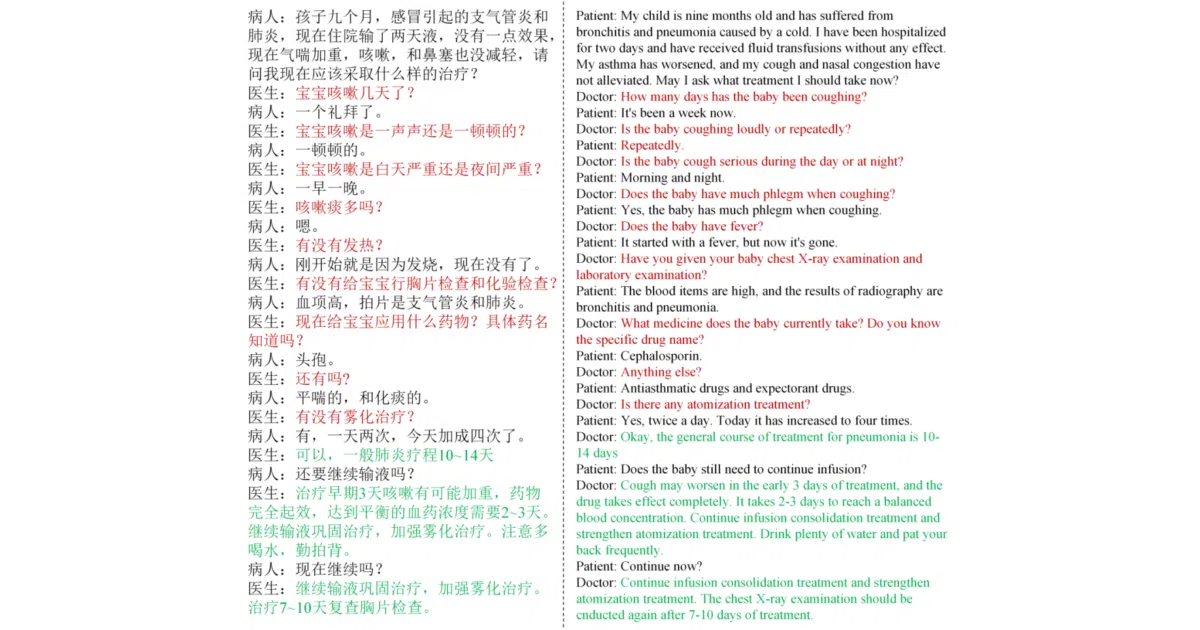
The interesting bit The project’s “Chain of Questioning” (CoQ) approach deliberately inverts the typical medical chatbot flow. Instead of training on single-turn symptom-to-diagnosis pairs, BianQue’s corpus contains tens of millions of Chinese health dialogues where the target text is often another doctor question, not an answer. This nudges the model to emulate a clinician’s habit of iterative inquiry when patient descriptions are vague or incomplete.
Key highlights
- Trained on a “tens of millions” scale corpus blending public Chinese medical datasets (MedDialog-CN, cMedQA2, CHIP-MDCFNPC, and others) with the lab’s own life-space health dialogues.
- BianQue-2.0 layers in drug instructions, medical encyclopedia entries, and ChatGPT-distilled instructions to strengthen factual suggestion capabilities beyond pure questioning.
- Supports a pipeline where BianQue-1.0 drives the interrogation phase and BianQue-2.0 delivers the final recommendation phase.
- Apache 2.0 licensed, with Streamlit demo apps and support for Linux, Windows, and macOS.
Caveats
- The repository is documented entirely in Chinese, which limits accessibility for developers who don’t read the language.
- Windows single-GPU setups require a manual environment-variable tweak to avoid crashes, suggesting the cross-platform packaging is still somewhat rough.
- Explicitly positioned as academic research infrastructure for chronic disease and mental health exploration, not as a clinically certified diagnostic product.
Verdict Developers building Chinese-language health conversational agents should look here for its structured multi-turn dialogue data and dual-model architecture. If you need a polished, plug-and-play diagnostic tool with clinical safety guardrails, treat this as research scaffolding rather than a finished product.
Frequently asked
- What is scutcyr/BianQue?
- BianQue exists because most medical chatbots diagnose on first contact, but real doctors know patients rarely describe symptoms clearly in one go.
- Is BianQue open source?
- Yes — scutcyr/BianQue is an open-source project tracked on heatdrop.
- What language is BianQue written in?
- scutcyr/BianQue is primarily written in Python.
- How popular is BianQue?
- scutcyr/BianQue has 893 stars on GitHub.
- Where can I find BianQue?
- scutcyr/BianQue is on GitHub at https://github.com/scutcyr/BianQue.