researchmm/Stark
End-to-end tracking without the post-processing hangover
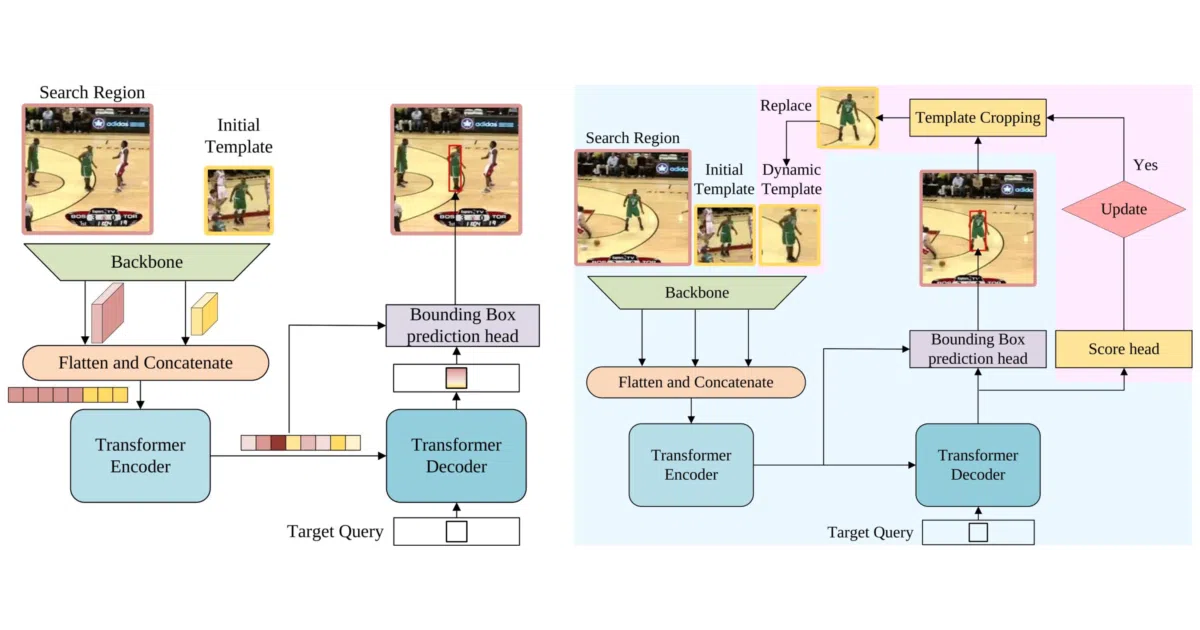
STARK is an ICCV 2021 tracker that uses a transformer to predict bounding boxes end-to-end, deliberately dropping the hyperparameter-sensitive post-processing stage entirely.
Not currently ranked — collecting fresh signals.
star history
What it does
STARK is the official PyTorch implementation of an ICCV 2021 visual object tracker. It directly predicts a single bounding box per frame and deliberately avoids hyperparameter-sensitive post-processing, which the authors credit for stable performance. The codebase is built on the PyTracking and DETR ecosystems and targets standard tracking benchmarks.
The interesting bit
The project treats tracking as a direct prediction task: the model outputs one bounding box and forgoes hyperparameter-sensitive post-processing entirely. A lightweight offshoot called STARK-Lightning is advertised at 200–300 FPS on an RTX TITAN, beating DiMP50 while using a smaller model than SiamFC—though the README is thin on how those gains are realized.
Key highlights
- End-to-end pipeline: one bounding box out, zero hyperparameter-tuned post-processing.
- Real-time inference: 40 FPS for
STARK-ST50and 30 FPS forSTARK-ST101on a Tesla V100. - Strong benchmark scores: 67.1 AUC on LaSOT, 68.8 AO on GOT-10K, and 82.0 AUC on TrackingNet, ahead of
TransT,TrDiMP, andSiam R-CNN. - Competition results: winner of the VOT-21 RGB-D challenge and runner-up in the real-time and long-term tracks.
- Upstream adoption: integrated into the OpenMMLab
mmtrackinglibrary.
Caveats
- The README is essentially a quickstart manual; architectural details and training intuition are left to the paper PDF.
- The
STARK-Lightningspeed claims are mentioned without detail on the speedup mechanism or reproducibility notes in the main README.
Verdict
A solid choice for researchers who want a real-time, PyTorch-native tracking baseline with strong benchmark numbers. Skip it if you need multi-object tracking or extensive documentation beyond training recipes.
Frequently asked
- What is researchmm/Stark?
- STARK is an ICCV 2021 tracker that uses a transformer to predict bounding boxes end-to-end, deliberately dropping the hyperparameter-sensitive post-processing stage entirely.
- Is Stark open source?
- Yes — researchmm/Stark is open source, released under the MIT license.
- What language is Stark written in?
- researchmm/Stark is primarily written in Python.
- How popular is Stark?
- researchmm/Stark has 715 stars on GitHub.
- Where can I find Stark?
- researchmm/Stark is on GitHub at https://github.com/researchmm/Stark.