phillipi/pix2pix
Paired photos in, hallucinated photos out, circa 2017
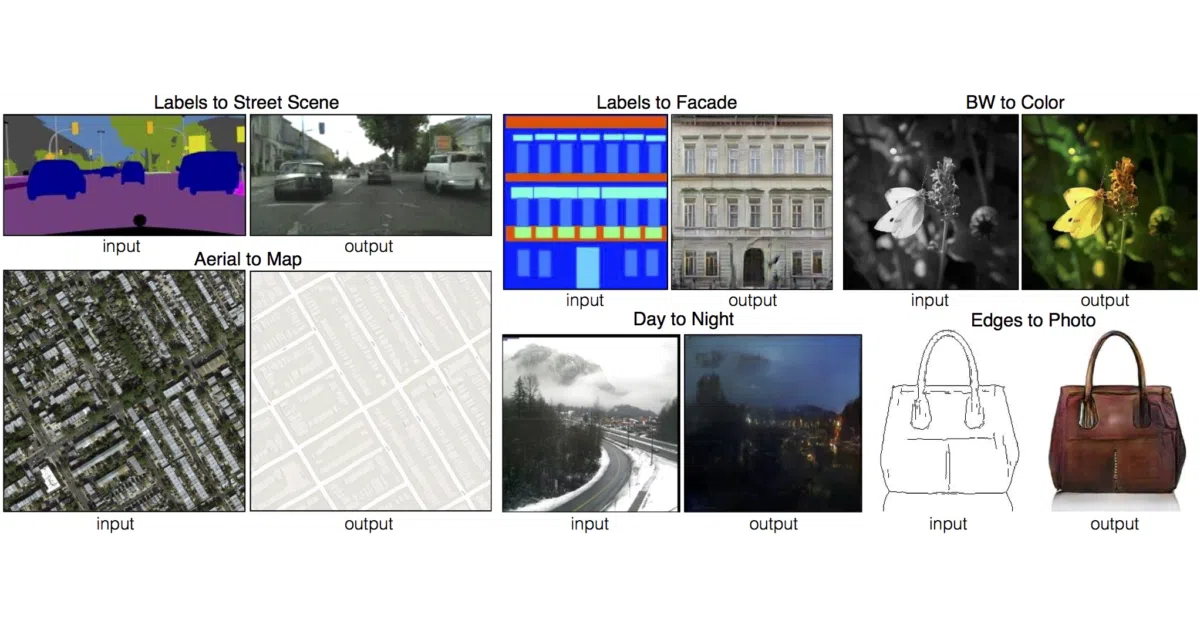
It learns to turn one image into another—labels to photos, edges to shoes—by training a conditional GAN on paired examples.
Not currently ranked — collecting fresh signals.
star history
What it does
This is the original Torch/Lua implementation of the 2017 CVPR paper that popularized general-purpose image-to-image translation. You feed it paired images—say, a label map and a real photo of the same scene—and it learns to generate the photo from the map, or vice versa. It ships with scripts and pre-trained models for facades, cityscapes, edges-to-shoes, day-to-night, and a few other tasks.
The interesting bit
The authors themselves now point users to their PyTorch successor, which makes this repo something of a historical artifact. Still, it is the codebase that established the pix2pix framework: a conditional adversarial network trained on paired input-output images that turned matched-pair training into a general-purpose image translation pipeline.
Key highlights
- Original implementation of the CVPR 2017 paper by Isola et al.
- Trains on paired datasets; the README notes that 400 facade images yielded decent results in about two hours on a single Pascal Titan X.
- Includes pre-trained models for facades, Cityscapes, edges-to-shoes/handbags, and day-to-night translation.
- Comes with helper scripts for dataset formatting, colorization prep, edge extraction, and Cityscapes evaluation (the latter expects 256×256 inputs and upsamples them for scoring).
- Optional display server for plotting L1, generator, and discriminator error during training.
Caveats
- The authors explicitly recommend the PyTorch version for new work, noting it is under active development and produces comparable or better results.
- Requires Linux or macOS with an NVIDIA GPU and CUDA CuDNN; CPU mode is described as untested.
- Several evaluation and preprocessing dependencies lean on older toolchains like Caffe and Matlab.
Verdict
Grab this if you need to reproduce the exact 2017 paper or are maintaining legacy Lua/Torch pipelines. Everyone else should follow the authors’ own advice and head straight to the PyTorch implementation.
Frequently asked
- What is phillipi/pix2pix?
- It learns to turn one image into another—labels to photos, edges to shoes—by training a conditional GAN on paired examples.
- Is pix2pix open source?
- Yes — phillipi/pix2pix is an open-source project tracked on heatdrop.
- What language is pix2pix written in?
- phillipi/pix2pix is primarily written in Lua.
- How popular is pix2pix?
- phillipi/pix2pix has 10.7k stars on GitHub.
- Where can I find pix2pix?
- phillipi/pix2pix is on GitHub at https://github.com/phillipi/pix2pix.