patchy631/ai-engineering-hub
An AI Engineering Cookbook with 93+ Practical Recipes
Because reading about agents is easier than wiring them up correctly.
Velocity · 7d
+11
★ / day
Trend
→steady
star history
What it does
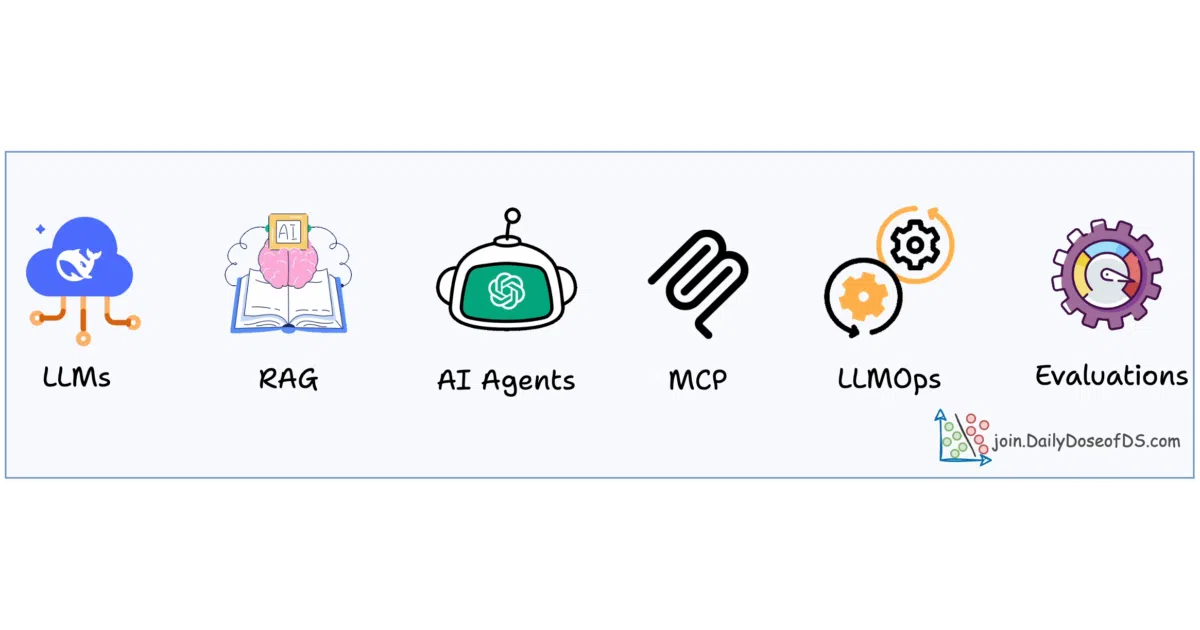
AI Engineering Hub is a curated stack of 93+ Jupyter Notebook projects covering LLMs, RAG pipelines, voice agents, and MCP integrations. The work is sorted into Beginner (22 projects), Intermediate (48), and Advanced (23) tiers, ranging from local OCR apps and ChatGPT clones up to fine-tuning runs and multi-agent deep researchers. Think of it as a self-paced curriculum that happens to live in a GitHub repo.
The interesting bit
Each folder is a vertical slice rather than a loose script: a Hotel Booking Crew or RAG SQL Router is a complete context, not a snippet. The progression from LaTeX OCR with Llama to Build Reasoning Model and an Attention Is All You Need implementation gives you a path from glue code to architecture.
Key highlights
- 93+ projects sorted into Beginner (22), Intermediate (48), and Advanced (23) buckets.
- Heavy focus on RAG variations—basic, agentic, multimodal, voice, and a sub-15ms retrieval stack.
- Explicit MCP (Model Context Protocol) section with Cursor, LlamaIndex, and Firecrawl integrations.
- Model comparison notebooks pitting Llama 4, DeepSeek-R1, Qwen3, Claude, and o3 against each other.
- Includes a full
NotebookLMclone and anAI Engineering Roadmapfor linear learners.
Caveats
- The README is a high-level index; you have to dive into individual folders to see dependencies or data requirements.
- “Production-Ready” is the repo’s own label—whether each notebook has tests, error handling, or CI is unclear from the top-level docs.
Verdict
Grab this if you learn by breaking working code and need a structured path from simple RAG to agent orchestration. Skip it if you want a single opinionated framework or a managed SaaS; this is a syllabus, not a product.
Frequently asked
- What is patchy631/ai-engineering-hub?
- Because reading about agents is easier than wiring them up correctly.
- Is ai-engineering-hub open source?
- Yes — patchy631/ai-engineering-hub is open source, released under the MIT license.
- What language is ai-engineering-hub written in?
- patchy631/ai-engineering-hub is primarily written in Jupyter Notebook.
- How popular is ai-engineering-hub?
- patchy631/ai-engineering-hub has 38.4k stars on GitHub and is currently holding steady.
- Where can I find ai-engineering-hub?
- patchy631/ai-engineering-hub is on GitHub at https://github.com/patchy631/ai-engineering-hub.