parkpow/deep-license-plate-recognition
License plate recognition that runs on a Raspberry Pi
A commercial ALPR/ANPR system with a surprisingly generous free tier and client libraries for eight languages.
Not currently ranked — collecting fresh signals.
star history
What it does
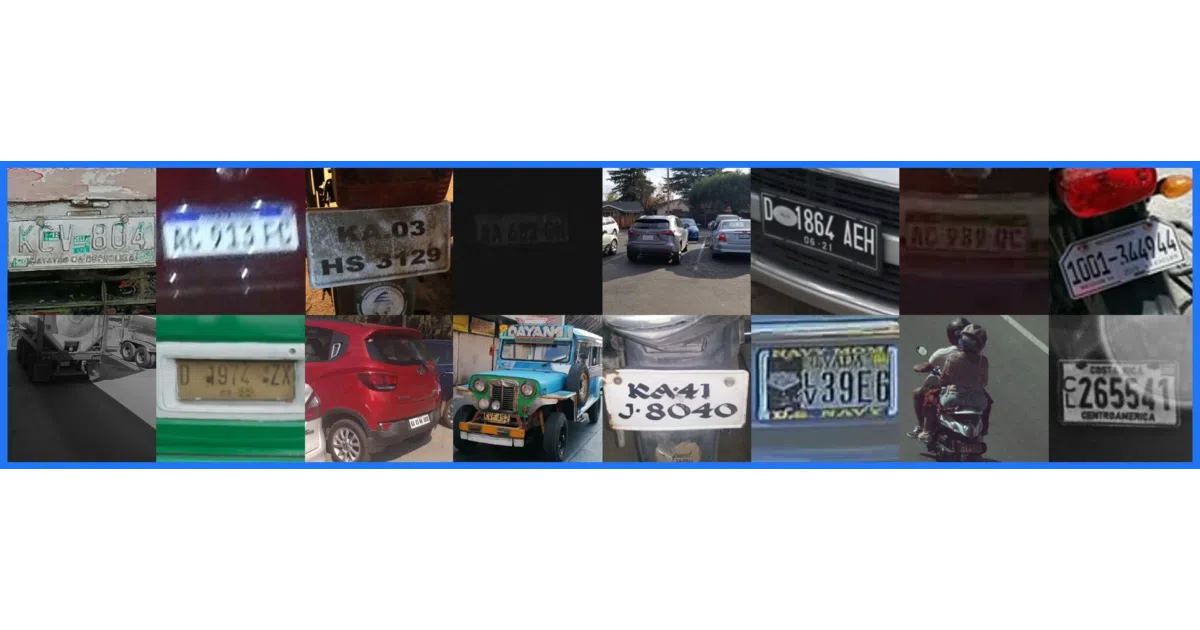
This repo is the SDK and sample-code front-end for Plate Recognizer, a commercial license-plate recognition service. You send it images or video frames; it returns bounding boxes, plate text, vehicle make/model, color, and orientation. The Python scripts here handle bulk processing, FTP/SFTP ingestion, automatic folder monitoring, and even plate blurring for redaction workflows.
The interesting bit
The heavy inference is cloud or self-hosted Docker, but the client-side footprint is deliberately tiny — the README lists Raspberry Pi, Zynq, 96Boards, and LattePanda as supported edge targets. That’s unusual for a commercial ALPR vendor; most want you on their hardware or their cloud bill. The blurring script is also a nice touch for GDPR-style privacy workflows, detecting “barely readable” plates that the standard recognition path might skip.
Key highlights
- REST API with client examples in 8 languages (C++, C#, Java, Python, etc.)
- On-premise Docker SDK for air-gapped or low-latency deployments
- Bulk processing via FTP/SFTP polling or local folder monitoring
- Plate redaction mode with split-image handling for high-res sources
- Claims 21 ms inference and 90+ country plate formats supported
Caveats
- The core models are closed-source; this repo is essentially glue code and API wrappers
- Free tier exists but commercial pricing is opaque; you’ll need to sign up to test
- Several README links are tracking-tagged and some marketing claims (“state of the art deep neural networks”) lack reproducible benchmarks in the repo itself
Verdict
Worth a look if you need ALPR fast and don’t want to train your own YOLO/CNN pipeline. Skip it if you require fully open-source models or if your use case is academic research without budget for SaaS credits.
Frequently asked
- What is parkpow/deep-license-plate-recognition?
- A commercial ALPR/ANPR system with a surprisingly generous free tier and client libraries for eight languages.
- Is deep-license-plate-recognition open source?
- Yes — parkpow/deep-license-plate-recognition is open source, released under the MIT license.
- What language is deep-license-plate-recognition written in?
- parkpow/deep-license-plate-recognition is primarily written in C++.
- How popular is deep-license-plate-recognition?
- parkpow/deep-license-plate-recognition has 669 stars on GitHub.
- Where can I find deep-license-plate-recognition?
- parkpow/deep-license-plate-recognition is on GitHub at https://github.com/parkpow/deep-license-plate-recognition.