open-edge-platform/anomalib
One library, dozens of ways to spot a visual defect
Anomalib corrals state-of-the-art visual anomaly detection algorithms into one modular toolkit for benchmarking, training, and edge deployment.
Not currently ranked — collecting fresh signals.
star history
What it does
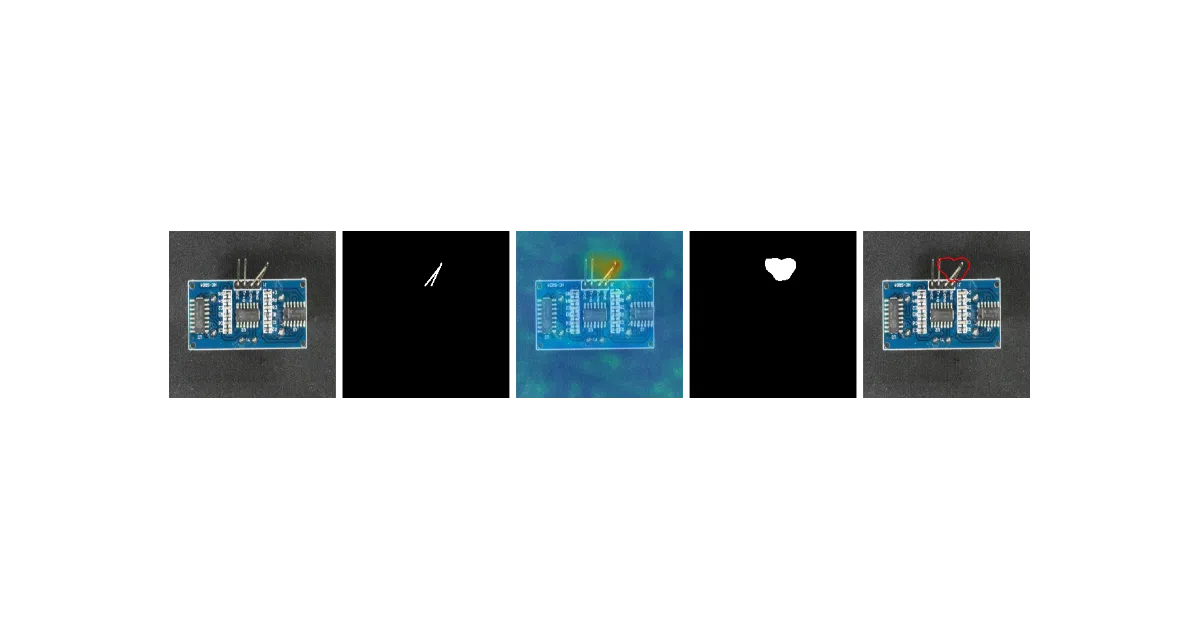
Anomalib is a Python library devoted to visual anomaly detection—spotting defects in images and video. It bundles implementations of recent deep learning algorithms, from classic industrial detectors to zero-shot foundation-model variants, behind a unified API and CLI. The target audience is researchers who need to benchmark against public datasets and engineers who want to push a trained model into an OpenVINO-optimized edge runtime.
The interesting bit
The library is built on PyTorch Lightning, which means most of the training scaffolding is someone else’s problem and you can focus on the actual model logic. It also wears its Intel affiliation on its sleeve: most architectures export to OpenVINO IR, and there is explicit—if limited—support for training on Intel Arc GPUs.
Key highlights
- Claims the largest public collection of ready-to-use deep learning anomaly detection algorithms and benchmark datasets.
- Modular API and CLI covering training, inference, benchmarking, and hyperparameter optimization via Weights & Biases or Comet.ml.
- Most models export to OpenVINO IR for accelerated inference on Intel hardware.
- v2.5.0 introduces zero-shot detection with Vision Foundation Models (
AnomalyVFM) and 3D anomaly detection via cross-modal feature mapping (CFM). - Experiment tracking is wired in through PyTorch Lightning loggers (TensorBoard, WandB, Comet).
Caveats
- Intel GPU training is currently limited to single-GPU setups and has only been tested on Arc 750 and 770 cards.
- OpenVINO export is available for the majority of models, but not the entire catalog.
Verdict
If you are building a visual inspection pipeline or benchmarking anomaly detectors on image data, this is a sensible starting point. If your data is tabular or purely time-series, look elsewhere.
Frequently asked
- What is open-edge-platform/anomalib?
- Anomalib corrals state-of-the-art visual anomaly detection algorithms into one modular toolkit for benchmarking, training, and edge deployment.
- Is anomalib open source?
- Yes — open-edge-platform/anomalib is open source, released under the Apache-2.0 license.
- What language is anomalib written in?
- open-edge-platform/anomalib is primarily written in Python.
- How popular is anomalib?
- open-edge-platform/anomalib has 6.3k stars on GitHub.
- Where can I find anomalib?
- open-edge-platform/anomalib is on GitHub at https://github.com/open-edge-platform/anomalib.