nv-tlabs/Difix3D
One-step diffusion to scrub artifacts from NeRFs and splats
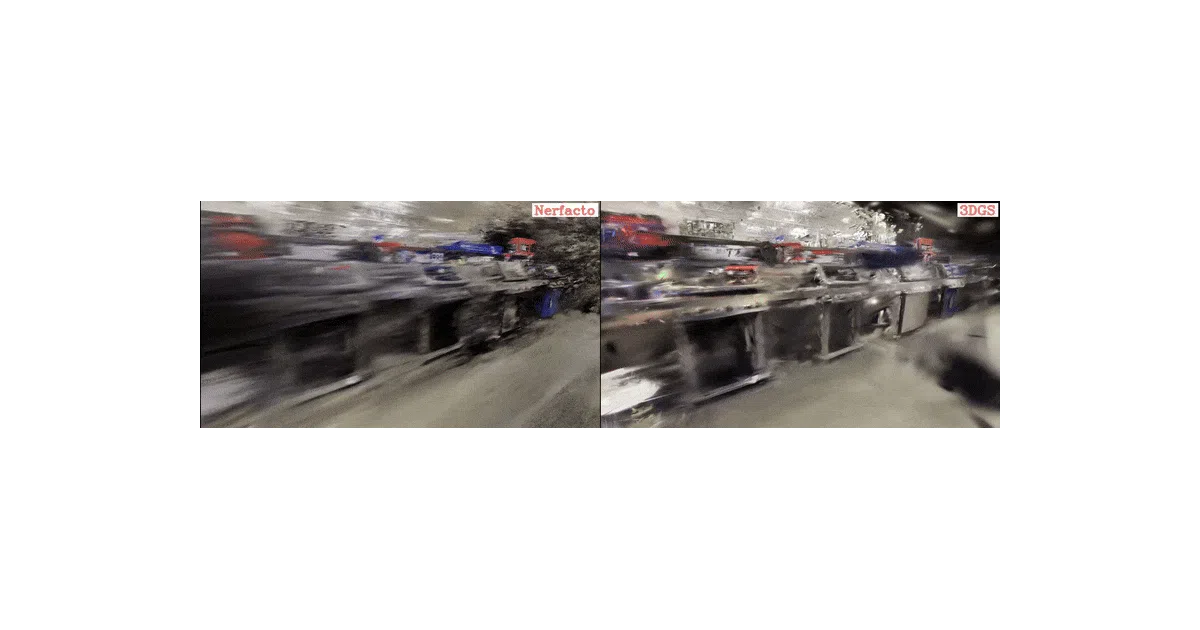
Difix3D+ uses a single-step diffusion model to clean up blurry artifacts in NeRF and Gaussian Splatting outputs, either during training or at render time.
Not currently ranked — collecting fresh signals.
star history
What it does Difix3D+ is a specialized image-to-image diffusion model that “removes degradation” from rendered views. It bolts onto existing 3D reconstruction pipelines—specifically nerfstudio and gsplat—to suppress blur and artifacts in NeRF and Gaussian Splatting outputs. You can apply it progressively during 3D training (the Difix3D mode) or as a post-render filter (Difix3D+).
The interesting bit
The model runs at a single diffusion timestep—timestep=199 with no multi-step sampling—which keeps inference fast enough to use as a real-time post-processing pass. It also accepts an optional reference image to guide restoration, giving you some control over the cleanup without iterative denoising.
Key highlights
- CVPR 2025 Oral and Best Paper Finalist
- Single-step inference via a custom Diffusers pipeline (
num_inference_steps=1) - Integrates with both NeRF (nerfstudio) and Gaussian Splatting (gsplat) workflows
- Optional reference-image guidance for controlled restoration
- Pre-trained checkpoints and a HuggingFace demo available
- Also usable as a standalone 2D image restoration model
Caveats
- Governed by the NVIDIA License, with additional terms referencing Stability AI’s SD-Turbo license; not fully open source
- Requires GPU acceleration (CUDA)
Verdict Worth exploring if you’re building NeRF or Gaussian Splatting pipelines and need a practical way to fix reconstruction artifacts. Skip it if you need a freely commercializable model or aren’t already working within the nerfstudio/gsplat ecosystem.
Frequently asked
- What is nv-tlabs/Difix3D?
- Difix3D+ uses a single-step diffusion model to clean up blurry artifacts in NeRF and Gaussian Splatting outputs, either during training or at render time.
- Is Difix3D open source?
- Yes — nv-tlabs/Difix3D is an open-source project tracked on heatdrop.
- What language is Difix3D written in?
- nv-tlabs/Difix3D is primarily written in Python.
- How popular is Difix3D?
- nv-tlabs/Difix3D has 1.3k stars on GitHub.
- Where can I find Difix3D?
- nv-tlabs/Difix3D is on GitHub at https://github.com/nv-tlabs/Difix3D.