nod-ai/AMD-SHARK-Studio
A Stable Diffusion UI that actually cared about AMD GPUs
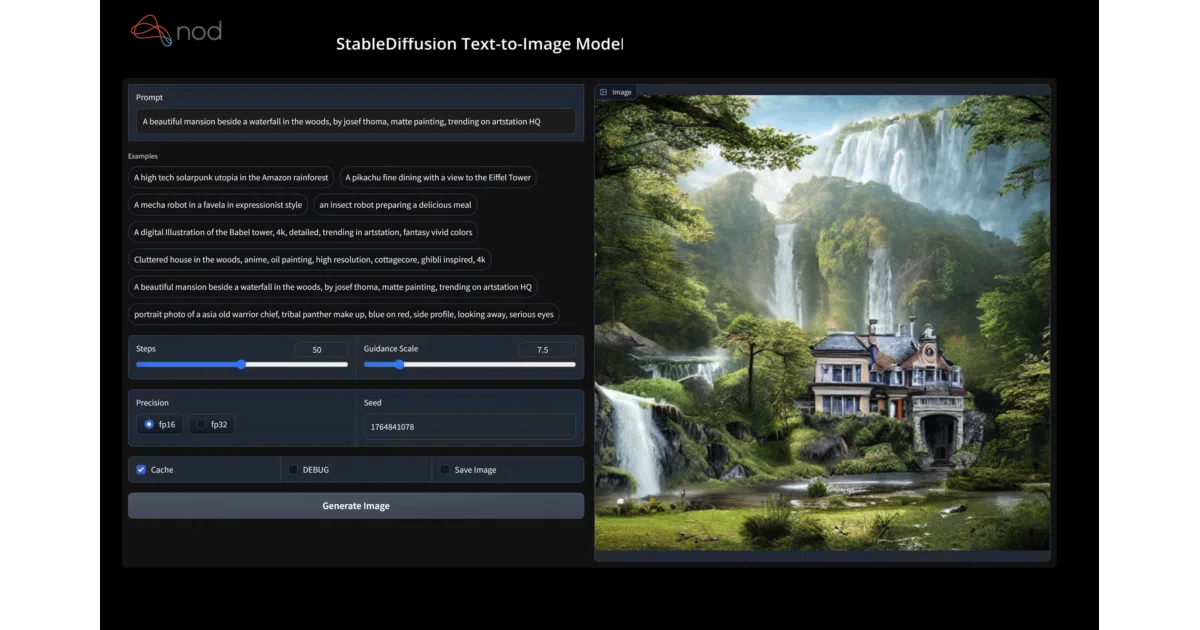
A web-based Stable Diffusion interface built on IREE/MLIR to run inference across AMD, NVIDIA, and Apple Silicon without CUDA lock-in.
Not currently ranked — collecting fresh signals.
star history
What it does
AMD-SHARK Studio packages a browser-based Stable Diffusion UI and command-line tools that compile PyTorch models through Torch-MLIR into IREE’s runtime. The result: image generation on AMD RDNA cards via Vulkan, NVIDIA via CUDA, and Apple Silicon via Metal—plus CPU fallback. Download an .exe, point your browser to localhost:8080, and go.
The interesting bit
Most Stable Diffusion tooling assumes CUDA. This project instead bets on Vulkan as a least-common-denominator GPU path, with IREE handling the actual kernel compilation and dispatch. The README even warns that Linux MESA/RADV drivers won’t work with FP16—an oddly specific constraint that suggests they actually tested this on real AMD hardware.
Key highlights
- Prebuilt Windows .exe releases; no Python setup required for basic use
- Web UI and CLI both supported (
--ui=webor directpython index.py) - Device targeting via
--device=vulkan,cuda,cpu, ormetal - Benchmarking infrastructure for individual dispatch kernels
- Hundreds of models in a “tank” test suite with pytest integration
Caveats
- Not currently maintained. The README opens with a large “NOTE: This project is not currently maintained” and warns that
mainis a broken refactor toward IREE-Turbine; you must use theAMDSHARK-1.0branch or an .exe release for working image generation - First run compiles and downloads ~5GB of models; the README literally asks for “your patience”
- macOS users are pinned to Vulkan SDK 1.3.216; “newer versions will not work”
Verdict
Worth a look if you’re on AMD hardware and frustrated by CUDA-centric SD tooling, or if you’re studying IREE/MLIR deployment patterns. Skip it if you want actively maintained software with modern model support—this is effectively archived code with a rebuild in indefinite limbo.
Frequently asked
- What is nod-ai/AMD-SHARK-Studio?
- A web-based Stable Diffusion interface built on IREE/MLIR to run inference across AMD, NVIDIA, and Apple Silicon without CUDA lock-in.
- Is AMD-SHARK-Studio open source?
- Yes — nod-ai/AMD-SHARK-Studio is open source, released under the Apache-2.0 license.
- What language is AMD-SHARK-Studio written in?
- nod-ai/AMD-SHARK-Studio is primarily written in Python.
- How popular is AMD-SHARK-Studio?
- nod-ai/AMD-SHARK-Studio has 1.5k stars on GitHub.
- Where can I find AMD-SHARK-Studio?
- nod-ai/AMD-SHARK-Studio is on GitHub at https://github.com/nod-ai/AMD-SHARK-Studio.