mlfoundations/open_clip
OpenCLIP turned OpenAI’s vision model into a public training ground
An open-source CLIP implementation built to train on public datasets, not just wrap OpenAI’s weights.
Not currently ranked — collecting fresh signals.
star history
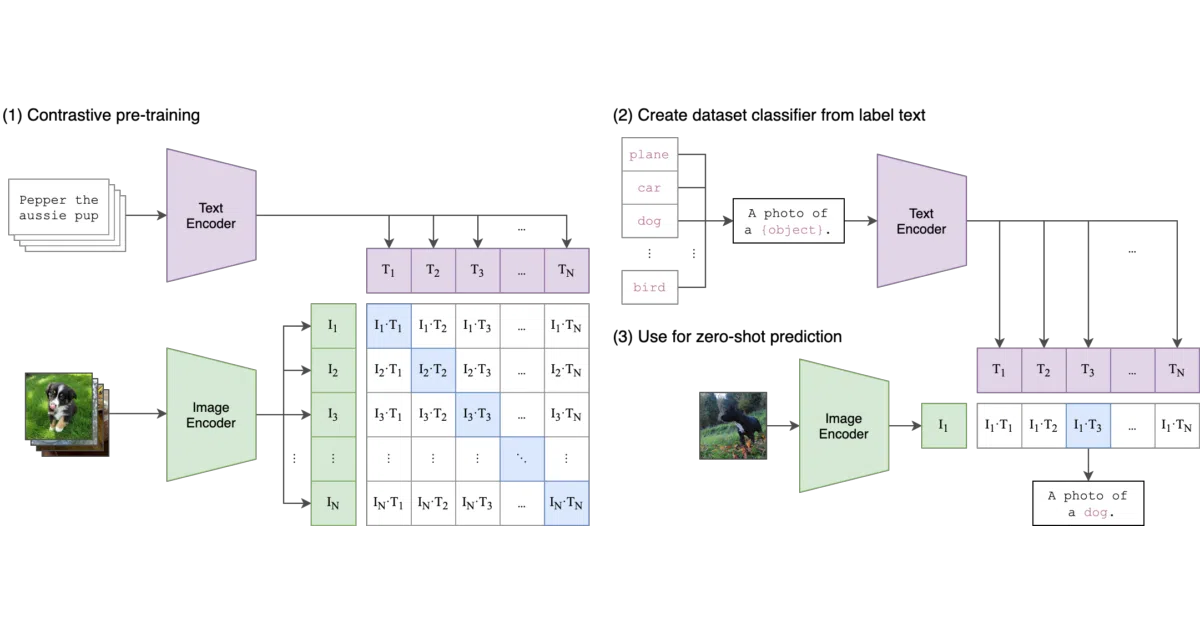
What it does OpenCLIP is a PyTorch implementation of CLIP that handles both inference and full training of contrastive vision-language models. The project maintains a broad zoo of pretrained weights trained on public datasets such as LAION-2B and DataComp-1B, all loadable through a unified model interface. It also supports variants like SigLIP, CoCa, and CLAP audio models, making it closer to a general contrastive-learning framework than a single-model reproduction.
The interesting bit
The main branch recently underwent a heavy refactor that replaces the old training loop with TrainingTask wrappers, FSDP2 distributed training, and torch.compile integration—effectively turning the codebase into a modern scaling lab. It also deliberately excised legacy cruft like Horovod and torch.jit loading, and even removed direct OpenAI JIT weight loading in favor of HuggingFace Hub routes to close an arbitrary-code-execution surface.
Key highlights
- Ships dozens of pretrained models (ViT, ConvNeXt, SigLIP, etc.) with reported zero-shot ImageNet-1k accuracies up to 85.4%.
- Training stack now uses dict-based batches, NaFlex variable-aspect image pipelines, and task-specific wrappers like
CLIPTaskandSigLIPTask. - Requires PyTorch ≥2.6 and uses
weights_only=Trueon all checkpoint loads for security. - Original OpenAI weights remain loadable, but the project primarily promotes community-trained checkpoints hosted on Hugging Face Hub.
Caveats
- The
mainbranch training API is currently unstable relative to the v3 release; several CLI flags and Python entry points have breaking changes, and the legacy training shim lacks new features like FSDP2 and audio training. - Some pretrained checkpoints still rely on the less-efficient QuickGELU activation, and using the wrong model definition postfix can silently drop accuracy.
Verdict Researchers and engineers who need to train or fine-tune contrastive vision-language models from scratch on public data should keep this bookmarked. If you only need OpenAI’s original CLIP as a black-box embedding API, this toolkit is overkill.
Frequently asked
- What is mlfoundations/open_clip?
- An open-source CLIP implementation built to train on public datasets, not just wrap OpenAI’s weights.
- Is open_clip open source?
- Yes — mlfoundations/open_clip is an open-source project tracked on heatdrop.
- What language is open_clip written in?
- mlfoundations/open_clip is primarily written in Python.
- How popular is open_clip?
- mlfoundations/open_clip has 14.2k stars on GitHub.
- Where can I find open_clip?
- mlfoundations/open_clip is on GitHub at https://github.com/mlfoundations/open_clip.