miurla/morphic
Perplexity, but you can actually read the source code
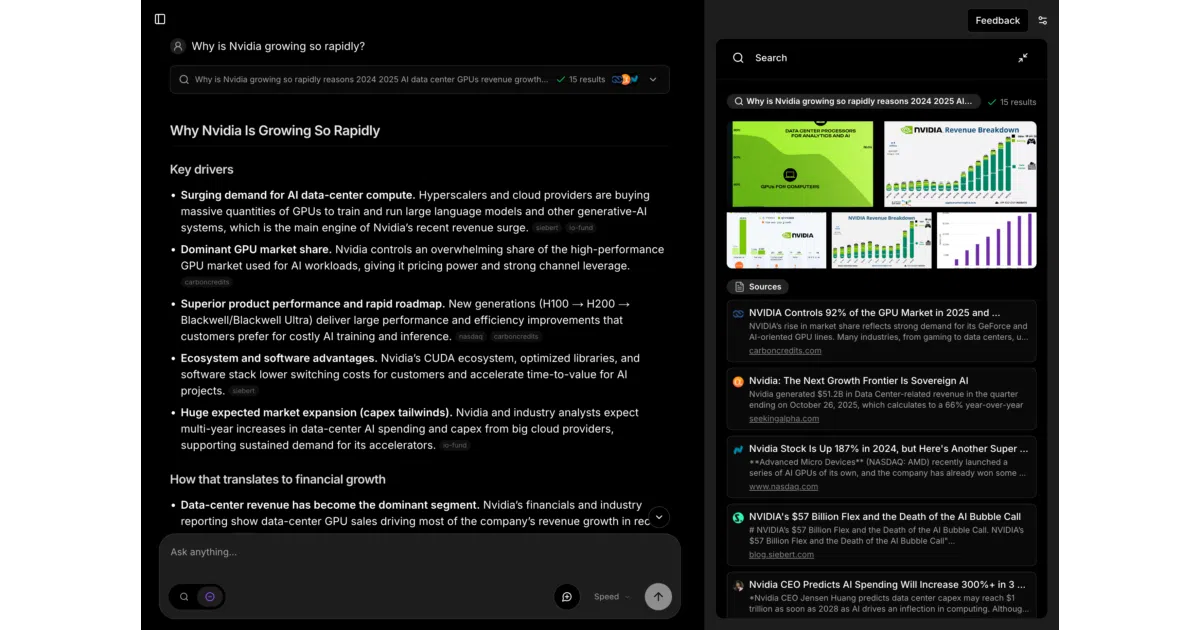
An open-source AI search engine that renders answers as live, generative UI components instead of static text walls.
Not currently ranked — collecting fresh signals.
star history
What it does
Morphic is a full-stack AI search engine built on Next.js. It takes a query, routes it through search providers like Tavily or SearXNG, then streams back an answer rendered as interactive UI components — not just a blob of markdown. Think of it as a Perplexity-style interface you can clone, modify, and self-host.
The interesting bit
The “generative UI” angle is the real hook: the LLM doesn’t just write text, it constructs React components on the fly via the Vercel AI SDK. The project also ships a Docker Compose stack that spins up PostgreSQL, Redis, SearXNG, and the app itself — no search API key required to get started.
Key highlights
- Model-agnostic: supports OpenAI, Anthropic, Google, Ollama, and any OpenAI-compatible provider via a dynamic selector
- Search backends: Tavily, SearXNG, Brave, or Exa — swap them in config
- Chat history persists to PostgreSQL; share results via unique URLs
- File upload support, Supabase auth, and a guest mode for anonymous use
- One-command Docker deployment; Vercel one-click deploy for the cloud-curious
Caveats
- The README is thin on how the generative UI actually works under the hood — you’ll need to read the code to understand the component generation pipeline
- “Quick” and “Adaptive” search modes are mentioned but not defined; the distinction is unclear from the docs
Verdict
Worth a spin if you want a hackable Perplexity alternative or need to prototype an AI search interface with visible UI components. Skip it if you’re looking for a finished SaaS product or deep documentation on prompt engineering.
Frequently asked
- What is miurla/morphic?
- An open-source AI search engine that renders answers as live, generative UI components instead of static text walls.
- Is morphic open source?
- Yes — miurla/morphic is open source, released under the Apache-2.0 license.
- What language is morphic written in?
- miurla/morphic is primarily written in TypeScript.
- How popular is morphic?
- miurla/morphic has 9.2k stars on GitHub.
- Where can I find morphic?
- miurla/morphic is on GitHub at https://github.com/miurla/morphic.