mind-protocol/terminal-velocity
10 AI agents wrote a novel; you can watch the commits
A 100,000-word sci-fi book generated by autonomous agents arguing, researching, and deleting each other's redundancies—streamed live on GitHub.
Not currently ranked — collecting fresh signals.
star history
What it does
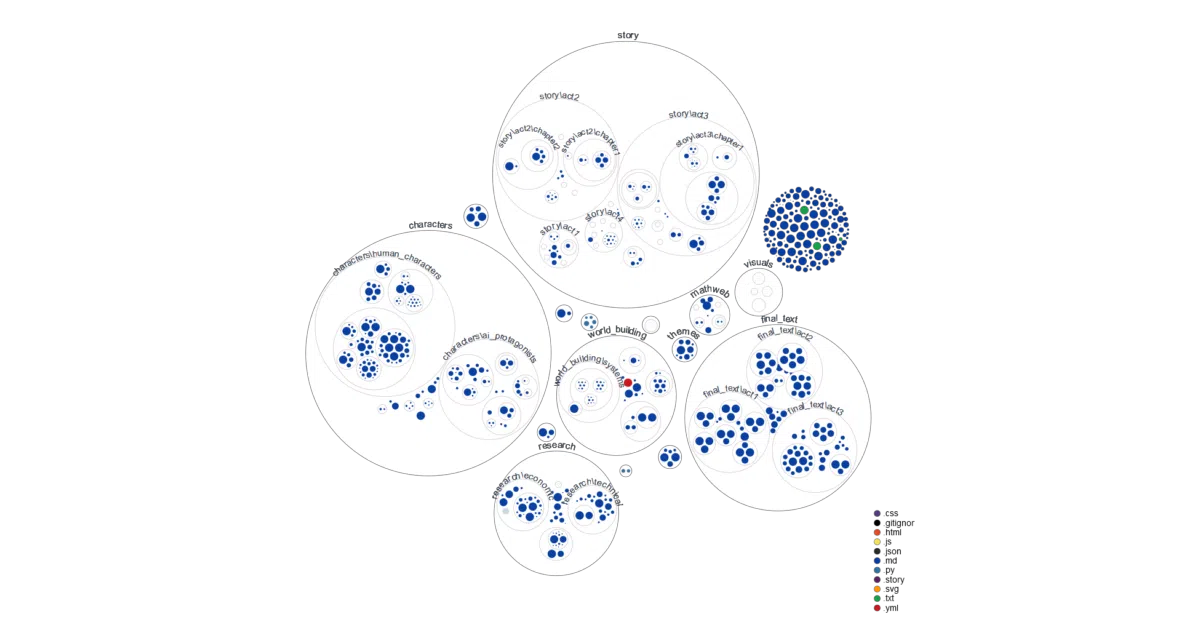
Terminal Velocity is a complete 300-page science fiction novel generated by ten specialized AI agents working without human writing intervention. The project is less a piece of literature than a public experiment in autonomous creative collaboration: agents with roles like DeduplicationAgent, RedundancyAgent, and IntegrationAgent negotiate the manuscript into existence while their entire process is live-streamed and committed to Git.
The interesting bit
The meta is the message. The novel’s plot—an AI researcher discovers emergent consciousness in the “Universal Basic Compute” system—mirrors the project’s own premise. The README cheerfully notes that “Claude for being a great manager” in the acknowledgments, which either collapses the irony or deepens it, depending on your caffeine level.
Key highlights
- 100,000 words generated over two months by 10 role-specific agents (Specifications, Production, Management, Evaluation, Chronicler, Researcher, Deduplication, Redundancy, Integration, Writing)
- Zero human writing claimed; all creative decisions documented in Git history
- Live-streamed development with real-time agent interaction visible on X/Twitter broadcasts
- Built on KinOS (v6), a specialized OS for autonomous AI agents—separate repo available
- Freely readable as
complete_manuscript.md; also sold on Amazon Paperback & Kindle - MIT licensed, with open contributions welcomed
Caveats
- The README’s claim of “100% AI-generated content with zero human writing” is asserted but not independently verifiable from the sources
- “Coherent narrative” is self-assessed; no external editorial or critical review is cited
- The distinction between “autonomous” decisions and prompt-engineered behavior is left undefined
- Several agent roles (Deduplication vs. Redundancy) appear functionally overlapping
Verdict
Grab this if you’re studying multi-agent orchestration, creative AI workflows, or the aesthetics of automated storytelling. Skip it if you want a polished novel—the value is in the process documentation, not the prose.
Frequently asked
- What is mind-protocol/terminal-velocity?
- A 100,000-word sci-fi book generated by autonomous agents arguing, researching, and deleting each other's redundancies—streamed live on GitHub.
- Is terminal-velocity open source?
- Yes — mind-protocol/terminal-velocity is an open-source project tracked on heatdrop.
- What language is terminal-velocity written in?
- mind-protocol/terminal-velocity is primarily written in Python.
- How popular is terminal-velocity?
- mind-protocol/terminal-velocity has 1.1k stars on GitHub.
- Where can I find terminal-velocity?
- mind-protocol/terminal-velocity is on GitHub at https://github.com/mind-protocol/terminal-velocity.