microsoft/mcp-for-beginners
Microsoft's Polyglot Primer for the Model Context Protocol
An open-source curriculum that teaches developers how to wire AI models to external tools using the Model Context Protocol, with hands-on examples in six languages.
Velocity · 7d
+5.7
★ / day
Trend
→steady
star history
What it does
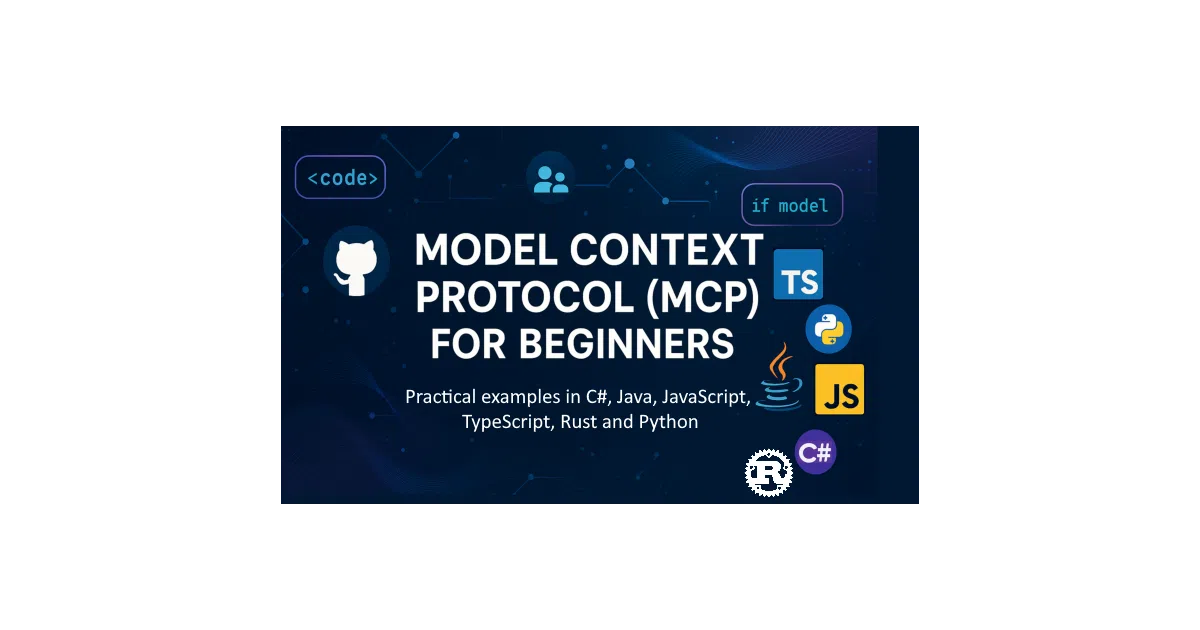
This repository is a structured curriculum for developers new to the Model Context Protocol (MCP). It walks through building MCP servers and clients using practical examples in C#, Java, JavaScript, Rust, Python, and TypeScript. The material covers session setup, service orchestration, security practices, and deployment strategies aligned with the MCP 2025-11-25 specification.
The interesting bit
The pedagogy is relentlessly analogical—MCP is compared to USB ports and universal translators—which makes it accessible, but the scope is genuinely broad: over 50 natural-language translations of the content, auto-generated via GitHub Actions. That is either impressive localization or a very large download, depending on your bandwidth.
Key highlights
- Cross-language examples in six runtimes: .NET, Java, TypeScript, JavaScript, Rust, and Python
- Covers the full lifecycle from first server to production deployment and security hardening
- Tied to the stable MCP Specification dated 2025-11-25
- Includes 50+ automated translations, though cloning them all significantly increases repository size
- Structured in progressive phases starting from zero assumed protocol knowledge
Caveats
- The README warns that 50+ language translations inflate the download size; you will want to skip the
translationsfolder unless you need them. - The pedagogical tone is heavy on analogies (USB ports, phone calls, gas pumps), which may slow down readers who already understand client-server architecture.
- The repository is categorized as Jupyter Notebooks, so expect narrative-heavy, cell-by-cell learning rather than terse reference code.
Verdict
Worth bookmarking if you need to onboard a team onto MCP and want examples in your stack’s language. Skip it if you are already running MCP in production and just need specification docs.
Frequently asked
- What is microsoft/mcp-for-beginners?
- An open-source curriculum that teaches developers how to wire AI models to external tools using the Model Context Protocol, with hands-on examples in six languages.
- Is mcp-for-beginners open source?
- Yes — microsoft/mcp-for-beginners is open source, released under the MIT license.
- What language is mcp-for-beginners written in?
- microsoft/mcp-for-beginners is primarily written in Jupyter Notebook.
- How popular is mcp-for-beginners?
- microsoft/mcp-for-beginners has 17.5k stars on GitHub and is currently holding steady.
- Where can I find mcp-for-beginners?
- microsoft/mcp-for-beginners is on GitHub at https://github.com/microsoft/mcp-for-beginners.