lyhue1991/eat_pytorch_in_20_days
PyTorch docs rated 5/10; this 20-day notebook syllabus claims a 2
It reorganizes PyTorch’s official documentation into a 20-day Chinese notebook curriculum for developers who already know deep learning but want copy-pasteable, structured examples.
Not currently ranked — collecting fresh signals.
star history
What it does
This is a Chinese-language PyTorch course delivered as Jupyter notebooks, organized into a rigid 20-day syllabus. It assumes you have already trained simple models in Keras, TensorFlow, or PyTorch, and aims to act as a friendlier, more structured layer on top of the official documentation. The material walks through modeling workflows for structured, image, text, and time-series data, then descends through tensors, autograd, and the full hierarchy of PyTorch APIs from low-level math operations to high-level training loops. The author has since appended chapters on ad-recommendation architectures and a miscellany of MLOps tooling.
The interesting bit
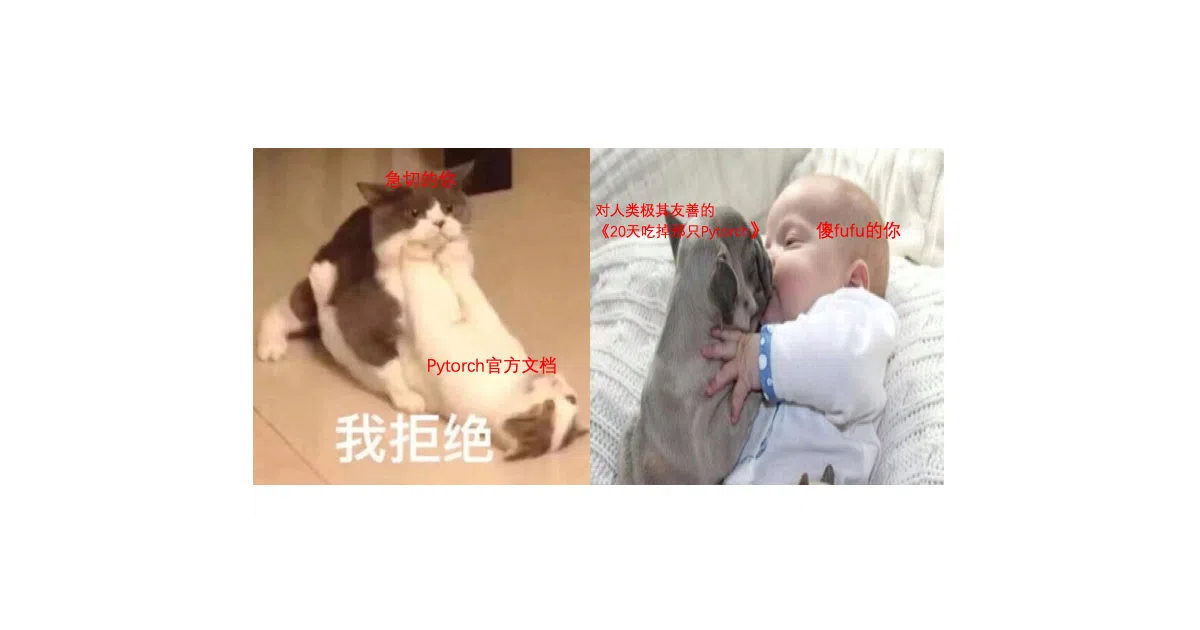
The author grades the difficulty of learning from official PyTorch documentation as a “5” and this syllabus as a “2,” an oddly specific boast that frames the whole project as a curated shortcut. The notebooks are built to serve two masters: a linear 20-day course for the committed, and a searchable snippet library for the impatient engineer who needs a minimal, working pattern right now.
Key highlights
- Explicitly restructures official PyTorch docs around user retrieval habits and a star-rated difficulty curve rather than API taxonomy.
- Covers four data modalities—structured, image, text, and time series—up front before dissecting tensors, dynamic computation graphs, and
nn.Module. - Later expansions include ad-recommendation models such as DeepFM, DIN, and DIEN.
- Bonus notebooks cover practical tooling: Kaggle GPUs, Streamlit, Gradio, Optuna, WandB, and Apple Silicon acceleration.
- Integrated with the companion
torchkeraslibrary, which grafts Keras-style progress bars and callbacks onto PyTorch training.
Caveats
- The entire project is in Chinese; no English translation is mentioned in the README.
- Not for beginners: it explicitly demands prior hands-on experience with another deep-learning framework.
- Supplementary datasets are gated behind a WeChat official-account keyword reply and a Baidu Netdisk link, an access path that is… memorable.
Verdict
Worth bookmarking if you read Chinese and want an opinionated, high-density onboarding into PyTorch and ad-tech modeling. Look elsewhere if you need an English resource or a ground-up explanation of what a neural network is.
Frequently asked
- What is lyhue1991/eat_pytorch_in_20_days?
- It reorganizes PyTorch’s official documentation into a 20-day Chinese notebook curriculum for developers who already know deep learning but want copy-pasteable, structured examples.
- Is eat_pytorch_in_20_days open source?
- Yes — lyhue1991/eat_pytorch_in_20_days is open source, released under the Apache-2.0 license.
- What language is eat_pytorch_in_20_days written in?
- lyhue1991/eat_pytorch_in_20_days is primarily written in Jupyter Notebook.
- How popular is eat_pytorch_in_20_days?
- lyhue1991/eat_pytorch_in_20_days has 6.2k stars on GitHub.
- Where can I find eat_pytorch_in_20_days?
- lyhue1991/eat_pytorch_in_20_days is on GitHub at https://github.com/lyhue1991/eat_pytorch_in_20_days.