lucidrains/magvit2-pytorch
The video tokenizer behind the 'language model beats diffusion' paper
Compresses video into discrete tokens so language models can generate frames instead of diffusion.
Not currently ranked — collecting fresh signals.
star history
What it does
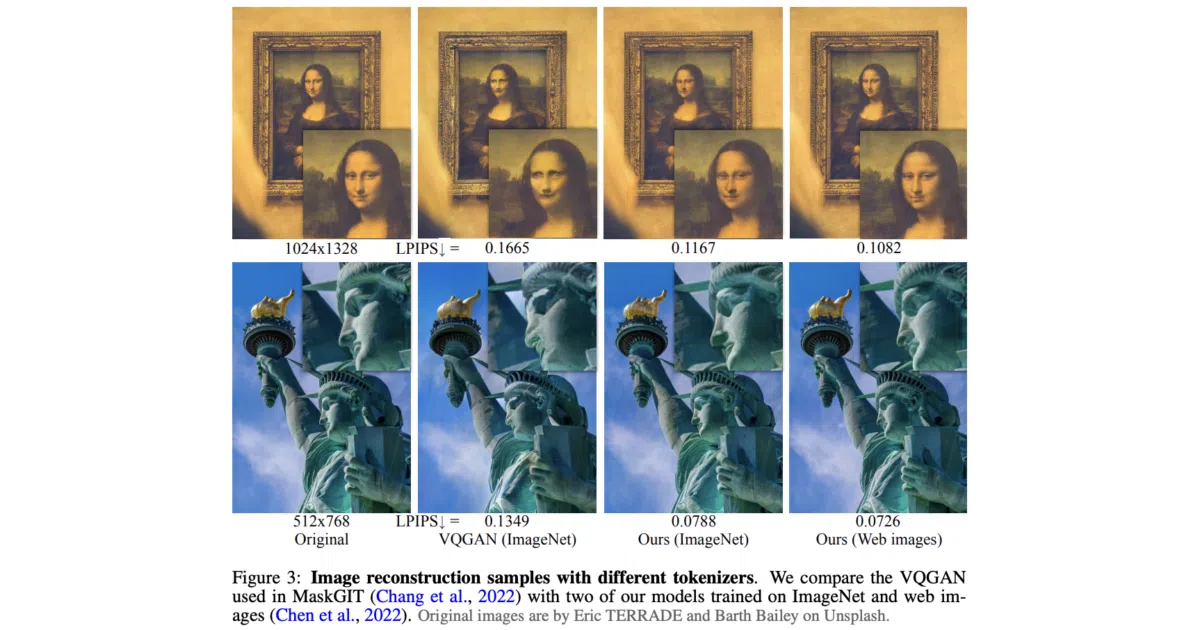
This is a PyTorch implementation of MagViT2, the video tokenizer from the paper Language Model Beats Diffusion — Tokenizer is Key to Visual Generation. It encodes video (or images) into a compact grid of discrete tokens and decodes them back, effectively giving transformers a vocabulary for visual generation. The repo includes a full training harness with adversarial losses, multi-scale discriminators, and EMA tracking.
The interesting bit
The README notes that Tencent built its Open-MAGVIT2 release on top of this code, which is a useful external validation that the architecture actually converges. The project also treats image pretraining as a first-class citizen, letting you warm up the tokenizer on stills before tackling video.
Key highlights
- Implements space-time compression with residual blocks, linear attention, and configurable 3D convolutions.
- Bundles a
VideoTokenizerTrainerthat handles discriminator management, gradient accumulation, and EMA averaging. - Supports mixed image-and-video pretraining; the README cites prior work showing image pretraining helps video synthesis.
- Multi-scale temporal discriminators and adaptive RMSNorm are included for conditioning.
- Weights & Biases integration is built in for experiment tracking.
Caveats
- The todo list still has open items, including axial rotary embeddings for spatial attention and helper utilities for multi-resolution temporal discriminators.
- The Lookup Free Quantizer (LFQ) core lives in a separate repository, so this package relies on an external dependency for the actual quantization step.
- It is unclear from the README whether the unchecked roadmap items are nice-to-haves or blockers for full reproduction.
Verdict
Worth a look if you are building or reproducing autoregressive video-generation pipelines and need a tokenizer with a training loop already wired up. Skip it if you want a turnkey, fully validated end-to-end model without assembly.
Frequently asked
- What is lucidrains/magvit2-pytorch?
- Compresses video into discrete tokens so language models can generate frames instead of diffusion.
- Is magvit2-pytorch open source?
- Yes — lucidrains/magvit2-pytorch is open source, released under the MIT license.
- What language is magvit2-pytorch written in?
- lucidrains/magvit2-pytorch is primarily written in Python.
- How popular is magvit2-pytorch?
- lucidrains/magvit2-pytorch has 669 stars on GitHub.
- Where can I find magvit2-pytorch?
- lucidrains/magvit2-pytorch is on GitHub at https://github.com/lucidrains/magvit2-pytorch.