logpai/logparser
16 ways to turn log soup into structured data
A Python toolkit that collects two decades of academic log-parsing algorithms so you don't have to implement them from scratch.
Not currently ranked — collecting fresh signals.
star history
What it does
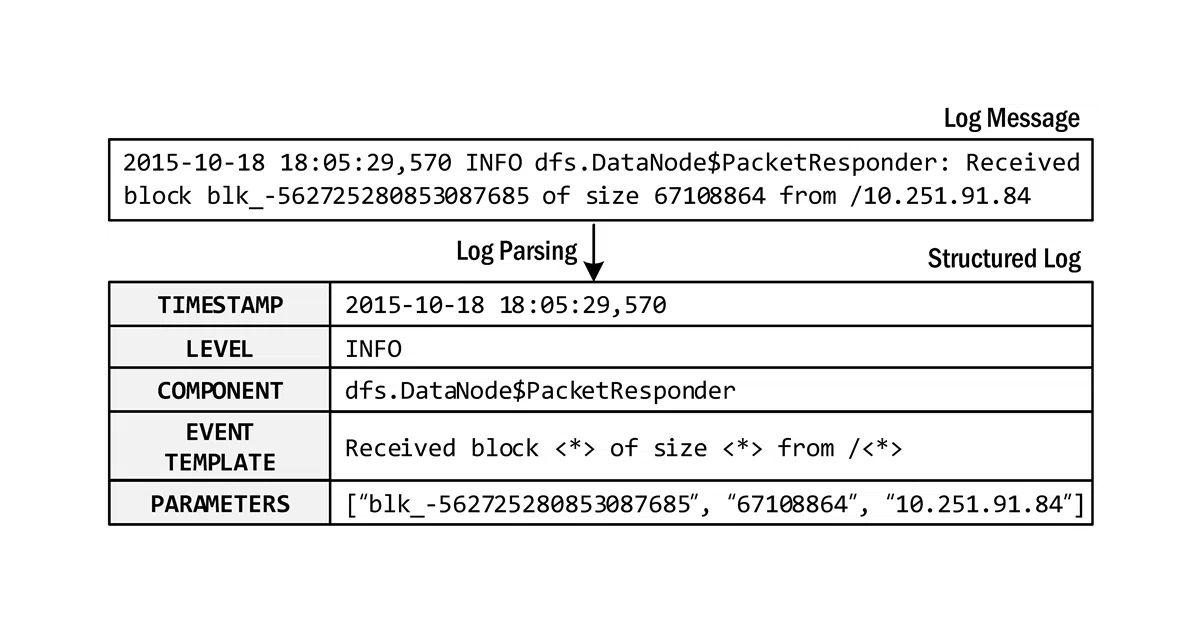
Logparser takes unstructured system logs and extracts event templates, turning raw text lines into structured events you can actually query and analyze. It ships as a Python package (pip install logparser3) with implementations of 16 different parsing algorithms, each originally published in venues from IPOM'03 up to TSC'23.
The interesting bit
The real value isn’t any single algorithm—it’s the head-to-head benchmarking. Every parser includes a benchmark against common log datasets, so you can compare how Drain’s fixed-depth tree stacks up against Spell’s streaming approach or Logram’s n-gram dictionaries on your actual data. It’s a research survey you can pip-install.
Key highlights
- 16 parsers spanning 20 years of research, from SLCT (2003) to Brain (2023)
- Each implementation includes links to original papers and reproducible benchmarks
- Python 3.6+ support after a major v1.0.0 refactor (the repo notes this was a long-running pain point)
- Installable via PyPI as
logparser3 - Code formatted with
blackand running CI
Caveats
- The README cuts off mid-table for the Brain parser, so the full list may be slightly longer or details may be incomplete
- The project is clearly research-oriented; production readiness for any given parser will vary
Verdict
Grab this if you’re building log analytics pipelines and want to test-drive established parsing algorithms before rolling your own. Skip it if you need a single, opinionated, battle-hardened parser with commercial support.
Frequently asked
- What is logpai/logparser?
- A Python toolkit that collects two decades of academic log-parsing algorithms so you don't have to implement them from scratch.
- Is logparser open source?
- Yes — logpai/logparser is an open-source project tracked on heatdrop.
- What language is logparser written in?
- logpai/logparser is primarily written in Python.
- How popular is logparser?
- logpai/logparser has 2k stars on GitHub.
- Where can I find logparser?
- logpai/logparser is on GitHub at https://github.com/logpai/logparser.