kengz/aiva
One bot, every platform, multiple languages — AIVA tries to do it all
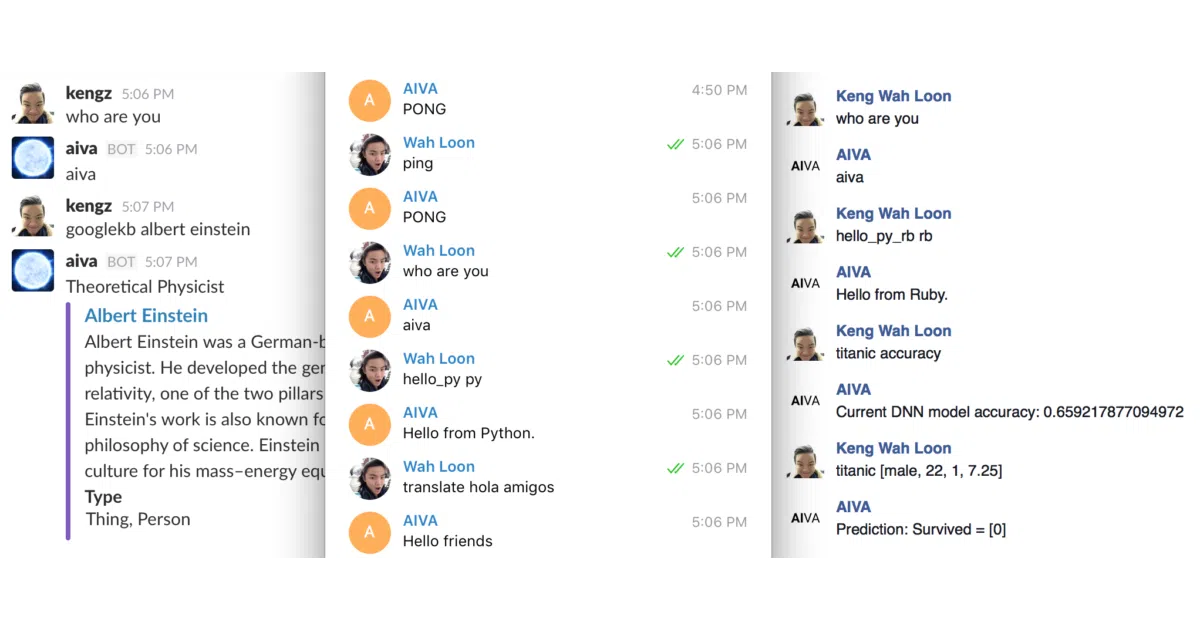
AIVA is a Hubot-based virtual assistant framework that lets you write bot features once and deploy them to Slack, Telegram, and Facebook simultaneously, with cross-language support via SocketIO.
Not currently ranked — collecting fresh signals.
star history
What it does
AIVA is a general-purpose bot framework built on top of GitHub’s Hubot. It handles the plumbing so you can write features in Node.js, Python, or Ruby and run them across multiple chat platforms without rewriting adapters for each one. The project includes setup scripts, Docker support, and a documented (though not preinstalled since v4) path to plug in AI tools like TensorFlow, spaCy, and Watson.
The interesting bit
The multi-language angle is the unusual part: AIVA uses SocketIO to let Node.js, Python, and Ruby processes talk to each other. So your NLP pipeline can live in Python while your bot logic stays in JavaScript, and they can share state. That’s more ambition than most bot frameworks show.
Key highlights
- Cross-platform by default: Slack, Telegram, Facebook, plus any Hubot adapter
- Multi-language via SocketIO inter-process communication
- Docker image available (
kengz/aiva) - Extends Hubot, so existing Hubot modules mostly work
- v4 slimmed down from the “quite heavy” v3.2.1 to be more developer-friendly
Caveats
- AI tools are “built-in” but explicitly not preinstalled since v4 — you’ll need to bring your own TensorFlow, scikit-learn, etc.
- The “Contextual Graph Knowledge Base” and “NLP intent-parsing engine” listed in the roadmap appear to be aspirations, not shipped features
- 845 stars suggests modest adoption; the project may be lightly maintained
Verdict
Worth a look if you’re building a multi-platform bot and specifically need polyglot support — the SocketIO bridge is genuinely handy. Skip it if you want batteries-included AI or a framework with active community momentum; AIVA’s “heavy lifting” is mostly Hubot’s, and you’ll still be doing plenty of integration work yourself.
Frequently asked
- What is kengz/aiva?
- AIVA is a Hubot-based virtual assistant framework that lets you write bot features once and deploy them to Slack, Telegram, and Facebook simultaneously, with cross-language support via SocketIO.
- Is aiva open source?
- Yes — kengz/aiva is open source, released under the MIT license.
- What language is aiva written in?
- kengz/aiva is primarily written in JavaScript.
- How popular is aiva?
- kengz/aiva has 847 stars on GitHub.
- Where can I find aiva?
- kengz/aiva is on GitHub at https://github.com/kengz/aiva.