johnson7788/MultiAgentPPT
A committee of agents writes your slides, one page at a time
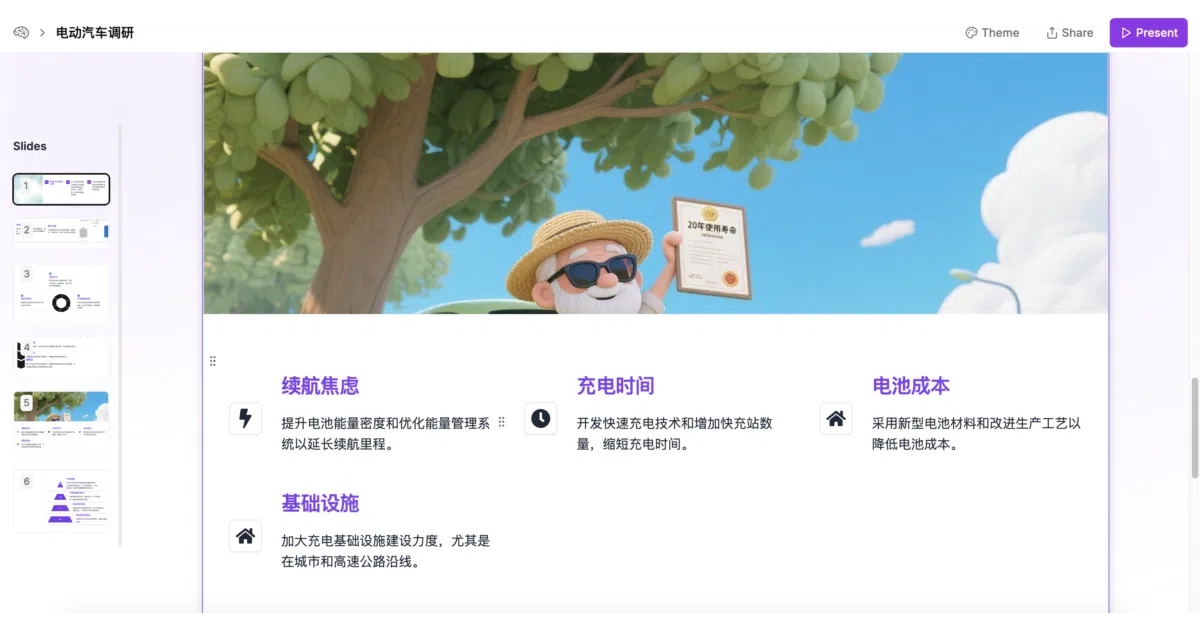
MultiAgentPPT orchestrates multiple LLM agents to research, outline, and draft presentations with streaming output and built-in quality checks.
Not currently ranked — collecting fresh signals.
star history
What it does
MultiAgentPPT is a Python/Next.js system that generates presentations from a single topic prompt. It chains several specialized agents—outline generation, topic splitting, parallel research with RAG retrieval, summary, and a looped write-and-check cycle—to produce slide content streamed live to a web frontend. The backend also supports exporting to .pptx via python-pptx.
The interesting bit
The architecture is deliberately over-engineered in a useful way: instead of one bloated prompt, a PPTChecker agent verifies each slide and retries up to three times, while research agents run in parallel against MCP-connected knowledge sources. The author also replaced title-based deduplication with page_number as a stable ID, which is the kind of boring detail that prevents chaos when content updates mid-stream.
Key highlights
- Uses Google’s ADK and A2A protocol for agent-to-agent communication, plus MCP for tool/retrieval integration
- Research agents run in parallel; results merge into a single summary before slide generation
- Loop-based generation avoids LLM token limits by creating one slide per iteration rather than dumping everything at once
- Frontend shows real-time agent status and streams content as it is produced
- Includes simplified fallback services (
simpleOutline,simplePPT) that skip retrieval and concurrency - Docker Compose setup provided for both frontend and backend
Caveats
- The author explicitly states this version is no longer maintained; a template-based successor (
TrainPPTAgent) is recommended instead - Built-in demo data is limited to an “electric vehicle development overview” sample; real deployments require configuring your own MCP tools, prompts, and RAG data
- Python <3.11 may trigger bugs; the author recommends 3.12
- Editable/downloadable
.pptxfrontend integration is still listed as unfinished
Verdict Worth a look if you’re studying multi-agent orchestration patterns or building a similar pipeline and want a reference implementation with visible plumbing. Skip it if you need a polished, maintained product—the author already has.
Frequently asked
- What is johnson7788/MultiAgentPPT?
- MultiAgentPPT orchestrates multiple LLM agents to research, outline, and draft presentations with streaming output and built-in quality checks.
- Is MultiAgentPPT open source?
- Yes — johnson7788/MultiAgentPPT is open source, released under the MIT license.
- What language is MultiAgentPPT written in?
- johnson7788/MultiAgentPPT is primarily written in Python.
- How popular is MultiAgentPPT?
- johnson7788/MultiAgentPPT has 1.6k stars on GitHub.
- Where can I find MultiAgentPPT?
- johnson7788/MultiAgentPPT is on GitHub at https://github.com/johnson7788/MultiAgentPPT.