jdagdelen/hyperDB
A vector database that mocks VC culture while actually working
HyperDB is a local vector store wrapped in satire—$135M cap SAFEs, meme benchmarks, and a C++ backend that actually does the math.
Not currently ranked — collecting fresh signals.
star history
What it does
HyperDB stores documents as vectors and lets you query them by semantic similarity. Feed it JSON, point it at a text field, and ask questions like “Likes to sleep.” It returns ranked results—Snorlax first, obviously. Data persists via gzipped pickle files. The pitch deck is a Rickroll.
The interesting bit
The joke is the packaging, not the payload. Underneath the meme benchmarks and fake fundraising, there’s a C++ vector store using Intel MKL BLAS for hardware-accelerated similarity search. The Python surface is deliberately thin—load, query, save, done—because the author seems to believe most LLM agent use cases don’t need a distributed cluster to find a sleepy Pokémon.
Key highlights
- Single-file persistence:
db.save("file.pickle.gz")anddb.load()—no server, no config - C++ backend with MKL BLAS acceleration for the actual vector math
- Optional local embeddings via
sentence-transformers; otherwise bring your own vectors - Indexes documents with IDs and metadata, though the README doesn’t detail query filters on either
- “Not entirely a joke”—the author’s words, not mine
Caveats
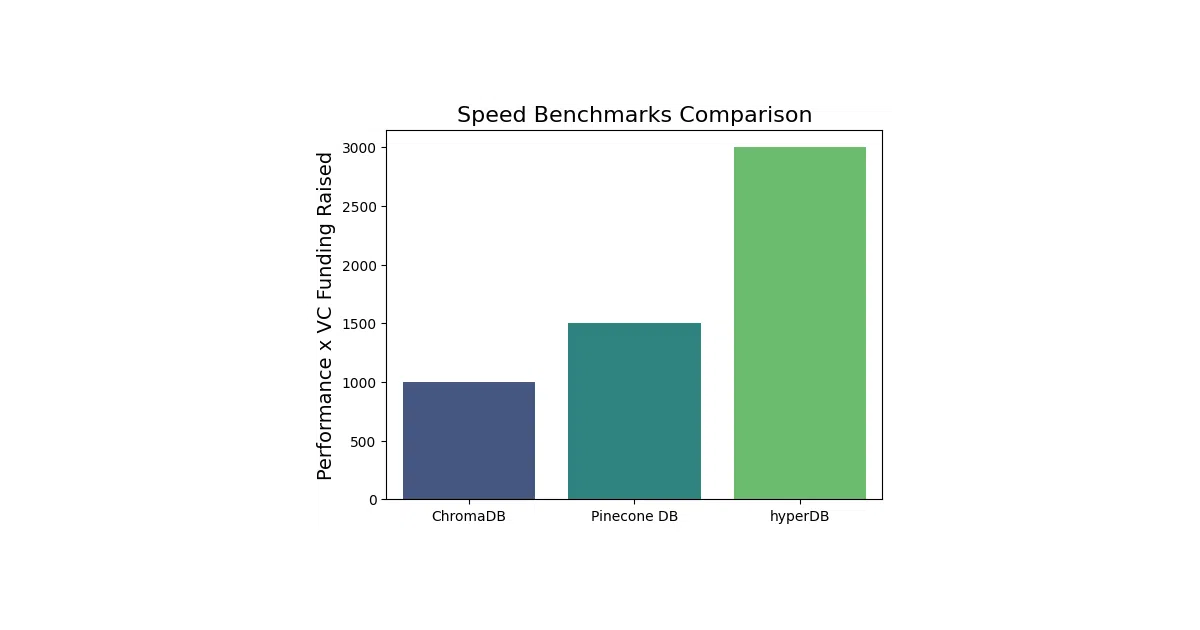
- The “benchmark” image is unlabeled and credited to “Benim Kıçım” (Turkish for “my butt”); interpret performance claims accordingly
- No visible docs on metadata filtering, update semantics, or concurrent access
- Gzipped pickle isn’t exactly a durable transaction log
Verdict
Worth a look if you want local vector search without spinning up Docker or signing up for a cloud API. Skip it if you need replication, streaming ingestion, or serious observability—the satire is thick, but the feature set is honestly thin.
Frequently asked
- What is jdagdelen/hyperDB?
- HyperDB is a local vector store wrapped in satire—$135M cap SAFEs, meme benchmarks, and a C++ backend that actually does the math.
- Is hyperDB open source?
- Yes — jdagdelen/hyperDB is open source, released under the MIT license.
- What language is hyperDB written in?
- jdagdelen/hyperDB is primarily written in Python.
- How popular is hyperDB?
- jdagdelen/hyperDB has 1.4k stars on GitHub.
- Where can I find hyperDB?
- jdagdelen/hyperDB is on GitHub at https://github.com/jdagdelen/hyperDB.