gnipbao/story-to-handdrawn-video
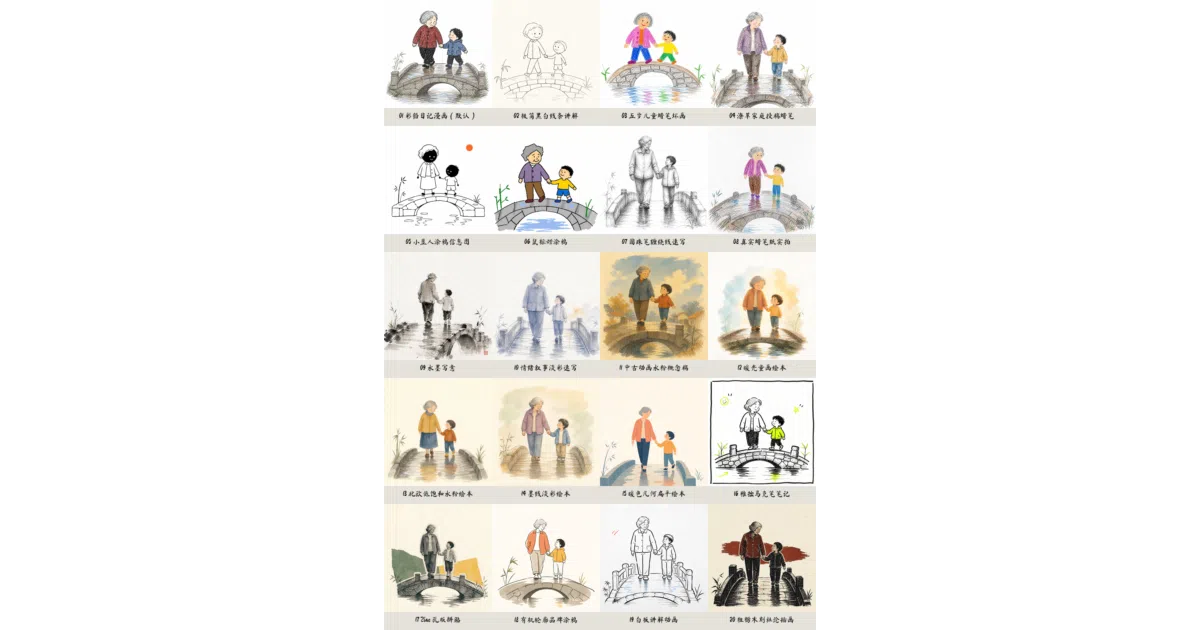
An agent skill that draws your story in 20 crayon styles
It turns Chinese story text or ordered images into timed, silent, hand-drawn MP4s by letting an agent handle the storyboarding and rendering grunt work.
Velocity · 7d
+5.0
★ / day
Trend
↘cooling
star history
What it does
The project is a Remotion-based renderer paired with an agent skill-package/. Feed it Chinese story text or a stack of ordered images, and it generates a 3:4 vertical silent MP4 using a hand-drawn visual system—think colored-pencil diary, ink wash, or zine collage. An agent runtime such as Codex, Claude Code, or Kimi Code handles the natural-language prompting, sentence splitting, storyboarding, and image generation, while the renderer composites the layers and spits out a clean picture track meant for post-production dubbing.
The interesting bit
The real craft is in the 20 tightly defined style recipes—each with fixed example images and a JSON contact sheet—that lock the look so generated frames stay consistent across scenes. The default colored-pencil-diary style is deliberately naive, but you can switch to anything from kid-crayon chaos to linocut-editorial without retraining a model. The renderer also builds a local black-and-white underlayer that aligns with the final color frame, enabling a left-to-right text → sketch → color reveal.
Key highlights
- 20 built-in hand-drawn styles (colored pencil, ink wash, gouache, zine riso, whiteboard, etc.) selectable by name, ID, or alias.
- Agent-driven workflow: natural language commands trigger sentence splitting, storyboarding, image generation, and rendering.
- Silent H.264 output (
1080×1440or720×960preview) designed as a picture track for later voiceover and music. - Accepts either raw Chinese story text or ordered image uploads, preserving original wording and composition.
- Optional bottom-right page-curl transition with a ghost of the previous frame on the paper back.
Caveats
- Requires a full local toolchain (
Node.js 20+,Python 3.10+,FFmpeg, Chrome) plus a compatible agent runtime; this is not a lightweight web app. - Image generation defaults to Codex Image2 and only falls back to OpenAI if explicitly requested, so your results depend on whichever image provider the agent uses.
- The README warns that time jumps, ambiguous references, medical scenes, or age-sensitive characters should be reviewed manually via a visual plan before rendering.
Verdict
Content creators and developers building automated short-form video pipelines will find the style discipline and agent integration useful. If you just need a one-off slideshow, the toolchain is probably overkill.
Frequently asked
- What is gnipbao/story-to-handdrawn-video?
- It turns Chinese story text or ordered images into timed, silent, hand-drawn MP4s by letting an agent handle the storyboarding and rendering grunt work.
- Is story-to-handdrawn-video open source?
- Yes — gnipbao/story-to-handdrawn-video is open source, released under the MIT license.
- What language is story-to-handdrawn-video written in?
- gnipbao/story-to-handdrawn-video is primarily written in HTML.
- How popular is story-to-handdrawn-video?
- gnipbao/story-to-handdrawn-video has 2.2k stars on GitHub and is currently cooling off.
- Where can I find story-to-handdrawn-video?
- gnipbao/story-to-handdrawn-video is on GitHub at https://github.com/gnipbao/story-to-handdrawn-video.