fynnfluegge/rocketnotes
A markdown editor that actually files your notes for you
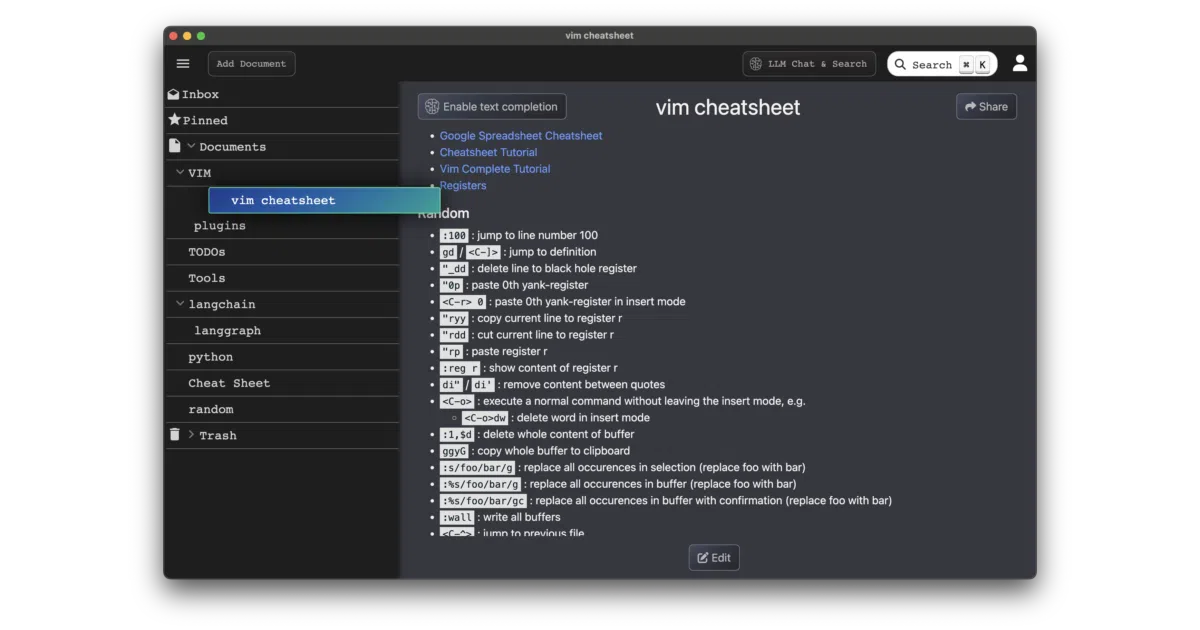
Rocketnotes pairs a hierarchical note editor with an AI agent that reads your scattered snippets and archives them where they belong.
Not currently ranked — collecting fresh signals.
star history
What it does Rocketnotes is a web-based Markdown editor with a document tree, semantic search, and the usual AI trimmings—chat with your notes, copilot-style completions, voice-to-text. You can run it in the cloud or self-host entirely via Docker with Ollama for local LLMs. There’s also an Electron app and a Neovim plugin if you prefer staying in the terminal.
The interesting bit The standout is the “agentic archiving” workflow: you dump snippets into a Zettelkasten-style inbox, and a LangGraph-powered agent figures out which existing document each snippet belongs in, then files it there automatically. It’s the rare note-taking app that tries to solve the “where did I put that?” problem before you even ask.
Key highlights
- Hierarchical document tree with drag-and-drop and pinned favorites
- Semantic search via sentence-transformers (cloud: S3 Vectors, local: ChromaDB)
- Multi-LLM support: OpenAI, Anthropic, Together AI, or local Ollama
- MCP server integration—expose your knowledge base to other LLM tools
- Neovim plugin for editor-native note-taking
- Backend is Go and Python; frontend is Angular/TypeScript
Caveats
- The macOS Electron app isn’t signed with an Apple developer license, so Gatekeeper will flag it
- AWS stack (DynamoDB, S3, Cognito) is baked into the cloud deployment; local Docker is the escape hatch
Verdict Worth a look if you’re a developer who likes Zettelkasten methods but hates manual filing, or if you want an Obsidian alternative with heavier AI integration and a proper self-hosted option. Skip it if you need mobile apps or collaborative real-time editing—neither is mentioned.
Frequently asked
- What is fynnfluegge/rocketnotes?
- Rocketnotes pairs a hierarchical note editor with an AI agent that reads your scattered snippets and archives them where they belong.
- Is rocketnotes open source?
- Yes — fynnfluegge/rocketnotes is open source, released under the Apache-2.0 license.
- What language is rocketnotes written in?
- fynnfluegge/rocketnotes is primarily written in TypeScript.
- How popular is rocketnotes?
- fynnfluegge/rocketnotes has 1.5k stars on GitHub.
- Where can I find rocketnotes?
- fynnfluegge/rocketnotes is on GitHub at https://github.com/fynnfluegge/rocketnotes.