frenzymath/Danus
A proof swarm where nothing counts until a verifier says so
Danus points a swarm of codex agents at research math and only lets verified lemmas into a shared fact graph — the sole source of truth.
Collecting fresh signals — velocity needs a few days of history.
star history
What it does
Danus is a Python orchestration engine that runs mathematical research as a multi-agent pipeline: a main codex agent decomposes a problem and steers a swarm of codex workers, each grinding on one small claim at a time — a lemma, a counterexample, a toy case. Every submission passes through a stateless cold-start verifier; only accepted claims enter a content-addressed fact graph, and the finished result can be rendered into a human report or a publishable LaTeX paper. The repo claims this branch solved a problem called YTD, with a paper and technical report telling the full story.
The interesting bit
The separation of powers is enforced by tool permissions, not prompts: the main agent literally lacks fact_submit, so the agent steering the search cannot inject unverified math into the graph, and the verifier writes nothing at all. Because each worker only loads the facts relevant to its current claim, context windows stay small even as the proof grows to many pages.
Key highlights
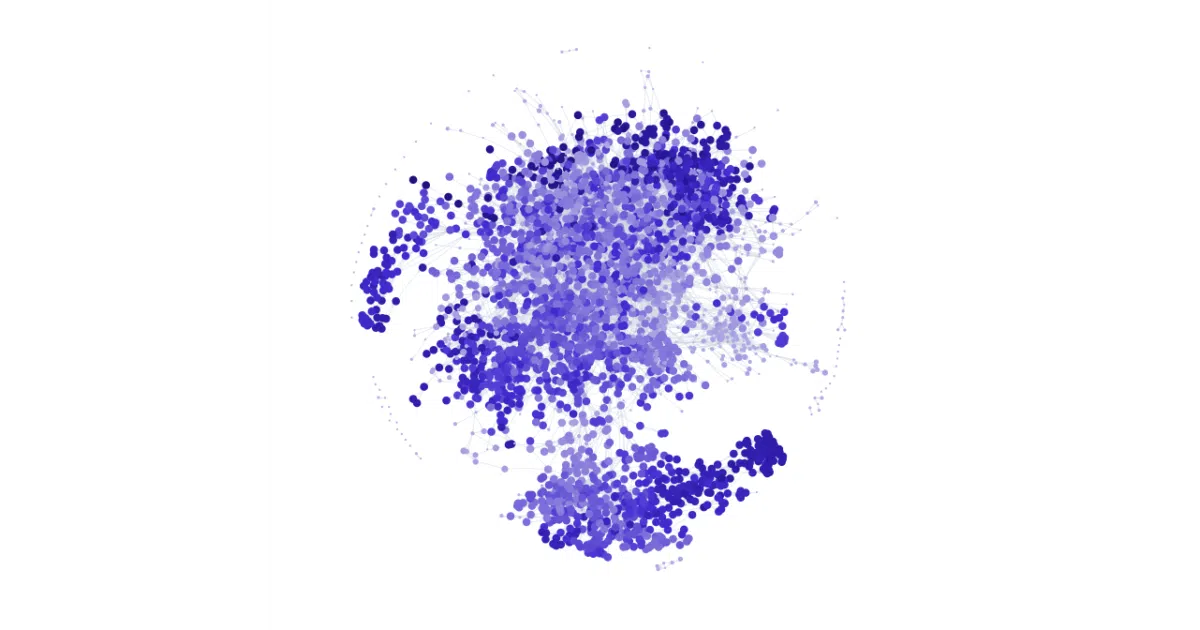
- Real-run fact graph shown in the README: 3,157 verified facts, 8,616 dependency edges, chains up to 54 facts deep.
- Workers iterate submit–verify–repair loops until a claim passes; the verifier is a fresh instance each time, retaining nothing.
- Facts are content-addressed and cascade-revocable; the final paper is re-verified as a whole document before delivery.
- This branch is codex-only (no Claude Code needed); a separate
mainbranch runs the orchestrator on Claude Code with the same proof core. - Everything is BYO keys on an OpenAI-compatible endpoint; includes an arXiv theorem search integration and a read-only observability dashboard.
Caveats
- The intended mode runs codex with approvals and sandbox bypassed — the README itself says to use an isolated, disposable host and read the security docs first.
- Out of the box,
write-paperproduces compilable but fact-stack-flavored prose; you’re advised to supply exemplar papers for readable output. - You must negotiate a stopping condition with the main agent up front, or the swarm keeps burning tokens past the point you cared about.
Verdict
Worth a look if you’re building agentic systems where correctness gating matters more than vibes — the role-gated tool design is the transferable idea. Skip it if you wanted a turnkey math solver; this is research infrastructure with sharp edges and your own API bill.
Frequently asked
- What is frenzymath/Danus?
- Danus points a swarm of codex agents at research math and only lets verified lemmas into a shared fact graph — the sole source of truth.
- Is Danus open source?
- Yes — frenzymath/Danus is open source, released under the Apache-2.0 license.
- What language is Danus written in?
- frenzymath/Danus is primarily written in Python.
- How popular is Danus?
- frenzymath/Danus has 503 stars on GitHub.
- Where can I find Danus?
- frenzymath/Danus is on GitHub at https://github.com/frenzymath/Danus.