elyra-ai/elyra
JupyterLab's Swiss Army Knife for AI Pipelines
Elyra bolts a visual pipeline editor, batch execution, and AI assistants onto JupyterLab so data scientists can stop duct-taping notebooks together.
Not currently ranked — collecting fresh signals.
star history
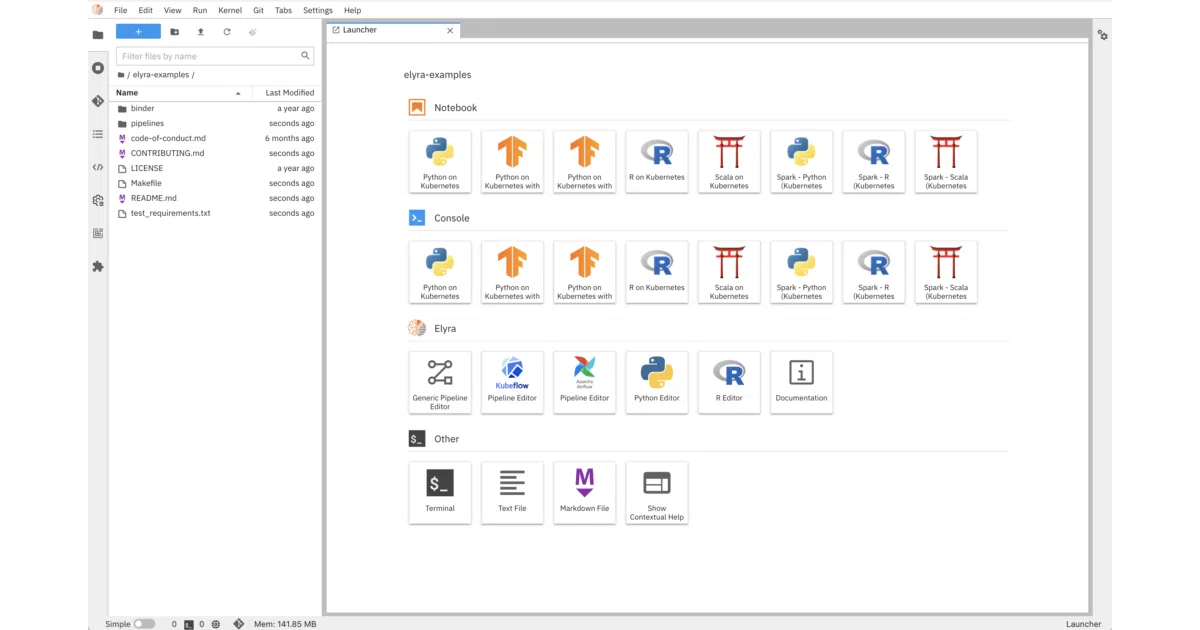
What it does Elyra is a collection of JupyterLab extensions that turn the notebook environment into something closer to a full AI/ML workbench. It adds a drag-and-drop pipeline editor, the ability to run notebooks or Python/R scripts as batch jobs, reusable code snippets, Git integration, and even an AI assistant hook via Jupyter AI. It also throws in LSP support, a Python debugger, and hybrid runtime execution through Jupyter Enterprise Gateway.
The interesting bit The visual pipeline editor is the standout: it lets you wire notebooks and scripts into DAGs that can run on Kubeflow Pipelines or Apache Airflow without leaving JupyterLab. That’s the “glue code” problem Elyra actually solves — moving from “works on my laptop” to “runs on the cluster” without a context switch.
Key highlights
- Visual pipeline editor for notebook/script DAGs targeting Kubeflow or Airflow
- Batch execution of notebooks, Python, and R scripts with local or remote runtimes
- AI assistant integration via Jupyter AI for in-cell code help
- Reusable code snippets, Git integration, and LSP-powered editing
- Docker and conda-forge distribution; supports JupyterLab 4.x (Python 3.10+, Node.js 22)
Caveats
- The Python debugger is marked experimental
- Installation requires Node.js 22 and a JupyterLab build step for older versions, which is more friction than a pure pip install
- The README lists many features but doesn’t quantify performance or scalability limits for pipeline execution
Verdict Data scientists and ML engineers already living in JupyterLab who need to productionize notebook workflows without learning a separate orchestration tool. If you’re happy with vanilla notebooks or already committed to a different pipeline framework, Elyra is probably overkill.
Frequently asked
- What is elyra-ai/elyra?
- Elyra bolts a visual pipeline editor, batch execution, and AI assistants onto JupyterLab so data scientists can stop duct-taping notebooks together.
- Is elyra open source?
- Yes — elyra-ai/elyra is open source, released under the Apache-2.0 license.
- What language is elyra written in?
- elyra-ai/elyra is primarily written in Python.
- How popular is elyra?
- elyra-ai/elyra has 2k stars on GitHub.
- Where can I find elyra?
- elyra-ai/elyra is on GitHub at https://github.com/elyra-ai/elyra.