devenjarvis/lathe
LLM as teacher, not ghostwriter: a tutorial generator you actually type
Lathe generates multi-part technical tutorials via LLM skills, then makes you write the code yourself in a local UI.
Not currently ranked — collecting fresh signals.
star history
What it does
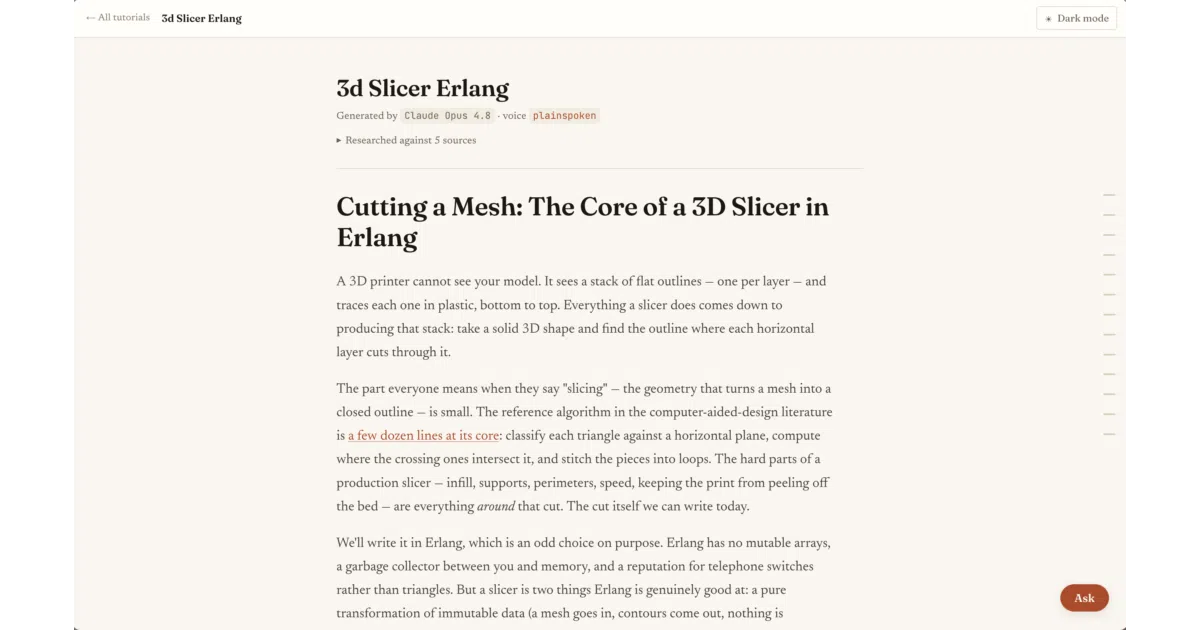
Lathe is a Go CLI plus LLM “skills” that generate hands-on, multi-part technical tutorials from any prompt. You run /lathe build a 3D Slicer in Erlang inside Claude Code, Cursor, or Codex, then open a local web UI at localhost:4242 to read and work through the tutorial by hand. The CLI stores, serves, and manages tutorials; the LLM skills handle generation, extension, verification, and Q&A.
The interesting bit
The author explicitly built this to avoid LLMs doing the thinking for you. The UI is designed for pleasant reading, but the code is deliberately left for your fingers. Every tutorial documents its sources, model, and prompt “voice” — a rare transparency move. The author also admits he “vibecoded” the tool itself, which is either irony or honesty, possibly both.
Key highlights
- Single self-contained Go binary; installs via Homebrew (macOS), curl script, or
go install - Skills install into
.claude/skills/,.cursor/commands/, or.agents/skills/depending on your LLM tool - Commands:
/lathe,/lathe-extend,/lathe-verify,/lathe-ask,/lathe-tag - CLI never calls an LLM directly; it hands you the exact skill command to paste, then records results via subcommands like
lathe storeandlathe verify-result - Dark mode included (the README makes a point of this)
Caveats
- macOS-only for Homebrew; Linux needs the install script or
go install - Author only tests on Claude Code + macOS; other setups “should work” but are unverified
- Tutorials are explicitly not as good as human-written ones; hallucinations possible, though the author argues the risk is lower when you’re actively typing the code
Verdict
Worth a look if you learn by doing and want to explore domains with scarce human tutorials (the author’s examples: 3D slicers, embedded Zig). Skip it if you want LLMs to write the code for you, or if you need battle-tested, pedagogically reviewed content.
Frequently asked
- What is devenjarvis/lathe?
- Lathe generates multi-part technical tutorials via LLM skills, then makes you write the code yourself in a local UI.
- Is lathe open source?
- Yes — devenjarvis/lathe is open source, released under the MIT license.
- What language is lathe written in?
- devenjarvis/lathe is primarily written in Go.
- How popular is lathe?
- devenjarvis/lathe has 1.7k stars on GitHub.
- Where can I find lathe?
- devenjarvis/lathe is on GitHub at https://github.com/devenjarvis/lathe.