deepfakes/faceswap
The deepfake tool that wants you to read its manifesto first
A 55K-star Python project for swapping faces in photos and videos, wrapped in an unusually explicit ethical framework.
Not currently ranked — collecting fresh signals.
star history
What it does
FaceSwap is a Python-based deep-learning tool that extracts faces from source images or videos, trains a neural-network model on them, and converts target media by swapping in the learned face. It runs on Windows, Linux, and macOS, with a GPU strongly recommended (CUDA for NVIDIA, ROCm for AMD on Linux). You can drive it via CLI commands or a GUI.
The interesting bit
The README spends nearly as many words on ethics as on installation. The developers explicitly state what the tool is not for, ban support questions from the GitHub repo, and route everything to a forum and Discord. It’s a rare case of a project trying to outrun its own worst use cases through policy rather than just code.
Key highlights
- Pipeline is explicit and manual: extract → train → convert, with models saved between runs
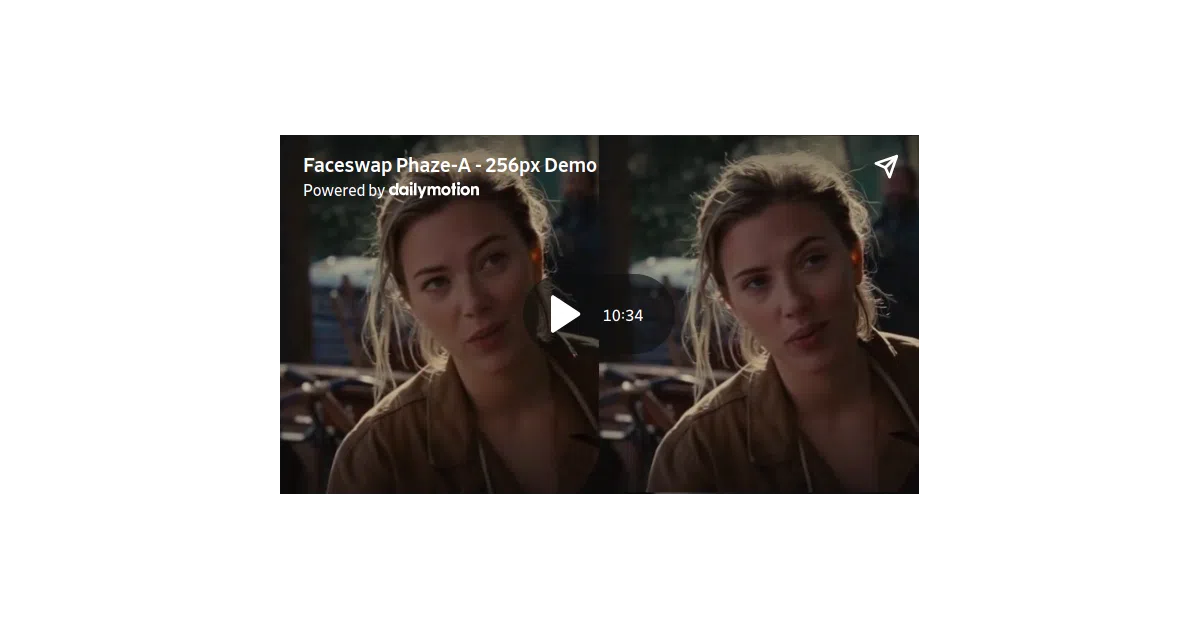
- Supports multiple models including Villain, Phaze-A, DFL-H128, and community contributions like Unbalanced and OHR
- Includes a GUI (
python faceswap.py gui) and a bundled video conversion helper (tools.py effmpeg) - Reusing pretrained models is recommended for faster convergence; low data? Start with a lookalike subject
- Active community with tiered contribution paths: devs, advanced users, and end-users each get their own issue tags and forums
Caveats
- The README is vague on actual model architectures, training times, and hardware requirements beyond “modern GPU”
- No benchmarks or quality comparisons against other face-swap tools are provided
- Support questions posted to GitHub issues are “liable to be deleted without response”
Verdict
Worth a look if you want to tinker with generative face models hands-on and don’t mind a project that treats its own misuse as a first-class problem. Skip it if you need turnkey results or detailed performance data before committing GPU hours.
Frequently asked
- What is deepfakes/faceswap?
- A 55K-star Python project for swapping faces in photos and videos, wrapped in an unusually explicit ethical framework.
- Is faceswap open source?
- Yes — deepfakes/faceswap is open source, released under the GPL-3.0 license.
- What language is faceswap written in?
- deepfakes/faceswap is primarily written in Python.
- How popular is faceswap?
- deepfakes/faceswap has 57.6k stars on GitHub.
- Where can I find faceswap?
- deepfakes/faceswap is on GitHub at https://github.com/deepfakes/faceswap.